Dessert French European Vegetarian Nut-free
Quick Peach Tarte Tatin
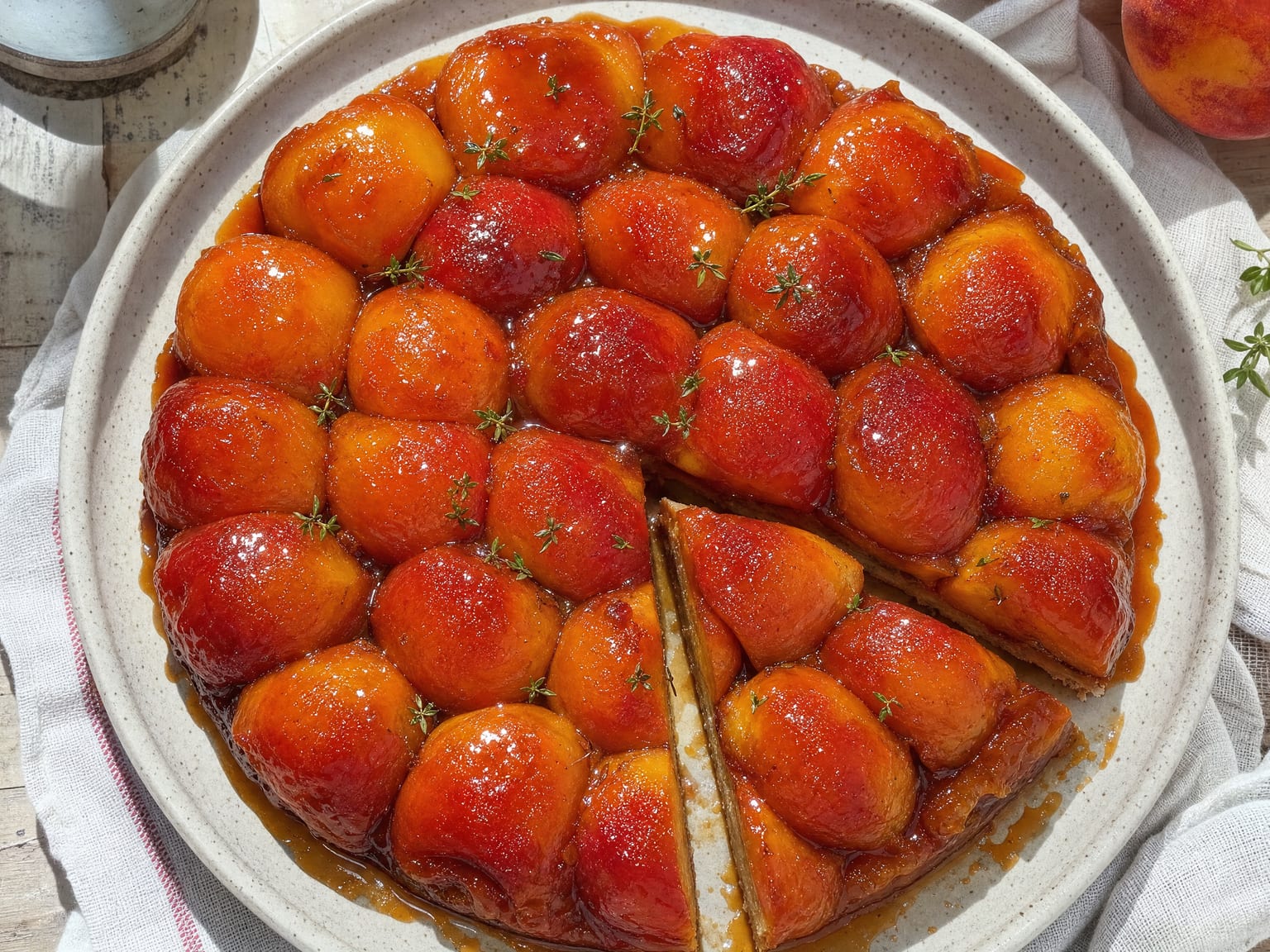
A high-summer tatin made with peaches or nectarines, halved and laid cut-side down in a butter and brown sugar syrup with thyme, so the hollow where the stone was fills with caramel as it bakes. Stone fruit carries much more water than apple, so the syrup starts drier and the fruit goes in cut-side down deliberately, giving the juice somewhere to go rather than flooding the pastry.
Prep10 min
Cook30 min
Rest10 min
Oven200°C
Servings6
Christoph's shortcut tatin worked with stone fruit, the syrup kept drier and the fruit laid cut-side down to manage the extra juice.
Ingredients
Written for a 25 cm pan
Units
Temperature
Servings
Pan caramel
- 60 g unsalted butter rounded
- 80 g dark brown sugar rounded
- 3 thyme sprigs (optional) rounded
- 1 g fine salt rounded
Peaches and pastry
- 900 g firm peaches or nectarines, about 6, ripe but not soft rounded
- 15 ml lemon juice rounded
- 320 g all-butter puff pastry, one ready-rolled sheet, kept cold rounded
Dietary labels are a guide, not a guarantee. If you have an allergy, read the ingredients yourself.
Method
- Heat the oven to 200°C.
- Melt the butter and brown sugar in a 25 cm ovenproof skillet over medium heat, swirling for about 2 minutes until smooth and bubbling. Drop in the thyme sprigs and the salt, then take the pan off the heat.
- Halve and stone the peaches. Run a knife round the natural seam, twist the halves apart and lift the stone out. If the fruit clings to the stone, cut thick wedges off it instead; freestone and clingstone varieties behave differently and neither is a problem. Toss with lemon juice. Do not peel them, the skin holds the halves together.
- Lay them cut-side down, packed tightly in one layer. Cut-side down matters: the hollow traps caramel and the skin side, which faces up in the pan, becomes the top once flipped and keeps its colour.
- Cover with the pastry, trimmed to a circle 2 cm wider than the pan, pricked with a fork, tucked down inside the pan wall.
- Bake 28 to 30 minutes, longer than apple, because the fruit releases a lot of juice that has to reduce. The tatin is not ready until the bubbling at the edge is slow and thick rather than watery.
- Rest 10 minutes and flip. If there is still a pool of thin juice, tip it into a small pan, boil it hard for a minute and spoon it back over the fruit.
Notes
- Stone fruit is the wettest thing you can put in a tatin. That is why there is less sugar here and no added liquid at all, and why the bake runs longer. Judge doneness by how the syrup moves, not by the clock.
- Ripe but firm. A peach that yields to a thumb is a peach that will disintegrate. If yours are soft, use them for something else and buy firmer ones.
- Apricots and plums work identically, with apricots needing about 5 minutes less. For plums the book already has the careful skillet version, plum tarte tatin.
- Thyme is not decoration. A woody herb against caramelised stone fruit is what keeps this from being one-dimensionally sweet. Rosemary, used more sparingly, does the same job.
Good with
From Christoph Mayer