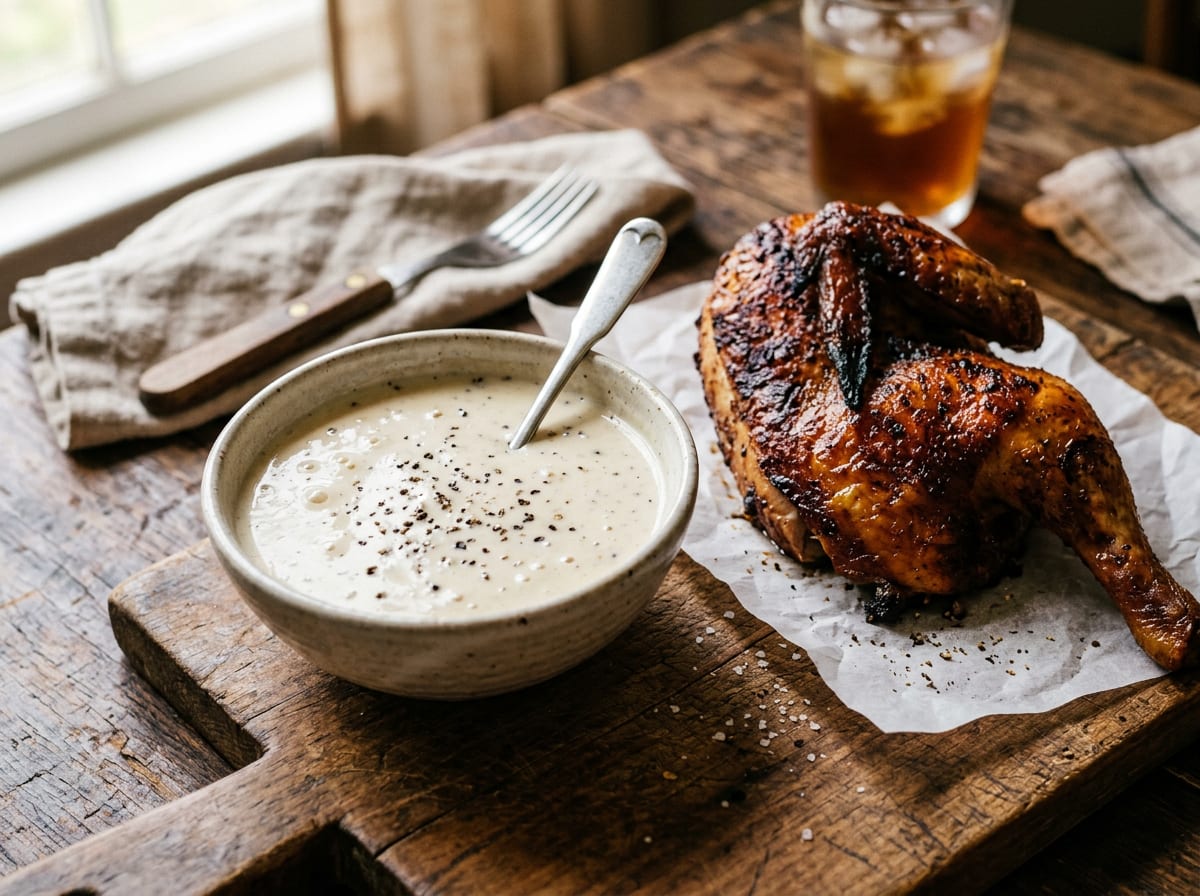
Alabama white sauce
A mayonnaise and vinegar barbecue sauce, sharp with black pepper and horseradish, invented in Decatur in 1925 for smoked chicken. It looks wrong to anyone expecting red sauce and it is one of the best things you can put on a bird.
After the Big Bob Gibson sauce from Decatur, Alabama
Ingredients
Sauce
- 350 g mayonnaise, a real full-fat one; light mayonnaise splits and tastes of nothing rounded
- 120 ml cider vinegar, this much is not a mistake; it should be sharp rounded
- 30 ml water, to bring it to a pourable consistency rounded
- 20 g horseradish, prepared, from a jar, drained of most of its liquid rounded
- 20 ml lemon juice rounded
- 8 g coarse black pepper, coarse and generous; this is the defining flavour rounded
- 6 g sugar rounded
- 5 g fine salt rounded
- 5 g garlic granules rounded
- 2 g cayenne rounded
Dietary labels are a guide, not a guarantee. If you have an allergy, read the ingredients yourself.
Method
- Whisk the vinegar into the mayonnaise gradually, not all at once. Dumped in, it can break the mayonnaise; added in three or four goes it stays smooth.
- Everything else in, then taste, then adjust the salt.
- Rest at least two hours in the fridge, and overnight is better. This is not optional. Fresh, it tastes like seasoned mayonnaise; rested, the pepper and horseradish bloom into the vinegar and it becomes its own thing.
How it is actually used
The traditional method is a dunk, not a brush. At Big Bob Gibson the whole smoked chicken goes into a vat of the sauce as it comes off the pit, gets fully submerged, and comes back out coated. The hot skin takes on a thin layer and the rest drips away.
At home, put a jug of it next to the carving board and pour it over the bird as you cut. Do the sauce and the heat together, because it behaves differently on hot chicken than on cold.
Notes
- Never let it boil, and never brush it on early. It is an emulsion. Direct heat splits it into oil and watery vinegar, and no amount of whisking brings it back. It goes on at the very end or at the table.
- It is not a mild sauce. People see the colour and expect ranch. There is a great deal of vinegar and black pepper in it and it is meant to cut through smoke and chicken fat.
- Its second life is as a dressing. It is excellent on a sharp coleslaw, on a potato salad, and as a dip for chips or hot chicken. Thin it with a spoon more water for a salad.
- It keeps a week in the fridge, limited by the mayonnaise rather than by anything else.
- It works on far more than chicken. Smoked turkey, pulled pork, grilled fish and roast potatoes are all improved by it.
Ingredient substitutions
- Mayonnaise is the entire structure, so use a real one. In Germany, a Delikatess mayonnaise is right; Salatmayonnaise at 50 percent fat is thinner and sweeter and needs a little less water and a little more vinegar.
- Prepared horseradish in a jar is what the recipe is written for. Fresh grated horseradish is far stronger, so start with a third of the weight. German Sahnemeerrettich already contains cream and sugar, so drop the sugar in the recipe if you use it.
- For a vegan version, a good vegan mayonnaise works better here than it does in most places, because the sauce is so heavily seasoned. It is looser, so cut the water.
Sources consulted
Good with
From Christoph Mayer