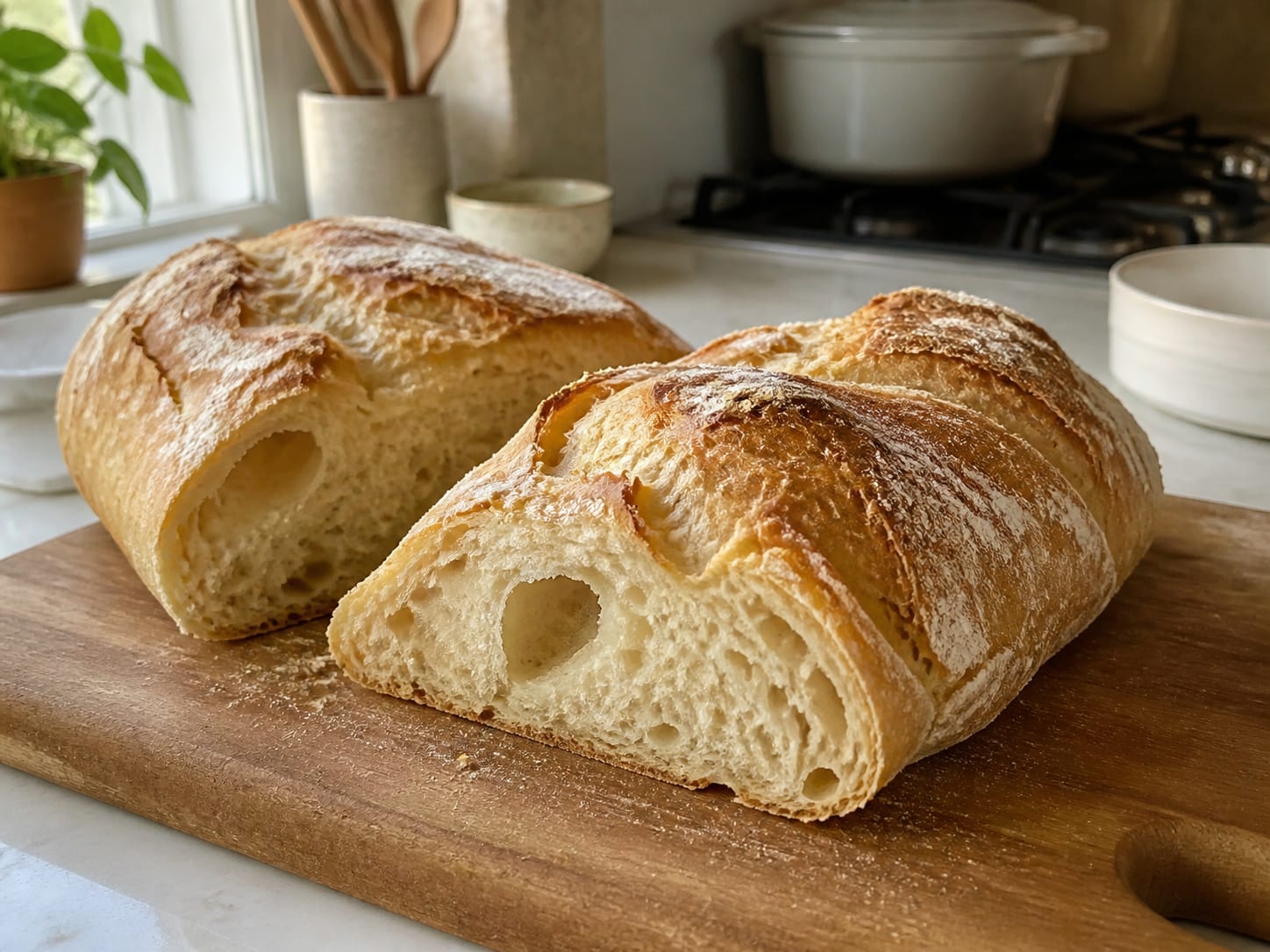
Baguette Rustica
A wetter, more rustic cousin of a straight baguette, closer to a ciabatta in hydration, shaped roughly with minimal handling rather than rolled tight. The higher hydration is what gives the noticeably more open, irregular crumb; it also makes the dough considerably harder to shape, which is the trade you are making.
Prep30 min
Cook25 min
Rest900 min
Oven240°C
Servings3
Christoph's rustic baguette, pushed toward ciabatta hydration for a more open, irregular crumb than a standard baguette.
Ingredients
Units
Temperature
Servings
Dough
- 500 g bread flour rounded
- 400 ml cold water, high hydration; the dough will feel closer to a thick batter than a dough at first rounded
- 3 g instant dried yeast rounded
- 11 g fine salt rounded
- 30 ml olive oil, for the dough and for oiling hands during shaping rounded
Dietary labels are a guide, not a guarantee. If you have an allergy, read the ingredients yourself.
Method
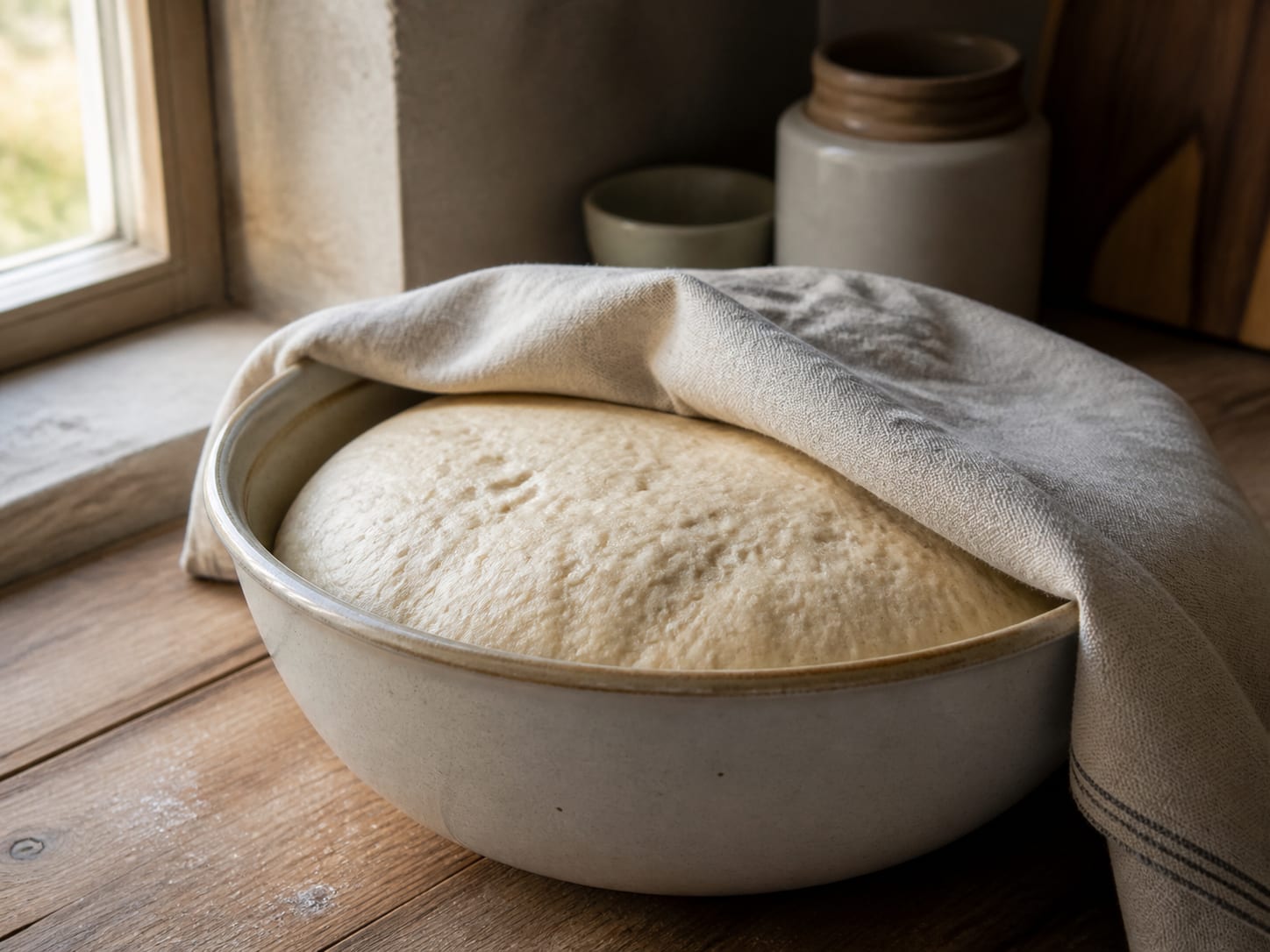
- Mix the flour, cold water and yeast together until no dry flour remains. The mixture will be closer to a thick, sticky batter than a normal dough; that is expected at this hydration. Cover and rest 30 minutes.
- Add the salt and half the olive oil, and fold and squeeze in the bowl for about 3 minutes until it comes together into a cohesive, very sticky mass.
- Cover and rest 1 hour, then fold with wet or oiled hands as for a standard baguette: lift and fold each side over the middle, turn the bowl, repeat 4 times. Repeat the fold twice more at 30 minute intervals.
- Cover tightly and refrigerate overnight, 8 to 12 hours.
- Turn the dough onto a heavily floured surface. Do not try to shape this dough tightly; instead, divide it into 3 rough pieces with a bench scraper and gently stretch and fold each into a rough rectangle, minimal handling. Over-shaping deflates the open structure this dough is built for.
- Place each piece on a floured couche or parchment, dust the tops with flour, and prove uncovered for 30 to 40 minutes.
- Heat the oven to 240°C with a baking sheet inside and a pan on the oven floor. Slash each loaf once or twice, transfer to the hot sheet, pour water into the pan below for steam, and shut the door.
- Bake 22 to 25 minutes, until deep golden brown and hollow-sounding. Cool at least 20 minutes before slicing.
Method in the Thermomix
Written for a TM5 or TM6, 2.2 litre bowl.
- Flour, water and yeast into the bowl. Mix 10 sec / speed 6, rest 30 min in the bowl.
- Add the salt and half the oil. Knead 4 min / dough mode. The dough will still be very wet and cling to the sides; that is correct for this hydration.
- Scrape into an oiled bowl with a spatula and continue from step 3 of the hand method: fold, ferment overnight, shape gently and bake as above.
Notes
- This dough is wetter and stickier than a normal baguette on purpose. Fighting it by adding flour gives back a tighter, less interesting crumb; embrace the mess with well-floured or oiled hands instead.
- Handle the dough as little as possible when shaping. Every extra fold or squeeze knocks out the large gas bubbles that make this loaf’s crumb distinctive.
- The overnight cold ferment does the real work here, both for flavour and for the strength the dough needs to hold its shape despite the high hydration.
- Best eaten the day it is baked; it does not keep as well as a tighter-crumbed loaf.
Ingredient substitutions
- Olive oil can be left out for a leaner, more traditional French-style crumb; Italian versions typically include it.
- Bread flour gives the best structure at this hydration; all-purpose flour will be noticeably harder to shape.
- A pizza stone preheated for 30 minutes gives a better crust than a plain baking sheet.
From Christoph Mayer