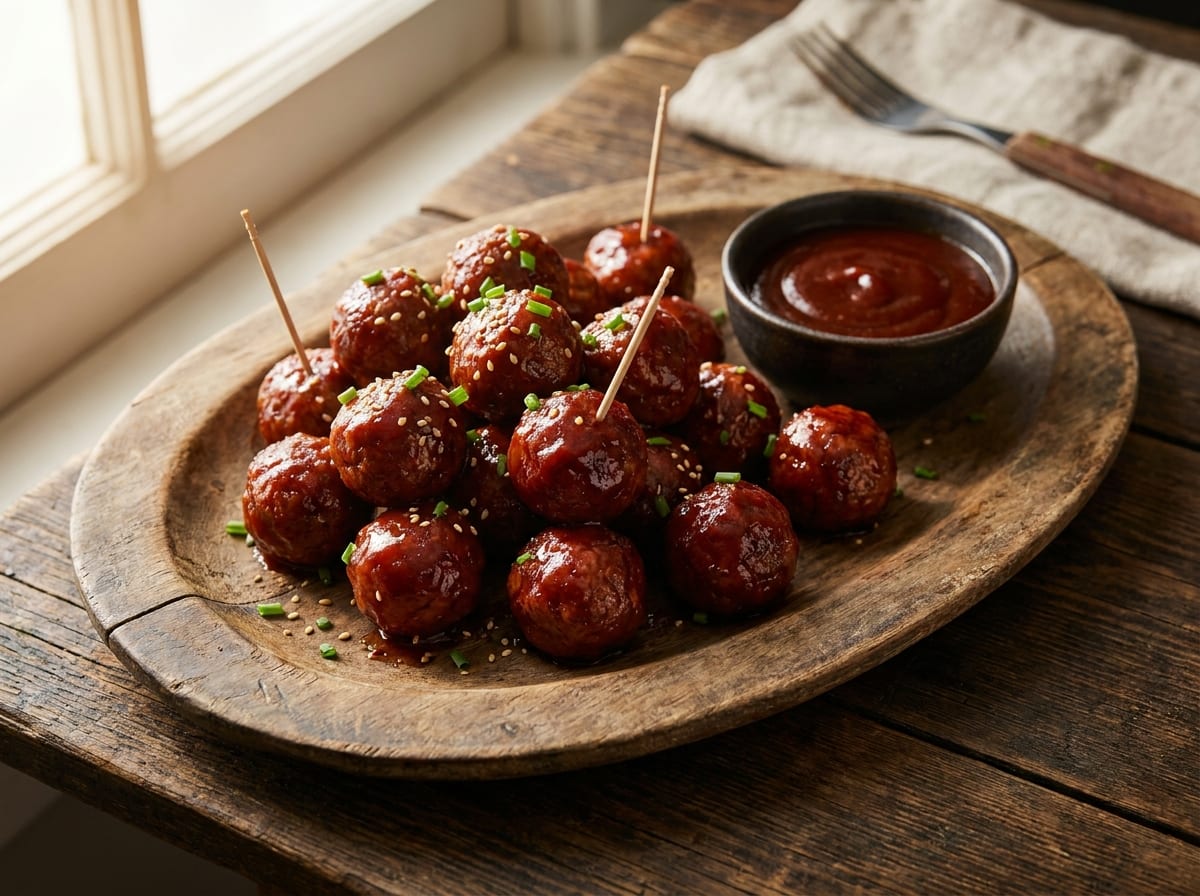
Barbecue Smoked Meatballs
A party-food meatball built around a barbecue rub inside the mix and a sticky glaze brushed on at the very end, smoked low the whole way through rather than seared, since a slow smoke gives the glaze time to tack up into a real lacquer instead of just melting and running off. Finishing with a second, thinner coat right before serving is what keeps the glaze glossy instead of dulling into a dry crust by the time it reaches the table.
Christoph's barbecue meatballs, smoked low the whole way through and glazed in two coats at the end for a real lacquer.
Ingredients
Written for a 30 × 40 cm baking sheet
Units
Temperature
Servings
Meatballs
- 1 kg ground beef, pork, or a mix of both, 80/20 lean-to-fat rounded
- 60 g dry breadcrumbs rounded
- 1 egg rounded
- 60 g yellow onion, very finely chopped rounded
- 20 g barbecue dry rub, your favourite sweet-smoky blend rounded
- 30 ml barbecue sauce, for the mix, plus more for glazing rounded
- 10 g fine salt rounded
Glaze
- 250 ml barbecue sauce rounded
- 15 ml apple cider vinegar, to loosen the glaze for brushing rounded
Method
- Preheat your smoker to 110°C (225°F), set up for indirect heat.
- In a large bowl, combine the meat, breadcrumbs, egg, onion, dry rub, 30 ml barbecue sauce and salt. Mix with your hands just until evenly combined.
- Shape into 3.5 cm balls, about 35 g each.
- Arrange the meatballs on a wire rack or directly on the smoker grate, leaving space between each.
- Smoke at 110°C for 35 minutes.
- Stir the vinegar into the barbecue sauce to loosen it slightly. Brush a first coat over the meatballs and return to the smoker for 10 minutes.
- Brush a second, thinner coat over the meatballs. Smoke for a final 10 minutes, until the internal temperature reaches 71°C and the glaze has set to a glossy lacquer.
- Rest for 5 minutes before serving, with toothpicks alongside if serving as an appetizer.
Notes
- Smoke low the whole way through rather than searing first. A slow, steady smoke gives the two glaze coats time to tack up into an actual lacquer rather than melting straight off a hot surface; this is one of the few meatballs here that skips a sear entirely.
- Two thin coats beat one thick one. The first coat sets a base and starts to caramelise; the second, applied closer to the end, is what gives the glossy, just-glazed look rather than a dulled, over-baked one.
- Use a barbecue sauce with enough sugar to caramelise. A very vinegar-forward, thin sauce won’t tack up the same way; if that’s what you have, stir in a spoonful of brown sugar before brushing.
- These hold well on a warm smoker for a while, which makes them a reasonable make-ahead for a party; brush on a final glaze coat just before serving to bring the shine back.
Ingredient substitutions
- All beef, or all pork, works fine here; the rub and glaze carry most of the flavour, so the meat choice matters less than in a plainer meatball.
- A hotter dry rub, or a dash of hot sauce in the glaze, for a spicier version.
- Serve on their own with extra sauce for dipping, or over cornbread for a heartier plate.
From Christoph Mayer