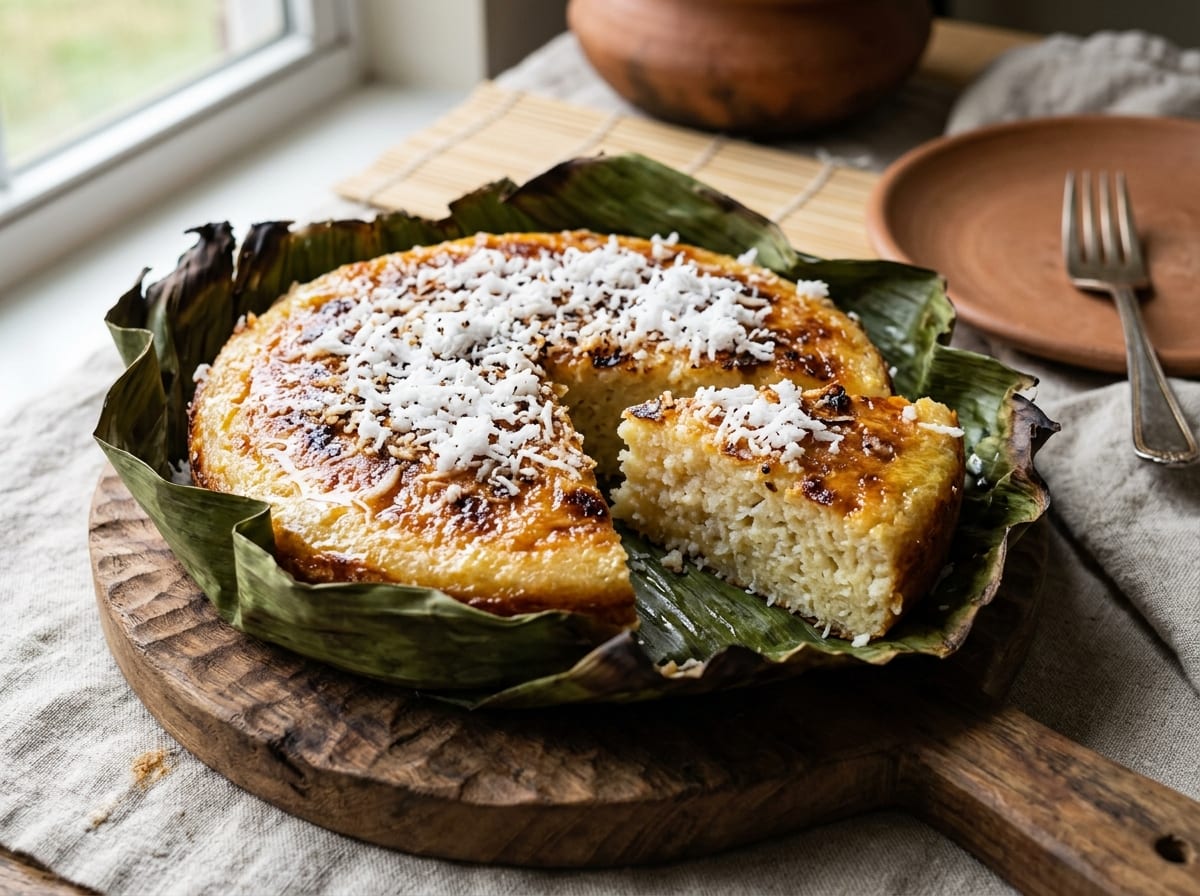
Bibingka
A moist, chewy Filipino baked coconut rice cake, brushed with butter and topped with fresh grated coconut straight from the oven.
Adapted from Kawaling Pinoy and The Little Epicurean, with Simbang Gabi background from Lifestyle.INQ
Ingredients
Written for a 23 cm round tin
For the Pan
- 2 banana leaf, thawed if frozen and cut into rounds; parchment paper is a fine substitute rounded
- 10 g melted unsalted butter, for greasing the tin rounded
Batter
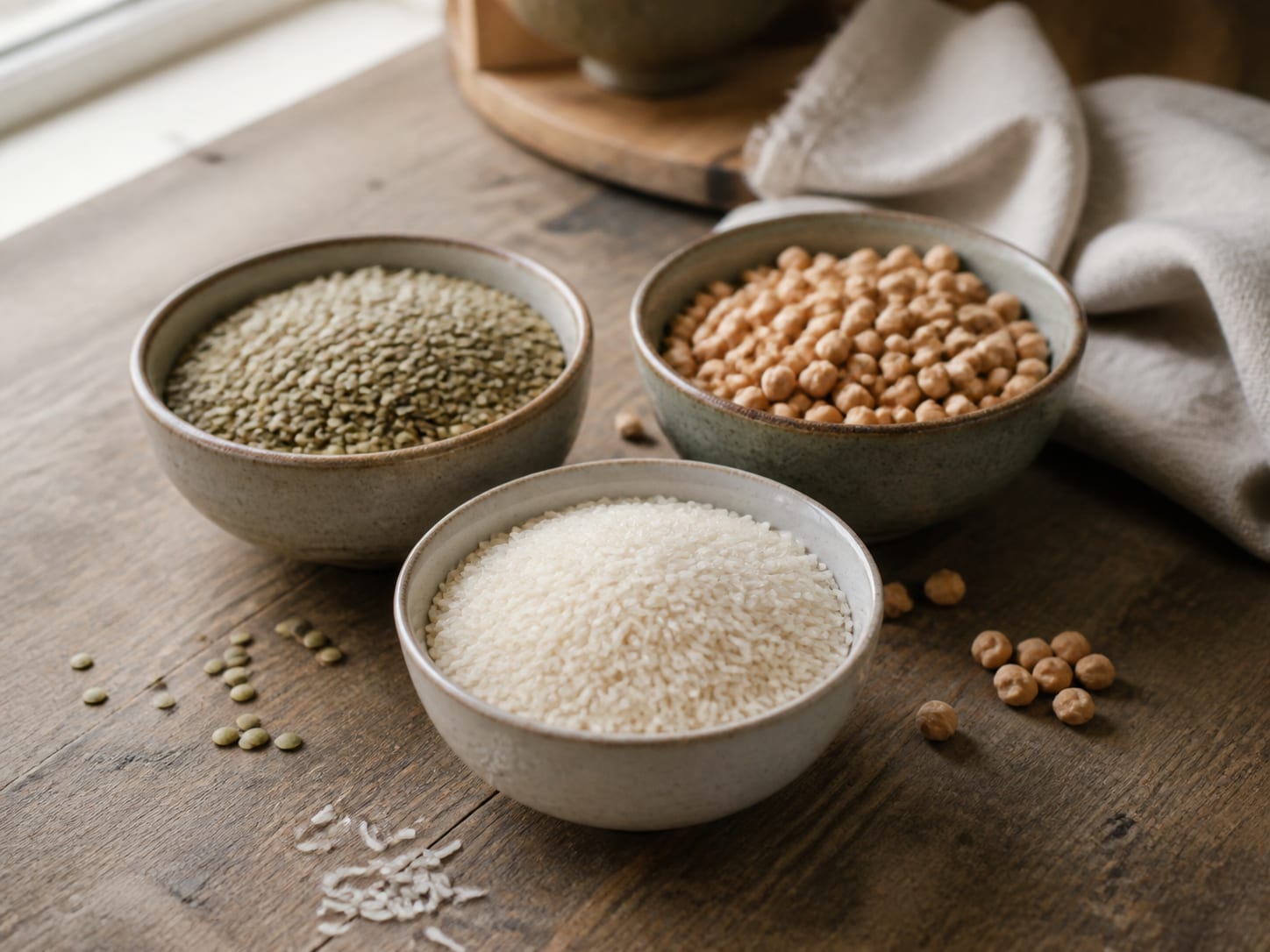
- 300 g rice flour, not the glutinous kind rounded
- 75 g glutinous rice flour, also called sweet rice flour or mochiko rounded
- 200 g granulated sugar rounded
- 12 g gluten-free baking powder rounded
- 3 g fine salt rounded
- 360 ml full-fat coconut milk, well shaken rounded
- 120 ml water rounded
- 3 large eggs, room temperature rounded
- 60 g melted unsalted butter rounded
To Finish
- 20 g melted unsalted butter, for brushing rounded
- 40 g freshly grated coconut, or moistened unsweetened desiccated coconut rounded
- 15 g granulated sugar, for sprinkling (optional) rounded
Dietary labels are a guide, not a guarantee. If you have an allergy, read the ingredients yourself.
Method
-
Prepare the banana leaves if using: thaw frozen leaves at room temperature or under cool running water, rinse off any dust, and pat dry. Trim out the thick centre rib. Working quickly, pass each leaf over an open flame or hold it close to a hot burner for a few seconds a side until it turns glossy, deep green, and pliable, which keeps it from splitting when you curve it into the tin. Cut rounds that cover the base and come partway up the sides, overlapping two or three pieces so no metal shows through.
If banana leaf is not available, line the tin with parchment paper instead. The cake bakes and tastes almost the same; you simply lose the toasty, faintly herbal aroma the leaf presses into the batter as it steams against the hot tin. Both fresh and frozen banana leaves turn up in the freezer section of many Asian grocers in Germany, so it is worth asking before reaching for the parchment.
-
Heat the oven to 190°C. Butter the lined tin, leaf and all.
-
Whisk the rice flour, glutinous rice flour, sugar, baking powder, and salt together in a large bowl.
-
In a separate bowl, whisk the coconut milk, water, eggs, and melted butter until smooth. Pour into the dry ingredients and whisk just until the batter is smooth and pourable, with no lumps. Pour into the prepared tin.
-
Bake for 35 to 40 minutes, until the top is set and lightly golden, the edges pull slightly away from the leaf, and a skewer inserted in the centre comes out clean.
-
While the cake is still hot, brush the top generously with melted butter and scatter over the grated coconut and a little sugar, if using. For the classic lightly charred top, slide the tin under a hot broiler for 1 to 2 minutes, watching it closely the whole time; it catches fast.
-
Let the bibingka rest in the tin for 10 minutes, then lift it out by the leaf or parchment, cut into wedges, and serve warm, ideally the same day.
Notes
- Bibingka is traditionally baked in a shallow clay pot called a palayok, set over hot coals both above and below, which is what gives the classic version its deeply charred top and smoky edge. A home oven with a brief spell under the broiler gets you close.
- If you would rather bake individual pieces the way street vendors do, divide the batter among 6 to 8 buttered, leaf-lined ramekins or a large muffin tin instead of the single round tin, and shorten the bake to about 20 to 25 minutes.
- This is street food, eaten standing up at a vendor’s stall outside the church right after Simbang Gabi, the nine dawn masses leading up to Christmas that end with the misa de gallo on Christmas Eve. It began as a hearty breakfast for farmers heading to the fields after mass, and it is still eaten hot, ideally within the hour.
- Rice cakes stale quickly. Keep leftovers loosely covered at room temperature for a day, or refrigerate airtight for up to 3 days; a minute in a low oven or a few seconds in the microwave brings the texture back.
- For a strictly gluten-free version, check that the baking powder is labelled gluten-free; some brands use a wheat-starch filler.
Sources Consulted
- Kawaling Pinoy, “Bibingka”
- The Little Epicurean, “Bibingka (Coconut Rice Cake)”
- Lifestyle.INQ, “Why do we eat bibingka and puto bumbong every Christmas?”
Ratios, oven temperature, and the banana-leaf lining technique are cross-checked against both recipes; the single-tin scaling, the parchment-paper substitution note, and the wording are original.
From Christoph Mayer