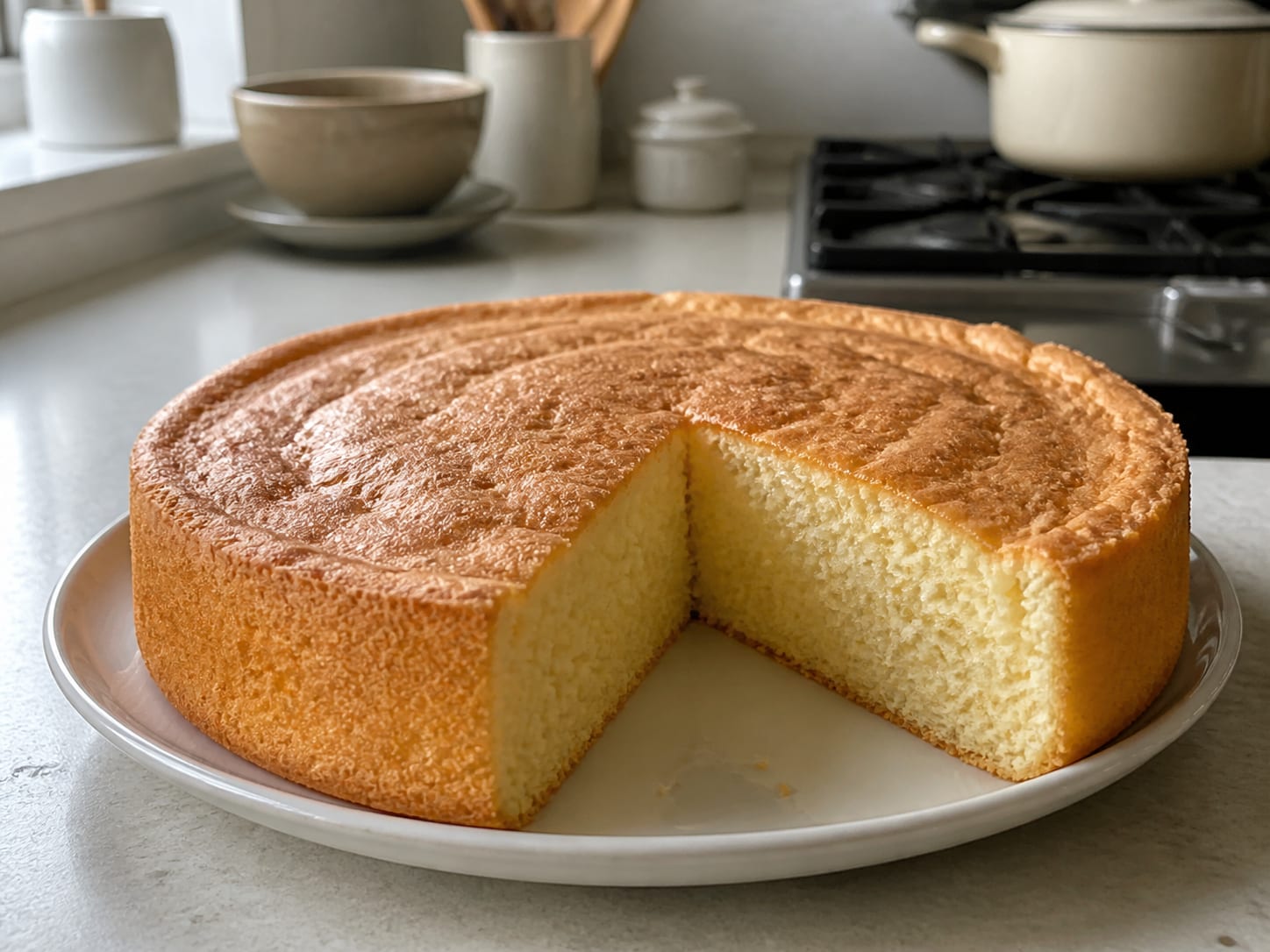
Biskuit (classic sponge cake)
A fatless sponge cake that gets its entire structure from whipped whole eggs and sugar, beaten until pale and thick enough to leave a ribbon trail on the surface for several seconds, since that trapped air is the only leavening this cake has. Folding in the flour with a light hand in as few strokes as possible is what keeps that air from collapsing before the cake ever sees the oven.
Prep20 min
Cook30 min
Rest40 min
Servings4
Christoph's classic sponge, the eggs and sugar whipped to a full ribbon stage since it's the only leavening the cake has.
Ingredients
Written for a 24 cm round tin
Units
Temperature
Servings
Sponge
- 4 eggs, room temperature rounded
- 120 g sugar rounded
- 3 g vanilla extract rounded
- 120 g flour rounded
- 20 g cornstarch rounded
- 3 g baking powder rounded
- 1 g fine salt rounded
Dietary labels are a guide, not a guarantee. If you have an allergy, read the ingredients yourself.
Method
- Preheat the oven to 175°C (fan). Line the base of a 24 cm round tin with parchment; do not grease the sides.
- Whisk the eggs, sugar and vanilla together in a large bowl, using a stand mixer or electric hand whisk, for 6 to 8 minutes, until pale, thick, and tripled in volume. It should leave a ribbon trail on the surface that holds for several seconds when the whisk is lifted.
- Sift the flour, cornstarch, baking powder and salt together over the egg mixture, in two additions. Fold in gently with a spatula each time, using as few strokes as possible, until just combined with no visible flour streaks.
- Pour into the prepared tin and smooth the top. Bake for 25 to 30 minutes, until a skewer comes out clean and the surface springs back when pressed.
- Let cool in the tin for 10 minutes, then run a knife around the edge and turn out onto a rack to cool completely.
Notes
- Whip the eggs and sugar to a full, stable ribbon stage. This cake has no chemical leavening doing the heavy lifting; the air beaten into the eggs is what makes it rise, so undermixing here leaves a dense, flat cake no matter how it’s baked.
- Fold, don’t stir, once the flour goes in. Vigorous stirring knocks the air straight back out; a gentle folding motion with as few strokes as possible keeps it intact.
- Don’t grease the sides of the tin. The batter needs to cling to the ungreased sides as it rises and cools, which helps it hold its height instead of shrinking away from the tin.
- Once cooled, it’s ready for layering, soaking, or filling, and is the base for many other cakes in this collection.
Ingredient substitutions
- Cornstarch lightens the crumb; if unavailable, use all flour instead, though the texture will be slightly denser.
- Lemon or orange zest can replace or join the vanilla for a different flavour base.
- This sponge takes well to a simple syrup soak if using it for a layered cake, since it’s naturally on the drier side.
From Christoph Mayer