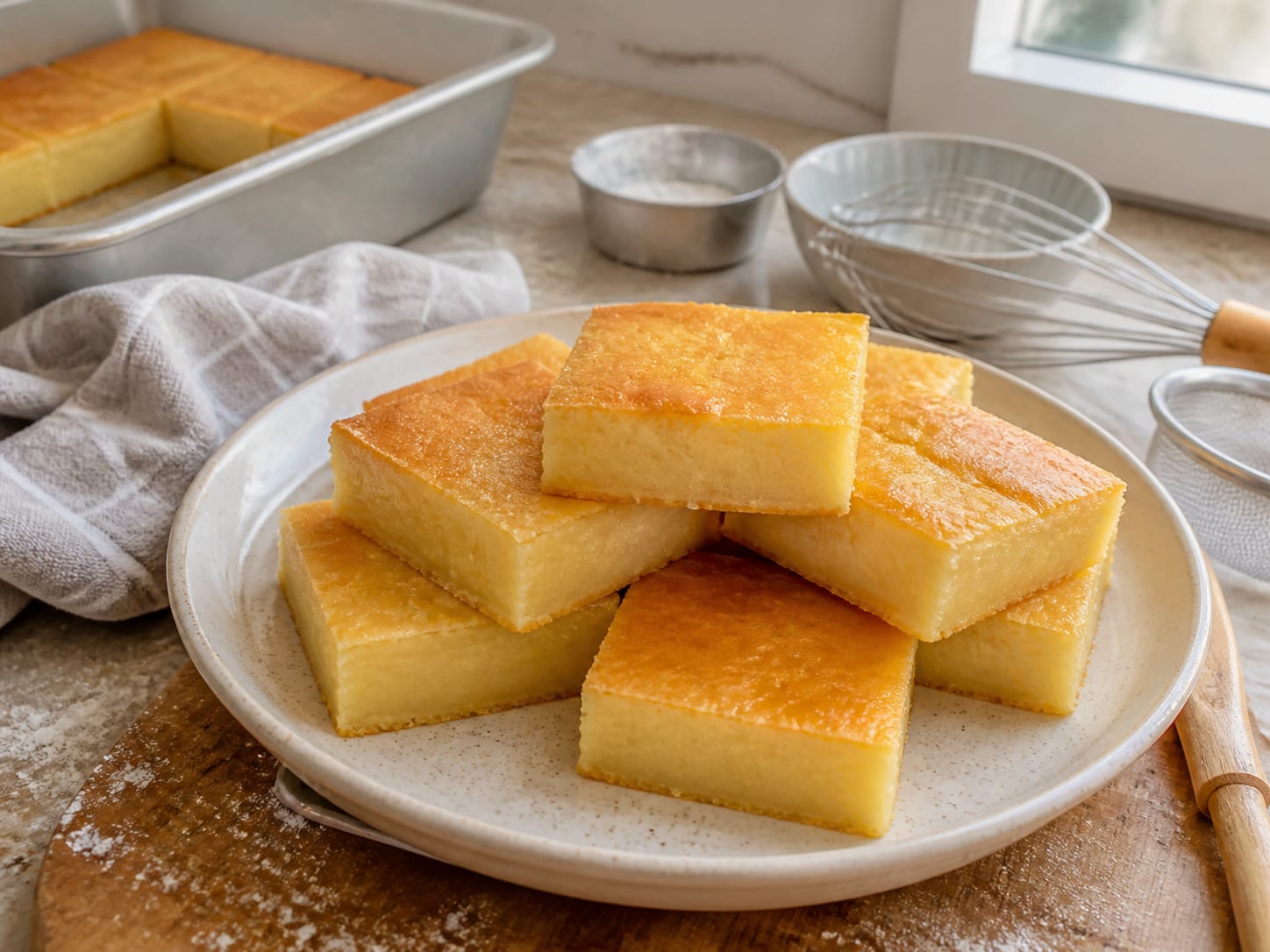
Butter mochi
A dense, chewy, custardy Hawaiian-Japanese bar cake made from mochiko, coconut milk, and evaporated milk, baked in one pan and cut into squares.
Research-based composite of established Hawaii butter mochi ratios built around mochiko, coconut milk, and evaporated milk; not represented as personally tested
Ingredients
Written for a 23 × 33 cm dish
Butter mochi batter
- 455 g mochiko, glutinous or sweet rice flour, not regular rice flour rounded
- 400 g granulated sugar rounded
- 12 g baking powder rounded
- 3 g fine salt rounded
- 4 large eggs rounded
- 400 g canned unsweetened coconut milk, well stirred before measuring rounded
- 355 g evaporated milk, unsweetened; not the same as sweetened condensed milk rounded
- 115 g unsalted butter, melted and cooled slightly, plus extra for the pan rounded
- 8 ml vanilla extract rounded
- 80 g unsweetened shredded coconut, optional topping, sprinkled over the batter before baking (optional) rounded
Dietary labels are a guide, not a guarantee. If you have an allergy, read the ingredients yourself.
Method
- Heat the oven and prepare the pan. Heat the oven to 175°C. Butter a 23 by 33 cm baking dish generously, including the corners and sides.
- Whisk the dry ingredients. In a large bowl, whisk the mochiko, sugar, baking powder, and salt until evenly combined and free of lumps of baking powder.
- Whisk the wet ingredients separately. In a second bowl, whisk the eggs until smooth, then whisk in the coconut milk, evaporated milk, melted butter, and vanilla extract until fully combined.
- Combine gradually to avoid lumps. Pour the wet mixture into the dry mixture in two or three additions, whisking well after each. Mochiko clumps stubbornly if all the liquid hits it at once, so add it gradually and whisk until the batter is completely smooth and pourable.
- Pour and settle the batter. Pour the batter into the prepared pan. Rap the pan firmly on the counter several times to bring air bubbles to the surface. Sprinkle the shredded coconut evenly over the top, if using.
- Bake. Bake at 175°C for 60 to 70 minutes, until the top is deep golden brown and set with only a slight jiggle at the very center. A knife inserted in the middle should come out mostly clean, with a few moist crumbs rather than wet batter. Tent loosely with foil if the top browns too quickly before the center sets.
- Cool completely before cutting. Set the pan on a rack and let the butter mochi cool completely, at least 2 hours and ideally longer, until it reaches room temperature. Butter mochi is very sticky and chewy while warm, and cutting it early tears the crumb and drags filling across the knife instead of giving a clean slice.
- Cut and serve. Cut into 24 squares with a knife lightly greased with butter or neutral oil, wiping and re-greasing the blade between cuts if it starts to stick.
Notes
- Storage: keep covered at room temperature for up to 2 to 3 days. The texture firms noticeably as the mochi sits, which is normal and not a sign of overbaking.
- This is deliberately chewier and denser than a Western-style cake. Mochiko’s starch behaves nothing like wheat flour, and that dense, bouncy, custardy crumb is the entire point of the dish, not a flaw to bake around.
- Glass and ceramic pans hold heat longer than metal and may need a few extra minutes; start checking for doneness at the low end of the range in a metal pan and toward the high end in glass.
- Butter mochi freezes well. Wrap individual squares tightly and freeze for up to 2 months; thaw at room temperature or warm briefly in the microwave to restore some of the fresh-baked chew.
Ingredient substitutions
Mochiko, a fine glutinous (sweet) rice flour, is the traditional and preferred flour here; Koda Farms Mochiko, sold in a distinctive blue-and-red box, is the most iconic brand in Hawaii and the one most home bakers reach for. In Germany and Canada, glutinous rice flour is widely available at Asian grocers, sometimes labeled “sweet rice flour” or “sticky rice flour,” and it behaves the same way in this recipe. Regular rice flour, glutinous rice flour’s non-sticky cousin, is not a substitute here: it lacks the amylopectin starch structure that gives butter mochi its signature chew, and baking with it produces a crumbly, dry bar instead of a dense, bouncy one. Always check the package for “glutinous” or “sweet” rice flour, not plain rice flour.
Canned, unsweetened coconut milk is the traditional choice and gives the richest flavor and body; do not substitute the thin, refrigerated coconut milk sold in cartons for drinking, which is too watery to set the batter properly. If evaporated milk is not on hand, simmer whole milk until its volume is reduced by about half, or use a mixture of whole milk and half-and-half in a roughly 3-to-1 ratio; either route approximates the concentrated richness evaporated milk contributes without the sweetness of condensed milk.
Sources consulted
- The Kitchn: Hawaiian Butter Mochi Recipe
- Wild Wild Whisk: The Best Hawaiian Butter Mochi Recipe
- Mochi Mommy: Classic Hawaii Butter Mochi Recipe
- Ono Hawaiian Recipes: Sweet-Chewy Butter Mochi
From Christoph Mayer