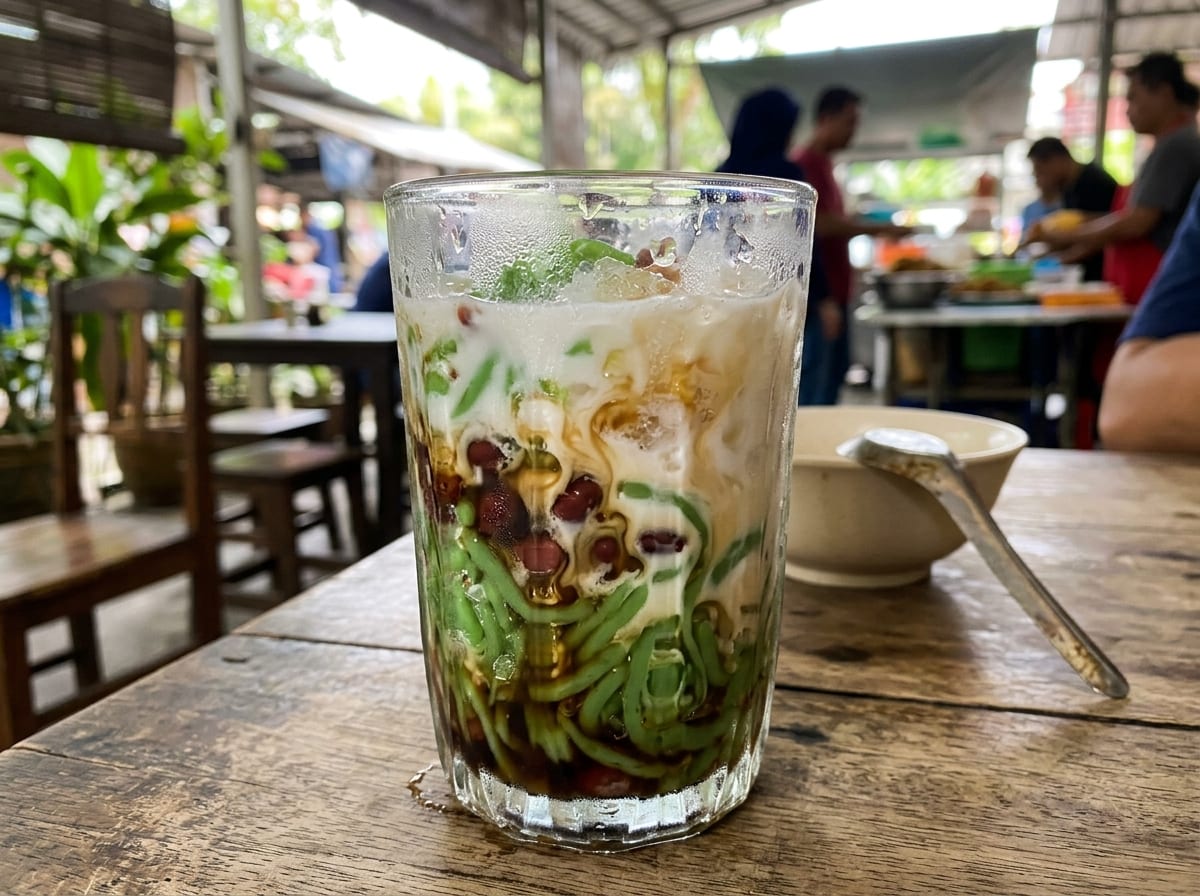
Cendol
Short, springy pandan rice-flour noodles pressed hot through a mold into ice water until they set, then piled into a glass with crushed ice, thick coconut milk, and a dark drizzle of palm sugar syrup. Malaysia's hawker-stall classic, cool and green and gone in minutes.
Jelly-noodle batter ratios and the ricer-into-ice-water technique adapted from Curious Cuisiniere and Takes Two Eggs
Ingredients
Pandan Jelly Noodles
- 100 g rice flour rounded
- 30 g tapioca starch, or cornstarch, for extra chew rounded
- 500 ml water rounded
- 5 ml pandan extract or paste, start with less if using paste, it is often more concentrated than extract rounded
- 1 salt rounded
- 1 l cold water, plus a generous handful of ice cubes, for the ice bath the noodles are pressed into rounded
Gula Melaka Syrup
- 150 g palm sugar (gula melaka), chopped or grated, or dark brown or muscovado sugar, a real substitute but different in flavor rounded
- 150 ml water rounded
- 1 salt, rounds out the sweetness (optional) rounded
Assembly
- 400 ml thick coconut milk, well shaken, the thick tinned kind sold for desserts, not a light coconut drink rounded
- 1 salt (optional) rounded
- 600 g shaved or crushed ice, plus more as needed rounded
Dietary labels are a guide, not a guarantee. If you have an allergy, read the ingredients yourself.
Method
- Make the ice bath first, since the pressing step moves fast once the batter is ready: fill a large bowl with very cold water and plenty of ice, and set it beside the stove with a potato ricer, or a colander with round holes about 3 to 4 mm across, resting over it.
- In a saucepan, whisk the rice flour, tapioca starch, and salt with about a third of the measured water until smooth and free of lumps. Whisk in the pandan extract, then the rest of the water.
- Set the pan over medium heat and cook, stirring constantly with a whisk or silicone spatula so it doesn’t catch on the bottom, until the mixture turns translucent green and thickens into a batter that coats the back of a spoon and holds a ribbon shape for a second when you lift the spatula. This takes 5 to 8 minutes; it goes from thin and cloudy to glossy and gloopy quite suddenly, so keep stirring right through that change.
- Working quickly while the batter is still hot and pourable, spoon it in batches into the potato ricer held over the ice water and squeeze the handles to press it through. If using a colander instead, push the batter through the holes with the back of a ladle or a bowl scraper, keeping the colander close to the water’s surface so the strands don’t stretch and snap before they hit the ice. Each squeeze makes a short batch of noodles; work through all the batter this way, topping up the ice as it melts.
- Let the noodles sit in the ice water for 10 to 15 minutes to firm up fully, then drain in a sieve. They should feel bouncy and slightly springy, not sticky. Cover and refrigerate until needed.
- For the syrup, combine the chopped palm sugar and water in a small saucepan over medium heat. Stir occasionally until the sugar has fully dissolved and the syrup has thickened slightly, about 5 minutes. Cool to room temperature; it thickens further as it cools.
- To serve, divide the jelly noodles among 4 glasses. Fill each glass most of the way with shaved or crushed ice, pour over the coconut milk (stir the pinch of salt into it first, it sharpens the sweetness), then finish with a generous drizzle of the cooled palm sugar syrup. Serve with a long spoon and stir everything together before the first bite.
Notes
- A potato ricer is the easiest stand-in for a real cendol mold. Use the largest-holed disc it comes with, hold it well above the ice water, and squeeze firmly and steadily. A colander with round holes about 3 to 4 mm across works too if you don’t have a ricer; press the batter through with a rubber spatula rather than a spoon, which gives more control over how the strands fall.
- Pandan extract and paste are both worth buying at an Asian grocer rather than skipping: they’re the ingredient the dish is named for, and there’s no real stand-in for the color or the faint vanilla-grassy flavor. Extract is thinner and usually stronger, so start with less than you would use of paste and add to taste.
- Gula melaka (dark palm sugar) is also easy to find at Asian grocers in Germany, usually sold in blocks or discs. Dark brown sugar or muscovado sugar makes a genuine syrup if you can’t get it, but it tastes different: more caramel and molasses, less of palm sugar’s smoky depth. Use the same weight and the same method.
- The jelly noodles keep in the fridge, covered in a little water, for a day or two, though they firm up further and lose some of their bounce over time. Make the syrup ahead too; it keeps just as long. Assemble the glasses only right before serving, so the ice doesn’t melt into everything.
Sources Consulted
The rice flour to tapioca starch ratio, the hot-batter-pressed-into-ice-water method, and the gula melaka syrup ratio come from the sources, averaged and scaled for a batch of four. The colander substitution, ingredient wording, and assembly proportions are original.
From Christoph Mayer