Ćevapi
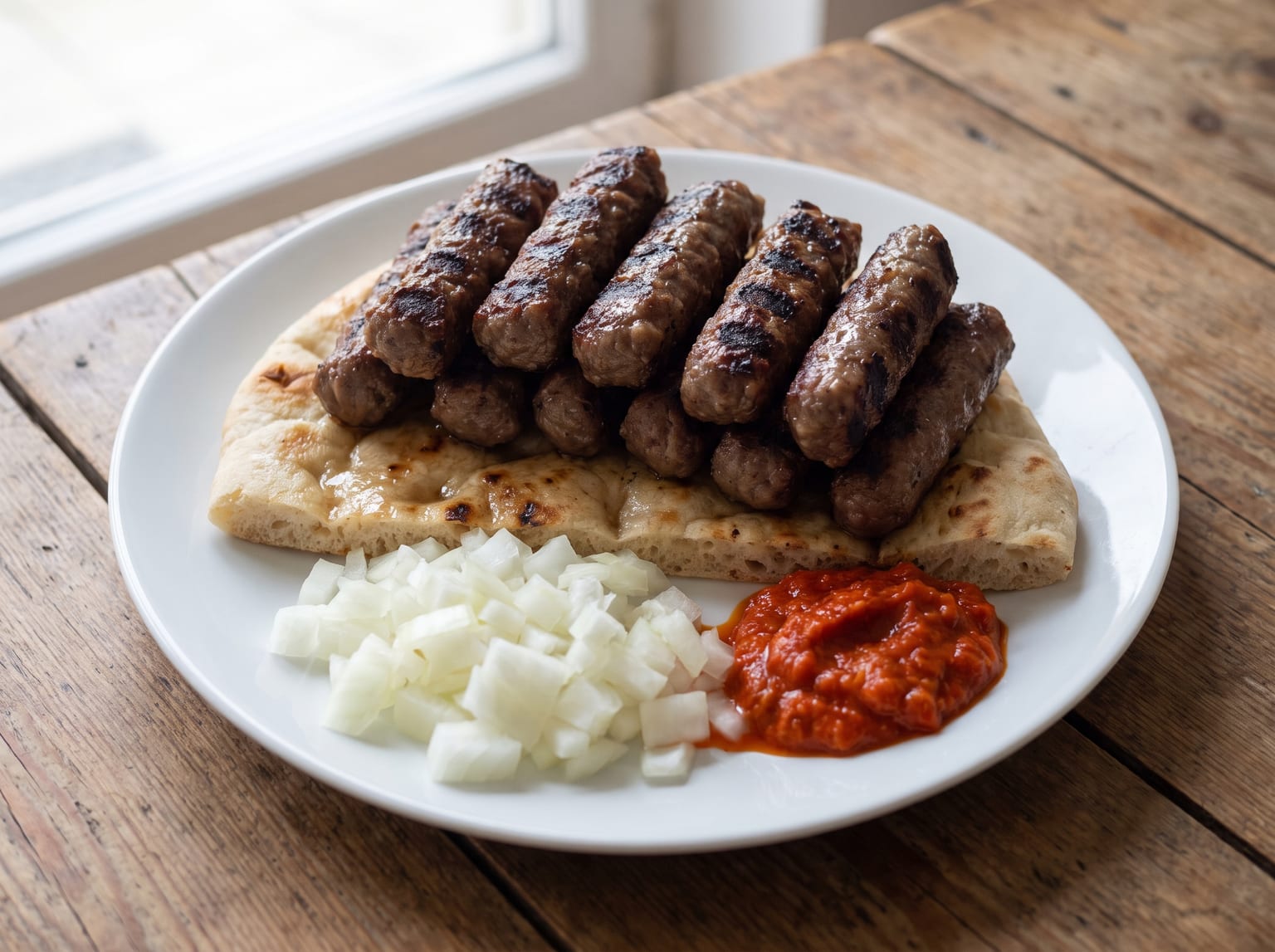
Skinless grilled beef sausages from the Balkans, piped out of a sausage press and grilled hard over charcoal. Baking soda and an overnight rest are what give them their snap, and this version is pure beef.
Standard Bosnian method, beef only, adapted for a home sausage press
Ingredients
Units
Temperature
Servings
Meat
- 1 kg coarsely ground beef, about 20 percent fat, from chuck; too lean and they are dry and crumbly rounded
- 5 g baking soda, not baking powder; this is the ingredient that makes them springy rounded
- 14 g fine salt rounded
- 4 g black pepper, freshly ground rounded
- 5 g sweet paprika rounded
- 4 garlic cloves, crushed to a paste with a little of the salt rounded
- 120 ml sparkling mineral water, very cold, added in stages while mixing rounded
To serve
- 5 soft flatbreads, somun or lepinja, or a thick pitta rounded
- 2 white onions, finely chopped, raw, and do not skip them rounded
- 200 g ajvar, red pepper relish, from a jar is normal rounded
Dietary labels are a guide, not a guarantee. If you have an allergy, read the ingredients yourself.
Method
- Mix the baking soda in first, on its own. Sprinkle it evenly over the mince with the salt and work it through with your hands for a minute. Everything else follows. The soda needs contact with the meat, not with a wet paste.
- Then work it, hard. Add the garlic paste, pepper and paprika, and knead for a full 5 minutes, adding the sparkling water in three or four goes. This is the opposite of a burger. You want the meat to become sticky and paste-like and to smear when you press it up the side of the bowl. That is the protein binding, and it is what stops them crumbling on the grill.
- Rest overnight. Cover tightly and refrigerate 12 to 24 hours. The baking soda raises the pH over that time, which is what gives the finished ćevap its bounce and its characteristic snap. Skipping this step gives you sausage-shaped meatballs, which are fine but are not ćevapi.
- Pipe them. Load the mince into the sausage press and extrude finger-thick ropes about 1.5 cm across, cutting them to roughly 7 cm. No casing, no funnel attachment, just the plain wide nozzle. Lay them on a tray lined with parchment as they come. A piping bag with the tip cut off works if you have no press, and so does rolling them by hand on a wet board.
- Rest them again, briefly. 30 minutes uncovered in the fridge firms the surface so they hold their shape on the bars.
- Grill hot. Charcoal at high heat, grate lightly oiled. 3 to 4 minutes a side, turning once, until deeply browned with black stripes and firm to the touch, about 71°C inside. They should sizzle the moment they land; a cool grill sticks and tears them.
- Serve inside the bread, not beside it. Split a warm flatbread, put the ćevapi in, and let the bread take the fat for a minute before eating. Raw onion on top, ajvar on the side.
Notes
- Why baking soda. It raises the pH of the meat, which loosens the muscle proteins so they hold water and bind to each other. The result is springy and juicy rather than crumbly. It is the single thing that separates real ćevapi from grilled mince, and 5 g per kilo is the right amount. More tastes soapy.
- The overnight rest is not optional. The soda needs time to work through. Grill them the same day and they are noticeably softer and flatter in flavour.
- Beef only, deliberately. Traditional recipes vary by region and often mix beef with lamb, and some use pork. Bosnian ćevapi are commonly beef alone, which is why this version is written that way.
- Freezing. They freeze beautifully raw, piped and laid flat on a tray, then bagged once solid. Grill from frozen over slightly lower heat, adding about 3 minutes.
- No grill. A ridged cast iron pan works and gives you decent stripes. A flat pan works too and gives you no stripes but the same eating.
Ingredient substitutions
- Somun or lepinja is the traditional bread, thick and soft and slightly chewy. A good thick pitta is the usual substitute. Do not use a thin crisp flatbread, because the whole point is that the bread absorbs the fat.
- Ajvar is a roasted red pepper and aubergine relish, sold in jars in most German supermarkets and in Balkan shops everywhere. Kajmak, a thick soured cream, is the other traditional accompaniment and crème fraîche is a passable stand-in.
Sources consulted
Good with
Sources consulted
From Christoph Mayer