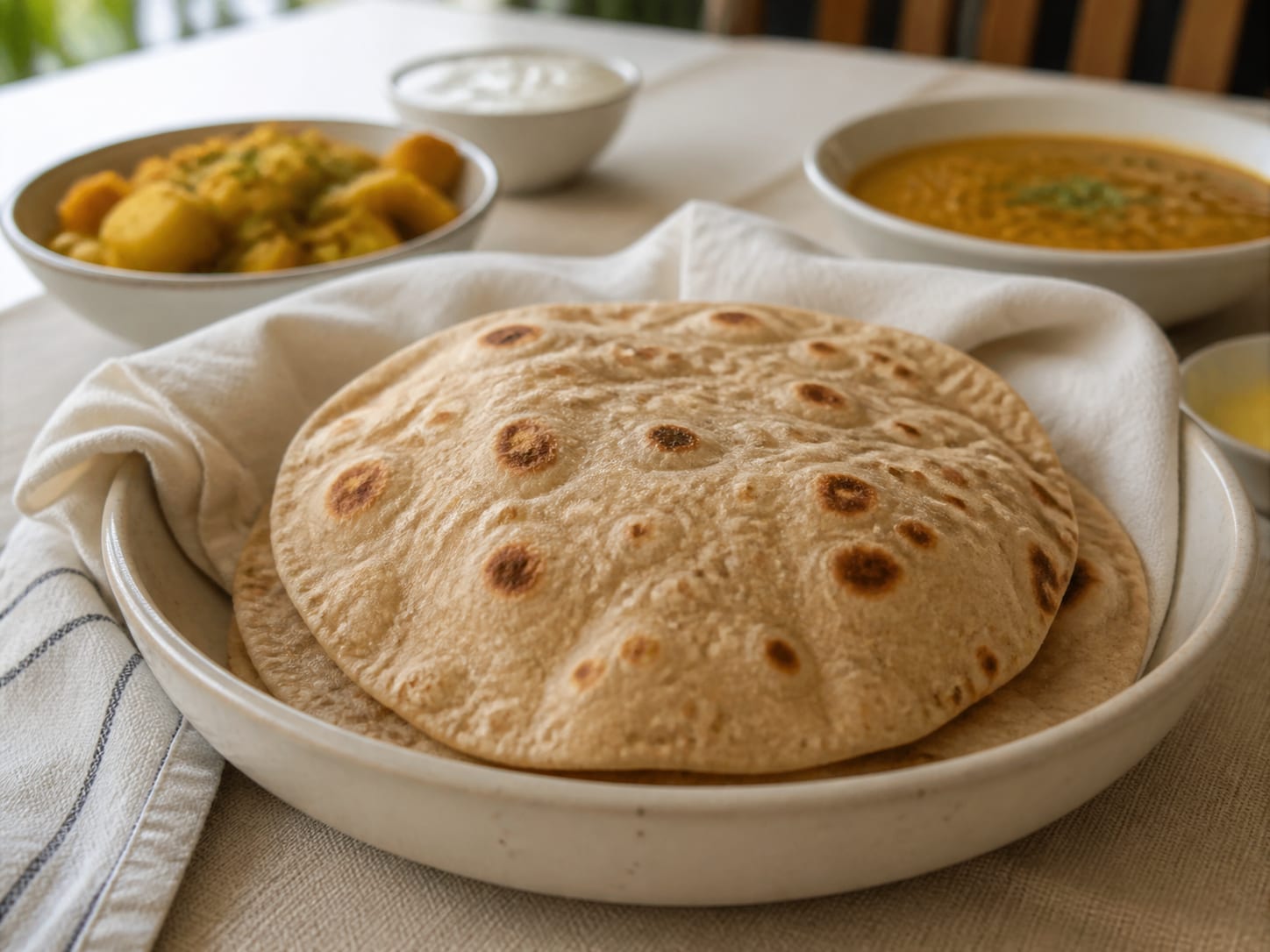
Chapati
Unleavened Indian flatbread rolled thin and cooked in a dry, very hot pan, the dough rested for at least 30 minutes so the gluten relaxes enough to roll out thin without springing back. Pressing the edges of each chapati gently with a folded cloth while it's in the pan is the traditional trick that makes them puff up with steam instead of staying flat.
Prep15 min
Cook25 min
Rest30 min
Servings4
Christoph's chapati, the dough rested to relax the gluten and the edges pressed in the pan so they puff with steam.
Ingredients
Units
Temperature
Servings
Chapati
- 300 g whole wheat flour rounded
- 180 ml water, lukewarm, plus more as needed rounded
- 5 g fine salt rounded
- 15 ml neutral oil rounded
- 20 g butter or ghee, for brushing, optional (optional) rounded
Dietary labels are a guide, not a guarantee. If you have an allergy, read the ingredients yourself.
Method
- Combine the flour and salt in a bowl. Add the water gradually, mixing until a soft, slightly sticky dough forms. Knead in the oil for 5 minutes, until smooth.
- Cover and let rest for at least 30 minutes, so the gluten relaxes.
- Divide into 8 pieces and shape each into a ball. Roll each ball out thin on a lightly floured surface, into a circle about 18 to 20 cm across.
- Heat a dry, heavy pan over high heat until very hot. Cook one chapati at a time, about 30 to 45 seconds per side, until small brown spots appear.
- Using a folded cloth, gently press the edges of the chapati while it’s still in the pan, working around the circle. This encourages it to puff up with trapped steam.
- Brush with butter or ghee if using, and keep warm, wrapped in a cloth, while cooking the rest.
Notes
- Rest the dough for the full 30 minutes. Skipping this leaves the gluten too tight to roll out thin without springing back, resulting in thicker, tougher chapatis.
- Get the pan properly hot before the first chapati goes in. A pan that isn’t hot enough won’t create the burst of steam needed to puff the bread; it’ll just dry out and go leathery.
- Press the edges gently with a cloth, not your fingers. This is the traditional technique for encouraging the steam pocket that makes a proper chapati puff up like a small balloon.
- Best eaten fresh and warm, though leftovers reheat reasonably in a dry pan.
Ingredient substitutions
- Whole wheat flour is traditional; a mix of whole wheat and all-purpose flour gives a slightly softer result if you prefer.
- Ghee is the classic finishing brush, giving a richer flavour than butter or oil.
- Serve alongside any curry or dal as a scooping bread.
From Christoph Mayer