Dessert VietnameseSoutheast Asian VegetarianVeganGluten-freeDairy-free coconutpulsesmake-aheadGluten-free
Chè ba màu (Vietnamese three-color dessert)
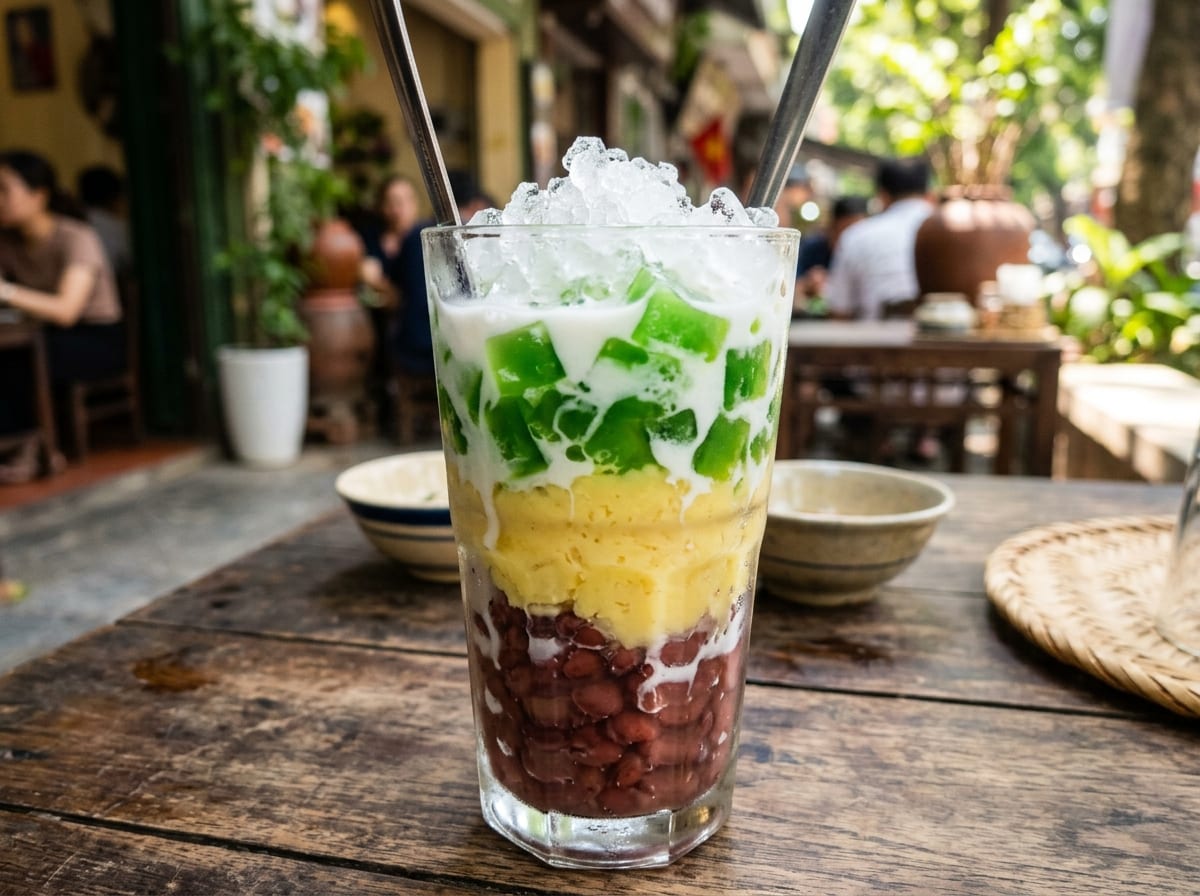
A chilled Vietnamese layered dessert served in a tall glass: sweetened red beans on the bottom, mung bean paste in the middle, chewy pandan jelly cubes on top, all under crushed ice with a pour of coconut milk. Stir it all together before the first spoonful.
Prep25 min
Cook75 min
Rest120 min
Servings4
Layer proportions and technique adapted from Hungry Huy and Wandercooks' chè ba màu recipes
Ingredients
Units
Temperature
Servings
Red bean layer
- 150 g dried adzuki (red) beans, rinsed; sold as adzuki or red mung beans at Asian grocers rounded
- 900 ml water, for boiling rounded
- 70 g granulated sugar rounded
- 1 g fine sea salt, a pinch, to round out the sweetness rounded
Mung bean layer
- 100 g dried split, hulled mung beans, yellow mung beans, sold already split and hulled rounded
- 500 ml water, for cooking rounded
- 60 g granulated sugar rounded
- 1 g fine sea salt, a pinch, to round out the sweetness rounded
Pandan jelly layer
- 500 ml water rounded
- 4 g agar agar powder, not gelatine; agar sets firm enough to hold a clean cube rounded
- 70 g granulated sugar rounded
- 5 ml pandan extract or paste, or 60 g fresh pandan leaves, blended with 200 ml of the water above and strained, if you can find them; extract is the honest substitute most cooks outside Southeast Asia will reach for, and it tastes noticeably less grassy than fresh leaves rounded
Coconut sauce
- 250 ml full-fat coconut milk, canned, well shaken rounded
- 40 g granulated sugar rounded
- 3 g cornstarch rounded
- 1 g fine sea salt, a pinch rounded
To serve
- to taste crushed ice, plus more as needed rounded
Dietary labels are a guide, not a guarantee. If you have an allergy, read the ingredients yourself.
Method
Sweeten the red beans
- Rinse the adzuki beans until the water runs mostly clear. No soaking needed.
- Put the beans and 900 ml water in a pot, bring to a boil, skim off any foam, then cover, reduce heat, and simmer 45 to 55 minutes, until a bean mashes easily between two fingers.
- Drain off most of the cooking liquid, leaving a couple of tablespoons in the pot. Stir in the sugar and salt and cook over low heat, stirring often, until the liquid reduces to a light syrup that coats the beans, 5 to 8 minutes. Cool to room temperature, then cover and refrigerate.
Cook and mash the mung beans
- Rinse the split mung beans in a few changes of water. They are already hulled and split, so they do not need soaking.
- Put the beans and 500 ml water in a small pot, bring to a boil, then reduce heat and simmer uncovered, stirring occasionally, 20 to 25 minutes, until fully soft and starting to fall apart. Add a splash more water if the pot looks dry before the beans are done.
- Off the heat, stir in the sugar and salt, then mash the beans against the side of the pot with a spoon or a bean masher until you have a thick, mostly smooth paste. Loosen with a spoonful of water if it is stiff. Cool, then cover and refrigerate.
Set the pandan jelly
- Combine the water, agar powder, and sugar in a small pot and whisk to dissolve as much of the agar as you can before it heats. Bring to a boil, whisking, and boil for 1 to 2 minutes, until the agar is fully dissolved (rub a drop between two fingers; it should feel smooth, not grainy).
- Off the heat, stir in the pandan extract until the color is even throughout.
- Pour into a shallow dish, roughly 15 by 20 cm. Let cool at room temperature until a skin forms, then refrigerate, uncovered, at least 2 hours, until firmly set and springy to the touch.
- Turn the jelly out and cut into roughly 1 cm cubes.
Make the coconut sauce
- Whisk the cornstarch with a tablespoon of the coconut milk in a small bowl to a smooth, lump-free slurry.
- Warm the remaining coconut milk, sugar, and salt in a small saucepan over medium heat, whisking, until the sugar dissolves and the milk is steaming. Do not let it come to a hard boil.
- Whisk in the cornstarch slurry and cook, stirring constantly, 1 to 2 minutes, until the sauce thickens enough to coat the back of a spoon in a thin, pourable film. Remove from the heat and cool completely; it thickens a little further as it sits.
Layer and serve
- Spoon a layer of sweetened red beans into the bottom of each tall glass, followed by a layer of mung bean paste, then a layer of pandan jelly cubes.
- Fill the rest of each glass with crushed ice.
- Finish with a generous pour of coconut sauce over the ice.
- Serve at once with a long spoon, and tell whoever is eating it to stir everything together before the first bite. The layers look nicer left alone, but the dessert only makes sense stirred.
Notes
- Fresh pandan leaves give a rounder, grassier flavor than extract, but they are hard to find outside Southeast Asian grocers. If you do find them, blend 60 g of leaves with 200 ml of the jelly’s water, strain through a fine sieve or cheesecloth, and use that liquid in place of the extract. Pandan extract or paste, sold in small bottles, is the honest and widely available substitute, and this recipe is written for it.
- The three components keep well on their own, covered, in the fridge for up to 3 days. That makes this a genuine make-ahead dessert, but only assemble it right before serving; stacked in a glass, the ice melts into the layers and the jelly softens within an hour.
- A can of pre-sweetened red bean paste, sold at Asian grocers, is a reasonable shortcut for the red bean layer if you are short on time. It is sweeter and softer than beans cooked from dried, and worth knowing about even though this recipe cooks its own.
Sources Consulted
- Hungry Huy, “Chè Ba Màu (Vietnamese Three Color Dessert)”
- Wandercooks, “Chè Ba Màu (Vietnamese Three Colour Dessert)”
Sources consulted
The three-layer structure, agar-based jelly method, and coconut sauce thickening technique come from the sources. Bean-cooking method, quantities scaled for four glasses, and wording are original.
From Christoph Mayer