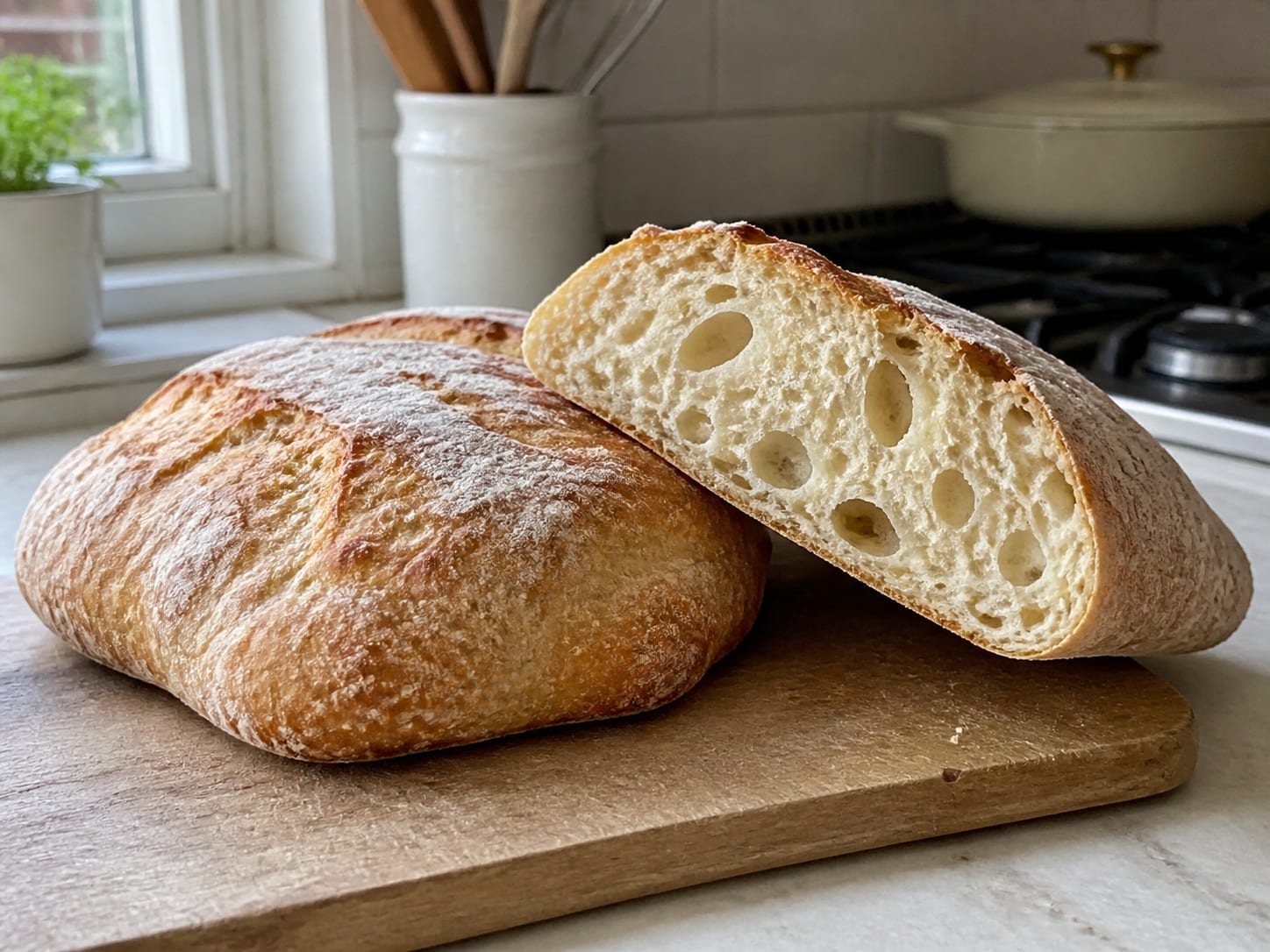
Ciabatta
An Italian bread built on a very wet dough and a long, slow overnight ferment rather than kneaded stiff and proofed quickly, which is what gives ciabatta its irregular, open crumb full of large holes. Handling the wet dough with wet hands and a light touch, folding rather than kneading it into shape, is what keeps the air bubbles built up overnight from being pressed back out.
Christoph's ciabatta, the wet dough handled with a light touch to keep the overnight-built air bubbles intact.
Ingredients
Units
Temperature
Servings
Biga (pre-ferment)
- 200 g flour rounded
- 130 ml water rounded
- 1 g instant yeast rounded
Final dough
- 300 g flour rounded
- 250 ml water, room temperature rounded
- 3 g instant yeast rounded
- 10 g fine salt rounded
- 15 ml olive oil rounded
Dietary labels are a guide, not a guarantee. If you have an allergy, read the ingredients yourself.
Method
- The night before, mix the biga ingredients into a shaggy paste. Cover and let ferment at room temperature for 12 to 16 hours, until bubbly and domed.
- The next day, combine the biga with the flour, water and yeast for the final dough. Mix until roughly combined; the dough will be very wet and sticky.
- Add the salt and olive oil. Mix with wet hands or a dough scraper for 5 minutes, using a stretch-and-fold motion rather than kneading, until the dough starts to show some structure.
- Cover and let rise for 2 hours, folding the dough over itself gently every 30 minutes, using wet hands.
- Turn the dough out onto a heavily floured surface. Divide into 2 pieces, handling gently to avoid deflating it. Shape each into a rough rectangle and transfer to a floured sheet or peel.
- Let rest, covered, for 45 minutes. Preheat the oven to 230°C (fan) with a baking stone or upside-down tray inside, if you have one.
- Bake for 22 to 25 minutes, until the crust is deeply golden and blistered and the internal temperature reads at least 96°C. Cool completely on a rack before slicing.
Notes
- This dough is meant to be very wet, wetter than feels right. That high hydration is exactly what creates ciabatta’s characteristic large, irregular holes; a stiffer dough gives a tighter, more even crumb, which isn’t the point here.
- Handle the dough with wet hands, not more flour. Adding flour to make it easier to handle changes the hydration and the final texture; wetting your hands instead lets you work with the dough as intended.
- Fold gently rather than kneading. The goal after the bulk rise is to preserve the air already built up overnight, not develop more structure through vigorous kneading.
- It’s best eaten the day it’s baked; day-old ciabatta is excellent toasted or turned into bruschetta.
Ingredient substitutions
- This bread doesn’t take well to substitutions; the ratio of flour to water is what defines it, so resist the urge to add more flour even when the dough feels unmanageable.
- A little semolina dusted on the peel or sheet instead of flour gives a slightly crisper base.
- Fresh herbs or olives folded in gently during shaping are a traditional variation.
From Christoph Mayer