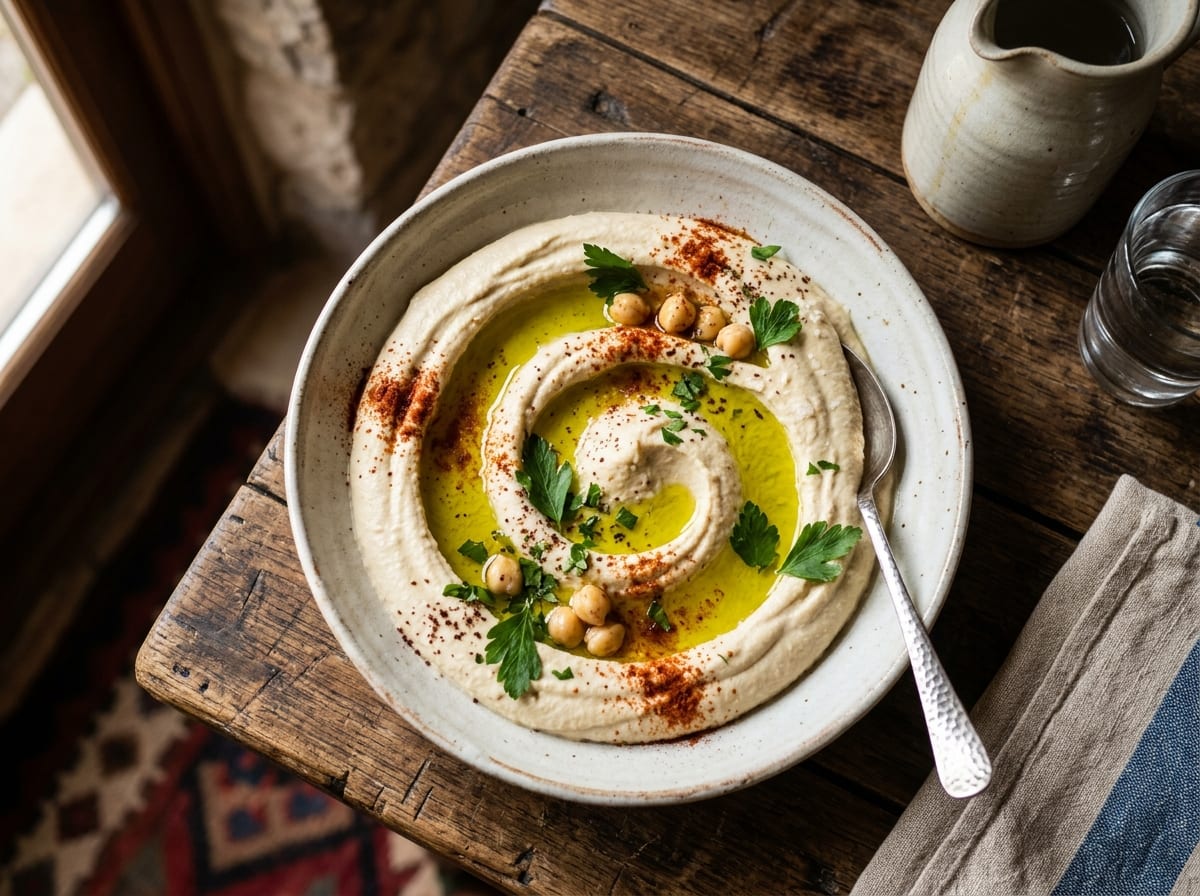
Smooth hummus
The pale, whipped, tahini-heavy Levantine style, made from dried chickpeas cooked until they collapse. Three things separate this from the grainy supermarket version, and none of them is the blender. Baking soda, far more tahini than looks right, and ice water.
Prep20 min
Cook75 min
Rest480 min
Servings8
Levantine method, tahini-forward and whipped with ice water
Ingredients
Written for a 4 L pot
Units
Temperature
Servings
The chickpeas
- 250 g dried chickpeas, dried, not tinned; this is the one substitution that changes the result rounded
- 8 g bicarbonate of soda, half for the soak and half for the pot rounded
The hummus
- 200 g tahini, more than most recipes use, and stirred smooth before weighing rounded
- 80 ml lemon juice, fresh, and about two lemons rounded
- 2 garlic cloves, steeped in the lemon juice and then strained out; see the notes rounded
- 120 ml ice water, genuinely iced, and added last rounded
- 10 g fine salt rounded
- 3 g ground cumin rounded
To serve
- 40 ml olive oil, a good one, poured into the well at the table rounded
- to taste paprika, sumac or whole chickpeas rounded
Dietary labels are a guide, not a guarantee. If you have an allergy, read the ingredients yourself.
Method
- Soak the chickpeas overnight in plenty of cold water with half the bicarbonate of soda. They will roughly triple.
- Drain, cover with fresh water, add the rest of the bicarbonate, and boil hard for 5 minutes, skimming the grey foam.
- Simmer 60 to 75 minutes until they are falling apart. Cook them well past the point that feels correct. Most of the skins will float free; scoop off what you can, but do not try to peel them all by hand.
- Steep the sliced garlic in the lemon juice for 10 minutes, then strain the garlic out and keep the juice. This is the difference between hummus that tastes of garlic and hummus that burns your throat on day two.
- Blend the tahini with the lemon juice, salt and cumin first, on its own. It will seize into a stiff pale paste, which is correct and alarming the first time.
- Add the hot drained chickpeas and blend for a full 3 minutes. Longer than you think.
- Pour the ice water in slowly with the motor running until it goes pale, glossy and slack. It should be looser than you want, because it firms up as it cools.
- Serve warm or at room temperature, spread into a bowl with a deep well, oil poured in.
Why it works
- Bicarbonate of soda raises the pH, which breaks down pectin in the chickpea walls and makes them collapse far faster than water alone. It also loosens the skins, which are the single biggest cause of grainy hummus.
- Blending tahini with acid before anything else breaks the sesame emulsion and rebuilds it, which is why the mixture seizes and then goes pale.
- Ice water rather than tap water. Cold whips more air in and keeps the tahini from splitting under the friction of a long blend.
- Hot chickpeas blend smoother than cold ones, so do not let them cool while you set up.
Notes
- Tinned chickpeas make acceptable hummus and not this hummus. If you use them, simmer them for 20 minutes with a teaspoon of bicarbonate first. They will never fully collapse.
- Tahini is most of the flavour, so buy a good one. It should pour, taste nutty rather than bitter, and be stirred thoroughly from the bottom of the jar before weighing.
- Never serve it fridge-cold. Cold hummus is dense and tastes of almost nothing. Take it out half an hour before, or warm it gently.
- It keeps 5 days covered with a film of olive oil, and freezes for 3 months.
Ingredient substitutions
- Tahini varies enormously. Lebanese and Palestinian brands are the benchmark and are usually smoother and less bitter than supermarket own-label. If yours is bitter, more lemon will not fix it.
- Bicarbonate of soda is Natron in Germany, sold in small paper sachets in the baking aisle. It is not the same as baking powder, which will not work.
Sources consulted
Good with
Sources consulted
From Christoph Mayer