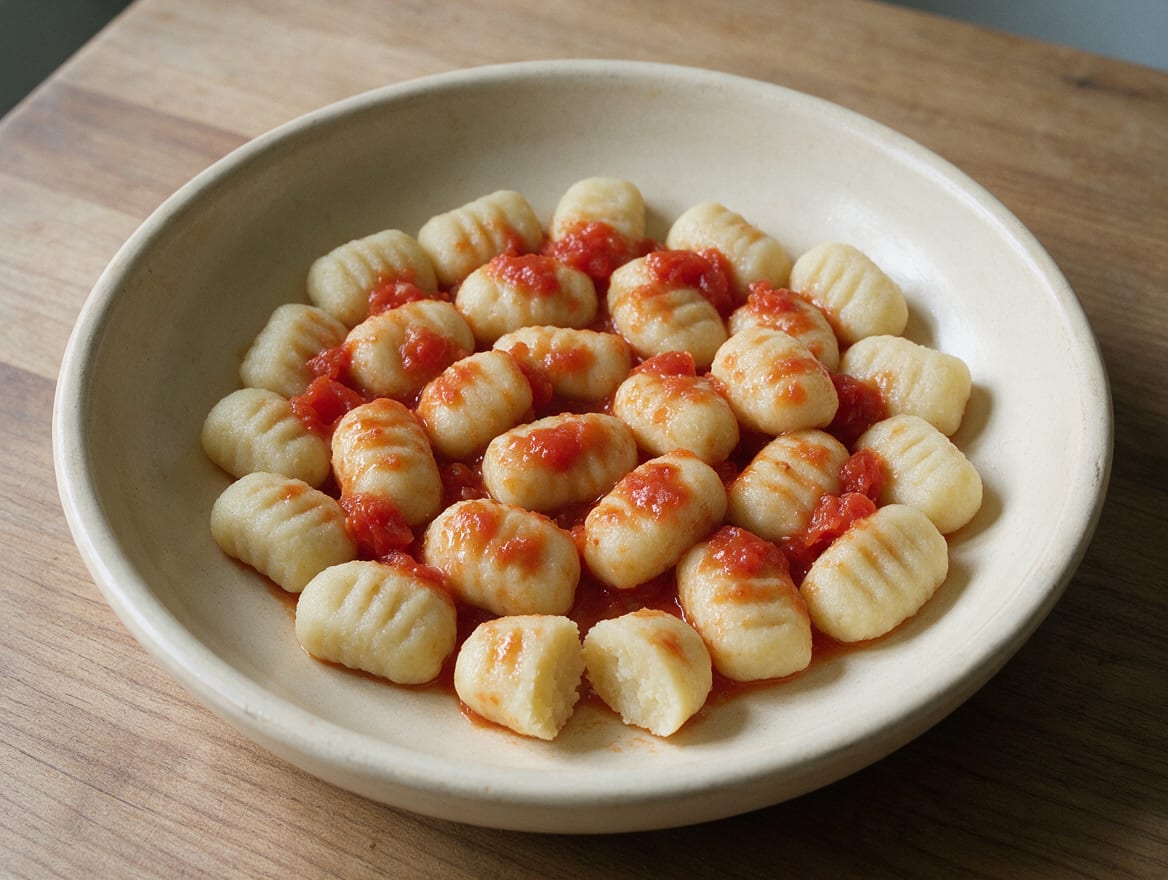
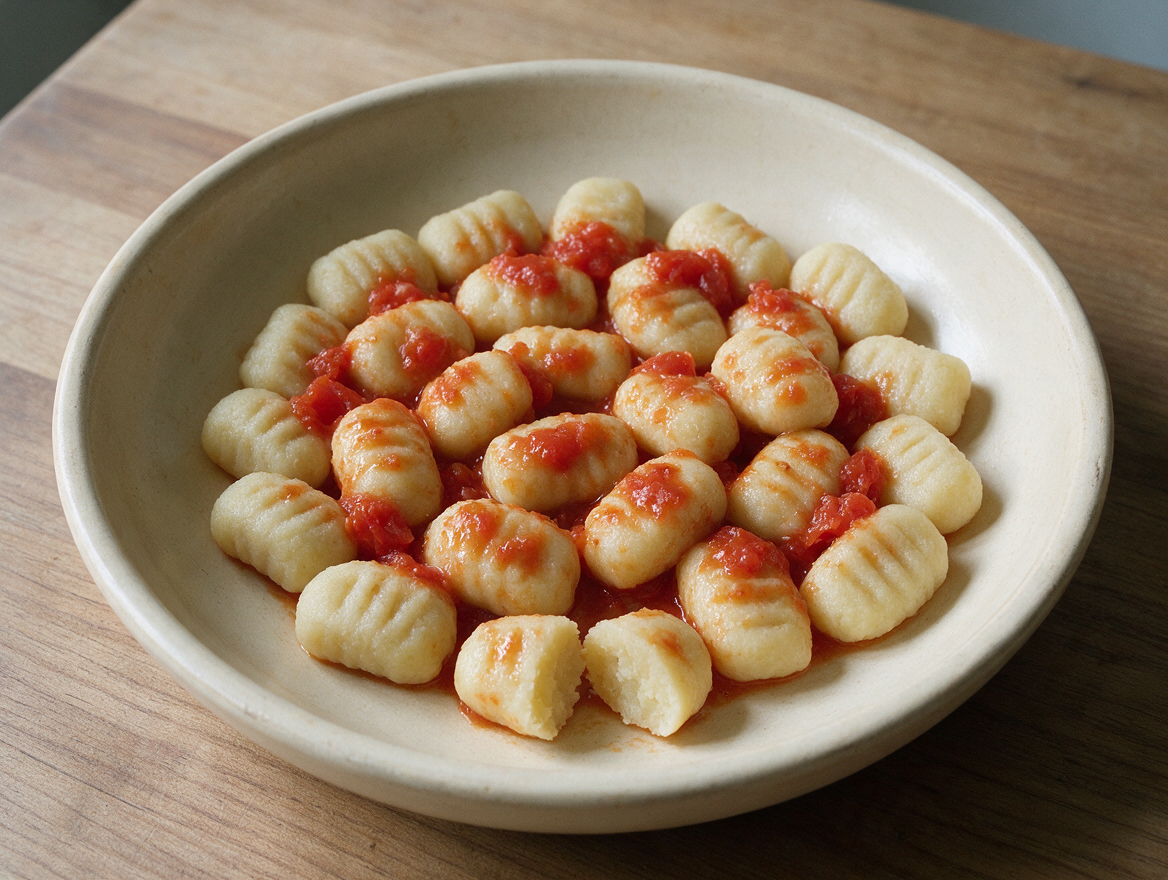
Classic potato gnocchi
Light Italian potato dumplings made from dry floury potatoes, minimal flour, and one egg, with practical moisture controls for reliable shaping.
Prep50 min
Cook60 min
Servings4
Adapted from La Cucina Italiana and GialloZafferano potato gnocchi techniques, with explicit potato-moisture controls.
Ingredients
Written for a 46 cm baking sheet
Units
Temperature
Servings
Gnocchi
- 1 kg dry floury potatoes, similar in size, scrubbed, skins left on rounded
- 180 g Italian 00 flour or plain flour, plus up to 60 g only if the potatoes demand it rounded
- 1 egg, about 50 g without shell, lightly beaten rounded
- 10 g fine salt rounded
- 60 g fine semolina, for dusting the trays rounded
Dietary labels are a guide, not a guarantee. If you have an allergy, read the ingredients yourself.
Method
- Heat the oven to 200°C. Pierce the potatoes once each and bake them directly on a rack for 50 to 65 minutes, until a thin knife passes through without resistance. Baking keeps them drier than boiling. The exact time depends on size.
- While the potatoes are hot enough to steam, split them and scoop out the flesh. Pass it through a potato ricer onto a clean work surface in a thin layer. Expect roughly 750 to 800 g flesh. Let visible steam escape for 5 minutes, but do not let the potatoes become cold.
- Sprinkle 180 g flour and the salt evenly over the warm potato. Drizzle over the beaten egg. Cut and fold with a bench scraper, then bring together gently by hand just until a soft dough forms. Do not knead. Add extra flour 15 g at a time only if the dough remains wet enough to stick heavily to clean hands.
- Bring a small saucepan of salted water to a gentle boil. Pinch off one piece, shape it, and test-boil it. It should hold together, float, and taste tender rather than gummy. If it dissolves, fold another 15 g flour into the dough and test again.
- Dust two 46 cm sheet pans lightly with semolina. Divide the dough into eight pieces. On a lightly floured surface, roll each into a rope about 2 cm thick, then cut into 2 cm pillows. Leave plain or roll each gently over a gnocchi board or fork. Place in a single layer on the trays without touching.
- To cook, bring a wide pot of well-salted water to a gentle boil. Add the gnocchi in batches so the water does not cool sharply. Stir once. As they rise to the surface, wait about 30 seconds, then lift them with a slotted spoon directly into warm sauce. Taste the first one because size and potato moisture affect timing.
Ingredient substitutions
- In Germany, choose mehligkochende Kartoffeln. Waxy festkochende potatoes retain more moisture and make denser gnocchi that require more flour.
- In Canada, russet potatoes are the most reliable choice. Yukon Gold potatoes can work but are moister and usually need a little more flour, producing a slightly heavier result.
- German Weizenmehl Type 405 and Canadian all-purpose flour both replace Tipo 00. Add by feel, not automatically to the 240 g ceiling. Strong Canadian flour develops more gluten, so handle it especially briefly.
Notes
- The starting potato weight includes the skins. If the riced flesh is far above 800 g, scale the initial flour proportionally; if it is below 750 g, hold back some flour.
- A light dough comes from dry potatoes and minimal handling. More kneading and more flour both make the dumplings firm.
- To freeze, place the uncooked tray in the freezer until the gnocchi are hard, then transfer them to a sealed bag for up to 2 months. Boil from frozen without thawing. Refrigerated cooked gnocchi keep up to 3 days, but their texture deteriorates.
Sources consulted
Good with
- Basil-pistachio pesto
- Christoph's sage and thyme brown butter spaghetti
- Italian-style marinara tomato sauce
Sources consulted
The flour ceiling is a safeguard, not a target; the riced potato yield and test-boil step determine the final flour need.
From Christoph Mayer