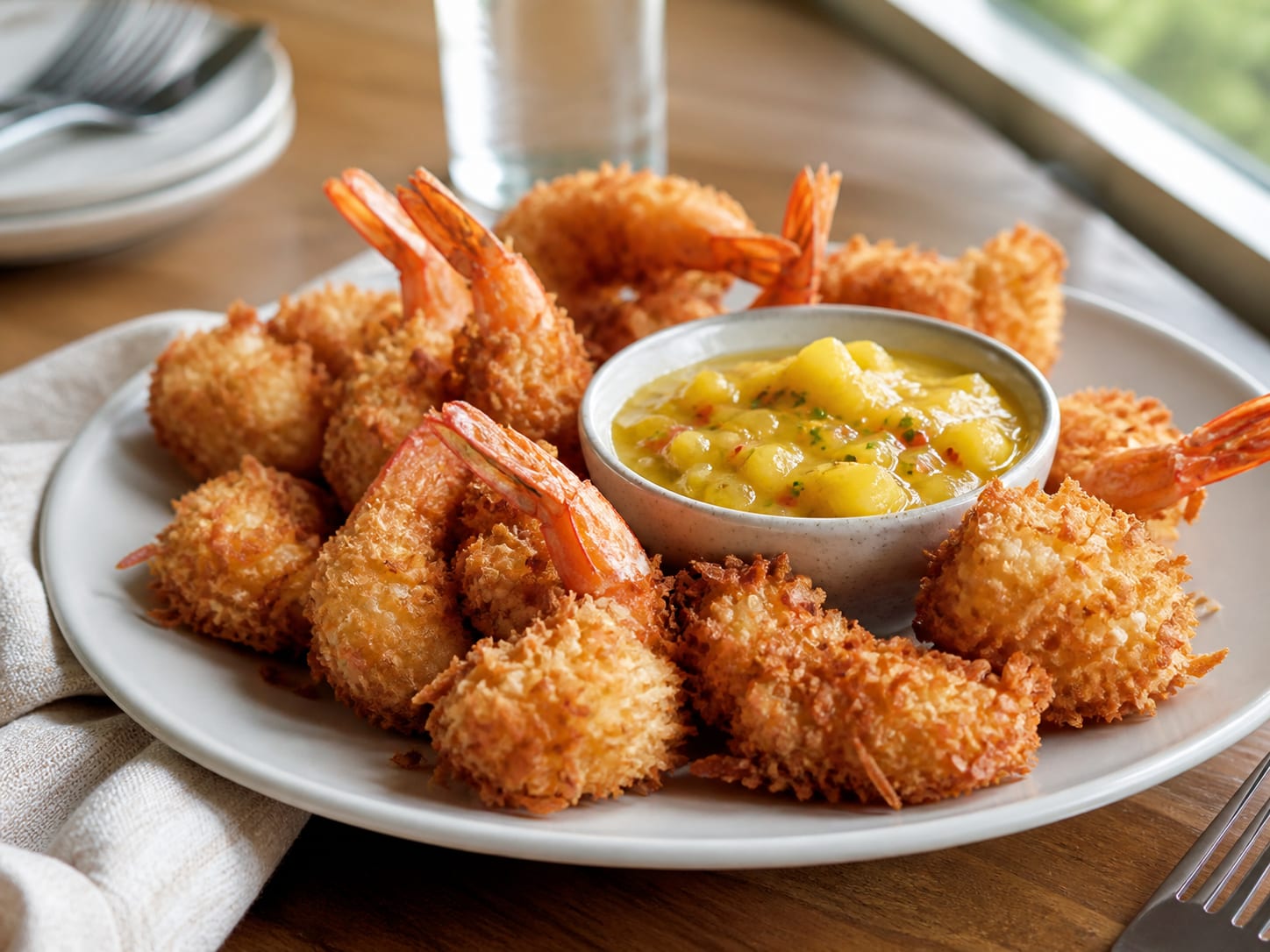
Coconut shrimp with pineapple dipping sauce
Panko and coconut crusted shrimp fried until golden and served with a warm, sweet-tangy fresh pineapple sauce.
Research-based adaptation combining panko-coconut breading and deep-frying technique with a simmered fresh pineapple sauce
Ingredients
Written for a 2 L pot
Units
Temperature
Servings
Coconut shrimp
- 500 g raw shrimp, peeled and deveined, tails left on, about 16 to 20 large shrimp rounded
- 60 g plain flour rounded
- 3 g fine salt rounded
- 1 g black pepper rounded
- 2 large eggs, beaten rounded
- 90 g panko breadcrumbs rounded
- 90 g sweetened shredded coconut rounded
- 1 L neutral oil, for deep-frying rounded
Pineapple dipping sauce
- 300 g fresh pineapple, finely chopped or pulsed to a chunky puree rounded
- 50 g sugar rounded
- 30 ml rice vinegar rounded
- to taste small red chile, finely chopped, seeds removed for less heat, or 1/2 tsp chili flakes (optional) rounded
- to taste fine salt (optional) rounded
Dietary labels are a guide, not a guarantee. If you have an allergy, read the ingredients yourself.
Method
- Make the pineapple sauce first. Combine the chopped pineapple, sugar, rice vinegar, and chile in a small saucepan. Bring to a gentle boil over medium-high heat, stirring occasionally, then lower the heat and simmer for 8 to 10 minutes, until jammy and thick enough to coat the back of a spoon. Season with a pinch of salt to taste, then set aside to cool slightly; serve warm or at room temperature.
- Set up a breading station. Put the flour, salt, and pepper in one shallow bowl. Beat the eggs in a second bowl. Combine the panko and shredded coconut in a third bowl.
- Bread the shrimp. Pat the shrimp dry. Holding each by the tail, dredge it in the flour mixture and shake off the excess, dip it in the beaten egg, then press it firmly into the panko-coconut mixture so the coating clings on both sides. Set the breaded shrimp on a tray or wire rack as you go; don’t stack them.
- Heat the oil. Pour the oil into a heavy pot to a depth of about 5 cm and heat it to 175°C. Use a thermometer, or test with a pinch of panko: it should sizzle and rise immediately.
- Fry in small batches. Lower 5 to 6 shrimp at a time into the oil, holding each close to the surface before releasing it. Fry for 2 to 3 minutes, turning once, until the coating is deep golden and the shrimp are opaque and curled into a tight “C”. Lift out with a slotted spoon or spider and drain on a wire rack or paper towels. Let the oil come back up to 175°C between batches.
- Serve immediately. Pile the hot shrimp on a platter and serve with the warm pineapple sauce alongside for dipping.
Notes
- Do not crowd the pot. Frying more than 5 to 6 shrimp at once drops the oil temperature, which makes the coating greasy and slow to crisp instead of golden and light.
- Coconut browns fast because it’s already partly toasted. If the oil creeps much above 175°C, the coating will scorch before the shrimp inside reaches a safe temperature; keep a thermometer in the oil and pull a batch a few seconds early if the coating is browning quickly.
- Shrimp themselves cook in 2 to 3 minutes; the coating is done at the same time the shrimp is, so there’s no need to fry longer for a “safer” result. Look for opaque flesh curled into a “C” shape, not a straight or loosely curled shrimp, which usually means it’s undercooked.
- The shrimp can be breaded up to 4 hours ahead and kept uncovered on a tray in the refrigerator; frying straight from cold helps the coating set before the outside overbrowns. Fried shrimp are best eaten within 15 minutes; they don’t reheat well since the coating turns chewy.
- The pineapple sauce keeps in a sealed container in the refrigerator for up to 5 days and can be made a day ahead; rewarm gently or serve cold.
Ingredient substitutions
- Shrimp: Fresh or frozen shrimp both work well here, and both are widely available in Germany and Canada; if using frozen, thaw fully in the refrigerator and pat very dry before breading so the coating sticks. Where you can, choose wild-caught shrimp or a farmed shrimp carrying a sustainability certification such as ASC. Shrimp size doesn’t change the method, just the fry time: smaller shrimp cook faster and need closer watching so the coating doesn’t overbrown before they’re done.
- Sweetened shredded coconut: Sold at most supermarkets in the baking aisle in both regions, or at Asian grocers. Unsweetened desiccated coconut is a fine substitute; it’s drier and less sweet, so stir an extra 10 g sugar into the panko-coconut mixture to keep the coating from tasting flat.
- Fresh pineapple for the sauce: Canned crushed pineapple in juice (drained of excess liquid) is an honest substitute for fresh in both regions; use the same 300 g weight. It has a slightly softer texture and is less acidic than fresh, so taste the finished sauce and add a touch more vinegar if it seems flat.
Sources consulted
- Cooking for My Soul: Fried Coconut Shrimp
- Evolving Table: Coconut Fried Shrimp with Pineapple Sauce
- The Short Order Cook: Pineapple Dipping Sauce for Coconut Shrimp
- Amoretti: Coconut Shrimp with Pineapple Sauce
Sources consulted
From Christoph Mayer