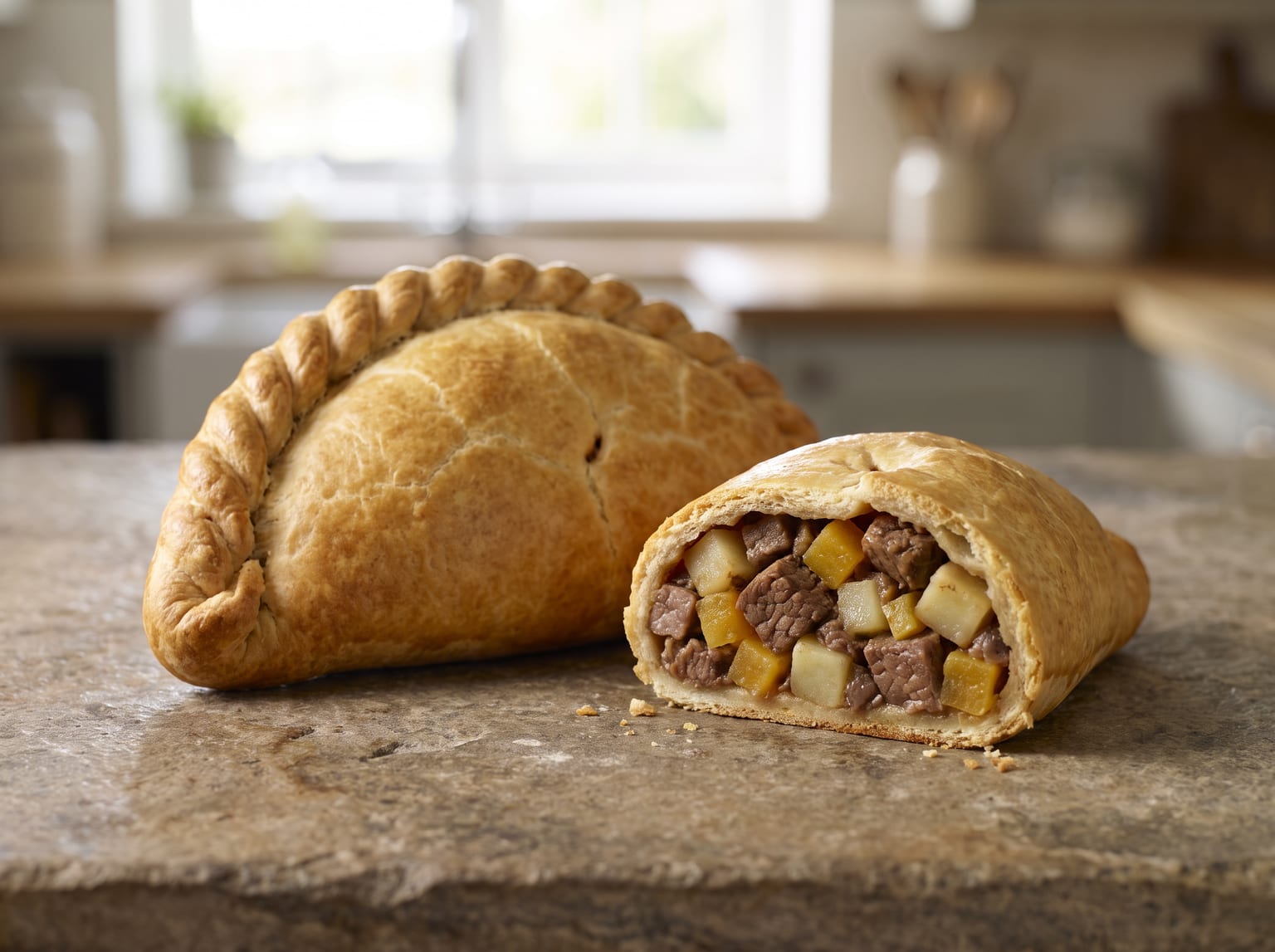
Cornish Pasty
A proper Cornish pasty, the beef, potato, swede and onion left raw and layered into the pastry rather than pre-cooked, since the traditional pasty is built to cook everything together inside a sealed parcel and pre-cooked filling only overcooks by the time the pastry is done. Crimping the edge by hand along the top rather than pinching it flat along the side is what gives a pasty its proper rope-twist seal and lets it stand upright without leaking.
Prep45 min
Cook50 min
Rest30 min
Servings4
Christoph's Cornish pasty, the filling left raw and layered so everything cooks together inside the sealed pastry the way a proper pasty is meant to.
Ingredients
Written for a 30 × 40 cm baking sheet
Units
Temperature
Servings
Pastry
- 500 g flour rounded
- 6 g fine salt rounded
- 125 g cold butter, cubed rounded
- 125 g cold lard or vegetable shortening, cubed rounded
- 150 ml ice water, plus more as needed rounded
Filling
- 400 g beef skirt or chuck steak, cut into small, thin pieces rounded
- 350 g waxy potatoes, peeled, cut into 1 cm cubes rounded
- 250 g swede, peeled, cut into 1 cm cubes rounded
- 150 g onion, finely chopped rounded
- 40 g butter, cut into small pieces rounded
- to taste fine salt and black pepper rounded
- 1 egg, beaten, for egg wash rounded
Method
- Make the pastry. Rub the cold butter and lard into the flour and salt until it looks like coarse breadcrumbs. Add the ice water and mix just until a dough comes together. Flatten into a disc, wrap, and chill for 30 minutes.
- Preheat the oven to 190°C (fan). Roll the pastry to about 4 mm thick and cut into 4 large circles, about 22 cm across.
- Layer a quarter of the potato, swede, onion and beef down the centre of each circle, in that order, leaving a border clear. Season each layer with salt and pepper as you go. Dot with the butter.
- Brush the pastry edge with water. Bring the two sides up over the filling to meet at the top, and crimp along the top edge by hand, folding it over on itself in a rope twist rather than pinching it flat.
- Transfer to a lined sheet pan. Brush all over with beaten egg.
- Bake for 45 to 50 minutes, until deeply golden brown all over and a skewer slides easily through the vegetables. Tent with foil after 30 minutes if the pastry is browning too fast.
- Let rest for 10 minutes before eating, since the filling holds a lot of heat.
Notes
- Leave the filling raw rather than pre-cooking it. A traditional pasty is a sealed parcel that cooks everything together inside the pastry; filling that’s already cooked just overcooks further by the time the pastry is done, and the vegetables lose their texture.
- Cut everything small and thin. Large chunks of beef or potato won’t cook through in the time the pastry needs; keep pieces to about 1 cm so everything finishes together.
- Crimp along the top, not the side. A rope-twist crimp along the top ridge is what lets a pasty stand upright and hold its shape without leaking; pinching the edge flat along one side is a shortcut that tends to split.
- They keep well for 2 days and reheat in a low oven, though a Cornish pasty was originally designed to be eaten by hand, hot or cold, without reheating at all.
Ingredient substitutions
- Chuck steak works well in place of skirt if that’s easier to find; either should be cut small since it won’t be tenderised by long cooking.
- Rutabaga is the same vegetable as swede under a different name in some countries.
- A dash of Worcestershire sauce brushed into the layers before sealing is a modern addition, not traditional but good.
From Christoph Mayer