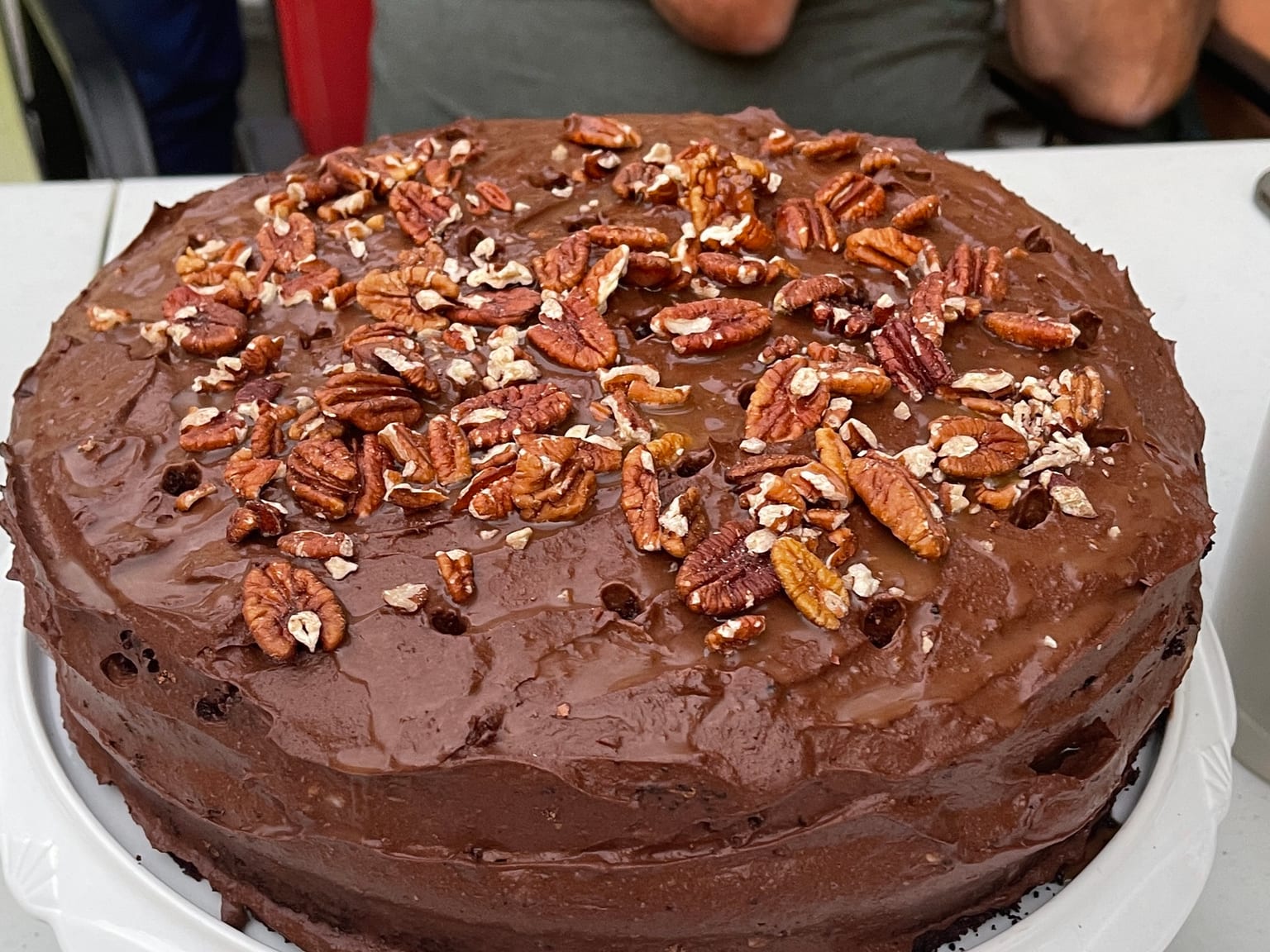
Double chocolate pecan cake
Cocoa in the crumb and melted dark chocolate in the frosting, with toasted pecans folded through so the cake has something to chew on. Hot coffee goes into the batter, which is what makes a cocoa cake taste of chocolate rather than of cocoa.
Reconstructed from Christoph's cake, built on the standard hot-liquid cocoa method
Ingredients
Written for a 23 cm round tin
Units
Temperature
Servings
Cake
- 260 g plain flour rounded
- 85 g cocoa powder, Dutch-processed, sifted; it clumps and the clumps do not beat out rounded
- 400 g granulated sugar rounded
- 8 g baking soda rounded
- 5 g baking powder rounded
- 5 g fine salt rounded
- 2 eggs, room temperature rounded
- 240 ml buttermilk rounded
- 120 ml neutral oil rounded
- 10 ml vanilla extract rounded
- 240 ml hot strong coffee, genuinely hot, poured in last; it blooms the cocoa rounded
- 150 g pecans, toasted and roughly chopped rounded
Chocolate frosting
- 250 g dark chocolate, 60 to 70 percent, chopped rounded
- 280 g unsalted butter, soft rounded
- 320 g icing sugar, sifted rounded
- 30 g cocoa powder rounded
- 60 ml whipping cream rounded
- 2 g fine salt rounded
To finish
- 100 g pecan halves, toasted rounded
- 60 g caramel sauce, shop-bought is fine, spooned over so it pools among the nuts rounded
Dietary labels are a guide, not a guarantee. If you have an allergy, read the ingredients yourself.
Method
- Prepare. Butter two 23 cm tins and line the bases. Heat the oven to 175°C. Brew the coffee and keep it hot: it goes in at the end and it needs to still be hot when it does.
- Toast the nuts. Pecans on a dry tray, 8 minutes at 175°C, and watch them. Raw pecans taste faintly of cardboard and turn the crumb slightly bitter; toasted, they taste of pecan. Cool them before they go anywhere near batter.
- Dry, then wet. Whisk the flour, cocoa, sugar, baking soda, baking powder and salt in a large bowl. In another, whisk the eggs, buttermilk, oil and vanilla.
- Pour the wet into the dry and whisk just to combine. Then pour in the hot coffee and whisk again: it will look alarmingly thin, closer to a batter for pancakes than for cake. That is correct and it is why the cake stays moist. Fold in the chopped pecans last.
- Bake. Divide between the tins and bake at 175°C for 30 to 35 minutes, until the middle springs back and a skewer has moist crumbs on it. Cool in the tins 15 minutes, then turn out and cool completely. These layers are tender while warm and will tear if you rush them.
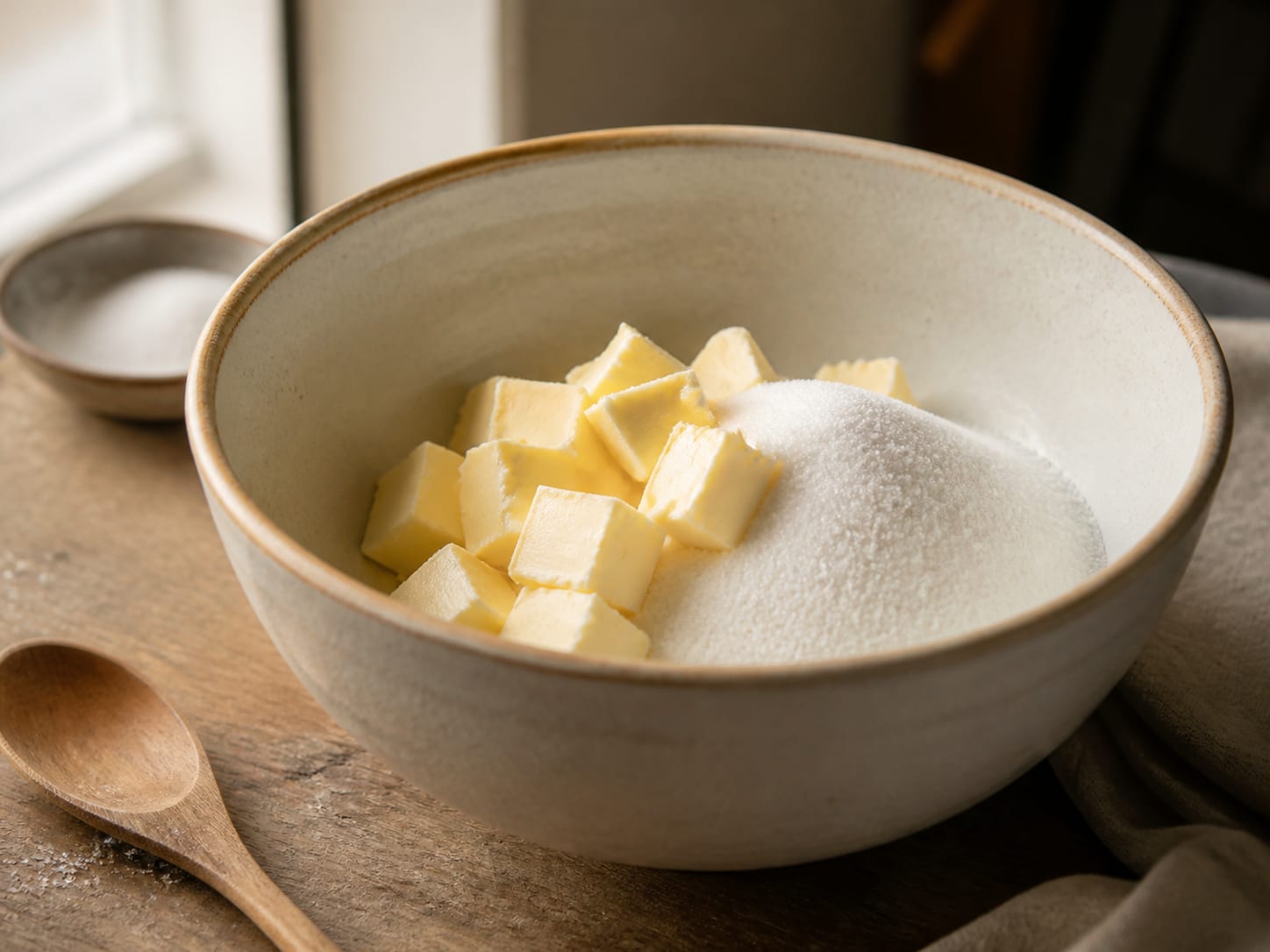
- Frosting. Melt the chocolate gently and let it cool until it is fluid but no longer warm to the touch. Beat the butter for 3 minutes until pale, then add the icing sugar and cocoa in two goes, then the cream and salt. Beat in the cooled chocolate last, on low, for 30 seconds. Warm chocolate will loosen the butter and give you a frosting that never firms up.
- Assemble. First layer, a generous third of the frosting, second layer on top. Cover the top and sides, leaving it rough and swirled rather than smooth: this is a cake that suits looking homemade.
- Finish. Scatter the toasted pecans over the top and spoon the caramel over so it pools between them. Let it stand an hour before cutting, so the frosting sets enough to slice cleanly.
Notes
- Which nut, and where. Chopped pecans go through the crumb and pecan halves go on top, where they stay whole under the caramel. Walnuts work in the crumb if that is what you have, and are sharper against the chocolate. Toast whatever you use.
- The coffee. It does not make the cake taste of coffee. Cocoa is full of aromatic compounds that only release in hot liquid, and coffee happens to carry them better than water. Decaf works. Hot water works and is a little flatter.
- Buttermilk. Acidic, which the baking soda needs to lift the cake and which keeps the crumb tender. If you have none, stir 15 ml of lemon juice into 240 ml of milk and leave it 10 minutes.
- Getting ahead. Layers keep 2 days wrapped, or 2 months frozen. The frosting keeps 3 days in the fridge and needs an hour out and a brief re-beat before it will spread.
- Cutting it. A long knife, wiped between slices. Chocolate frosting drags every crumb it meets across the next cut face.
Ingredient substitutions
- Dutch-processed cocoa is the dark, mellow one and is standard in Germany. Natural cocoa is more acidic and lighter in colour; the cake still works but comes out redder and sharper, and rises a touch more.
Sources consulted
Good with
Sources consulted
The photograph is Christoph's own.
From Christoph Mayer