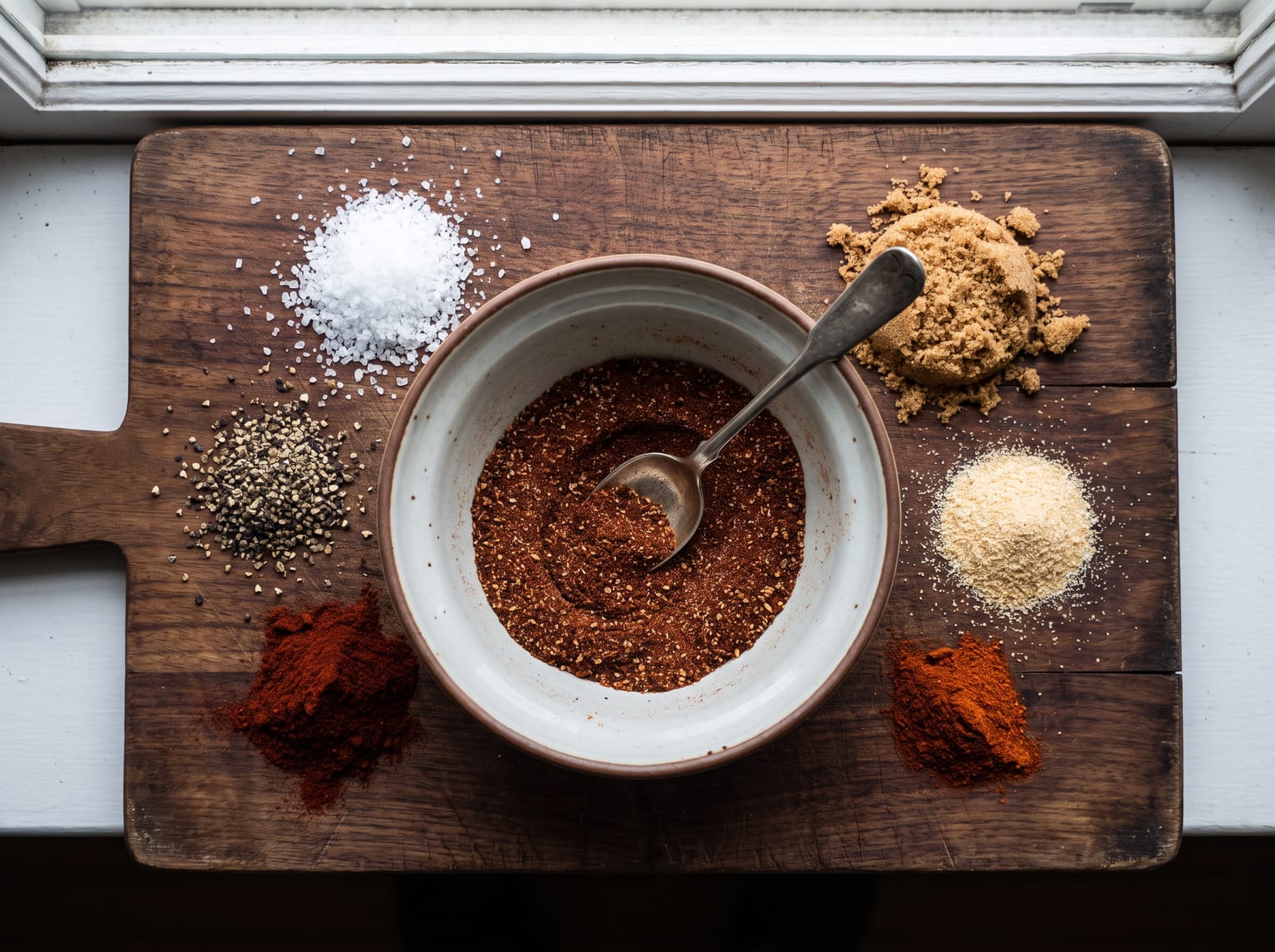
Barbecue dry rubs, by ratio
One ratio behind every rub, and a table of what changes for beef, pork, chicken, salmon and ribs. The variable that actually matters is sugar, because sugar burns and the cooking temperature decides how much you can get away with.
The house ratio, written so the per-protein versions are one column each
Ingredients
The ratio
- 60 g coarse salt, 3 parts; the one ingredient that is never optional rounded
- 60 g sweet paprika, 3 parts; colour and body rounded
- 40 g dark brown sugar, 2 parts, and the number that changes most; see the table rounded
- 40 g coarse black pepper, 2 parts rounded
- 20 g garlic granules, 1 part rounded
- 20 g onion granules, 1 part rounded
- 10 g cayenne, half a part, and adjustable rounded
Dietary labels are a guide, not a guarantee. If you have an allergy, read the ingredients yourself.
Method
- Mix the sugar in last and break the lumps. Brown sugar clumps, and a lump on the meat becomes a burnt spot.
- Store airtight and dark. Anything with sugar in it draws moisture and will set solid in a humid cupboard. A bay leaf in the jar helps.
- Apply generously and early. For anything over 2 kg, rub it the night before and leave it uncovered in the fridge, which dries the surface and gives better bark.
The table
Parts are by weight, relative to 3 parts salt.
| For | Sugar | Paprika | Add | Leave out | Cook below |
|---|---|---|---|---|---|
| Beef brisket | 0 | 0 to 1 | nothing; salt and pepper is the whole rub | sugar entirely | any temperature |
| Beef ribs, steak | 0.5 | 2 | 1 part ground coffee, 1 part cocoa | most of the sugar | 160°C |
| Pork shoulder | 2 | 3 | 1 part mustard powder | nothing | 150°C |
| Pork ribs | 3 | 3 | 1 part celery salt | nothing | 135°C |
| Chicken | 1 | 3 | 1 part dried thyme, 1 part lemon zest | most of the sugar | 180°C |
| Salmon and firm fish | 1 | 1 | 2 parts dried dill, 2 parts lemon zest, 1 part fennel | cayenne, paprika mostly | 200°C |
| Jerk, dry version | 1 | 1 | 4 parts allspice, 2 parts thyme, 1 part cinnamon, 2 parts cayenne | nothing | 160°C |
The same idea, in other countries
American barbecue rubs are one branch of a much older habit. Nearly every cuisine has a dry blend rubbed onto meat before fire, and most of them are built on the same four slots: salt, something red, something warm, something aromatic. What changes is which.
| Blend | From | Built on | Rub it on |
|---|---|---|---|
| Baharat | Levant and Gulf | black pepper, cumin, coriander, cinnamon, clove, paprika | lamb, chicken, mince, roast vegetables |
| Ras el hanout | Morocco | thirty-plus spices; warm, floral, a little bitter | lamb, chicken, carrots, couscous |
| Berbere | Ethiopia and Eritrea | chilli, fenugreek, ajwain, warm spices | chicken, lentils, beef, butter |
| Shichimi togarashi | Japan | chilli, sesame, nori, sanshō, dried citrus peel | chicken skin, salmon, eggs, noodles |
| Chinese five-spice | China | star anise, fennel, clove, cinnamon, Sichuan pepper | pork belly, duck, ribs |
| Tandoori masala | North India | paprika, cumin, coriander, garam masala, often with yogurt | chicken, paneer, lamb |
| Montreal steak spice | Canada | coarse pepper, coriander seed, dill seed, garlic, salt | steak, and it is the coarsest of all of them |
| Herbes de Provence | France | thyme, rosemary, savory, oregano, sometimes lavender | chicken, lamb, roast vegetables |
| Suya | West Africa | ground peanut, chilli, ginger, onion powder | beef skewers |
| Dukkah | Egypt | hazelnut or almond, sesame, cumin, coriander | bread and oil, roast vegetables, lamb |
Not all rubs are powder
The two at the bottom of that table break the rule the rest of this page assumes. Suya and dukkah are built on ground nuts and seeds rather than dried spices, and that changes how they behave.
- They burn much faster, because nut oil scorches well below where paprika does. Treat a nut rub like a sugar rub: hot and fast, or added near the end.
- They go rancid rather than stale. A spice blend fades over a year; a nut blend turns bitter in about six weeks. Make them small and keep them cold.
- They are also a dip. Dukkah with olive oil and bread is the usual way it is eaten, and the rub is the secondary use.
- They add texture, not just flavour. This is the thing a powder cannot do, and it is why they go on at the end of a cook rather than the start.
Sugar is the only decision that really matters
Sugar begins to burn at about 160°C. Everything else in the table follows from that one fact.
- Brisket takes no sugar because it cooks for fourteen hours and there is nowhere to hide.
- Ribs take the most because they cook low and slow at 135°C and the sugar caramelises into the glaze rather than burning.
- Chicken takes very little because it is cooked hot enough to render the skin, which is well past where sugar goes bitter.
- Fish takes almost none and cooks hot and fast, so the rub is really a herb and citrus mix with a little salt.
Notes
- Salt is the only ingredient doing chemistry. It draws moisture out, dissolves in it and carries the seasoning back into the meat. Everything else sits on the surface and becomes crust, which is why a rub is a seasoning and not a marinade.
- Coarse over fine, everywhere. Fine powders cake into a paste in the fridge and burn faster. Coarse salt and 16-mesh pepper are what make Texas bark look like Texas bark.
- A binder is optional and does nothing for flavour. Mustard, oil or mayonnaise just help the rub stick. You will not taste any of them afterwards.
- Make small batches. Paprika loses colour and cayenne loses heat within a few months, and this is cheap to remake.
Ingredient substitutions
- Smoked paprika in place of some of the sweet is the honest way to get a smoke note when cooking indoors. Do not use all smoked, which turns acrid over a long cook.
- Coarse salt matters by volume, not weight. If you swap kosher for fine sea salt, weigh it rather than measuring by spoon, or it will be twice as salty.
Sources consulted
Good with
From Christoph Mayer