Main Chinese restaurant-style Chinese Dairy-free Nut-free
Ginger Hot Pot
The claypot section of the menu, where chicken, beef or BBQ pork is simmered with vegetables in a gingery sauce and brought to the table still bubbling in the pot it cooked in. Unlike the stir-fries on this shelf the vegetables are meant to give a little rather than stay crisp, and the ginger goes in twice, sliced early to perfume the braise and julienned at the end so you can still taste it.
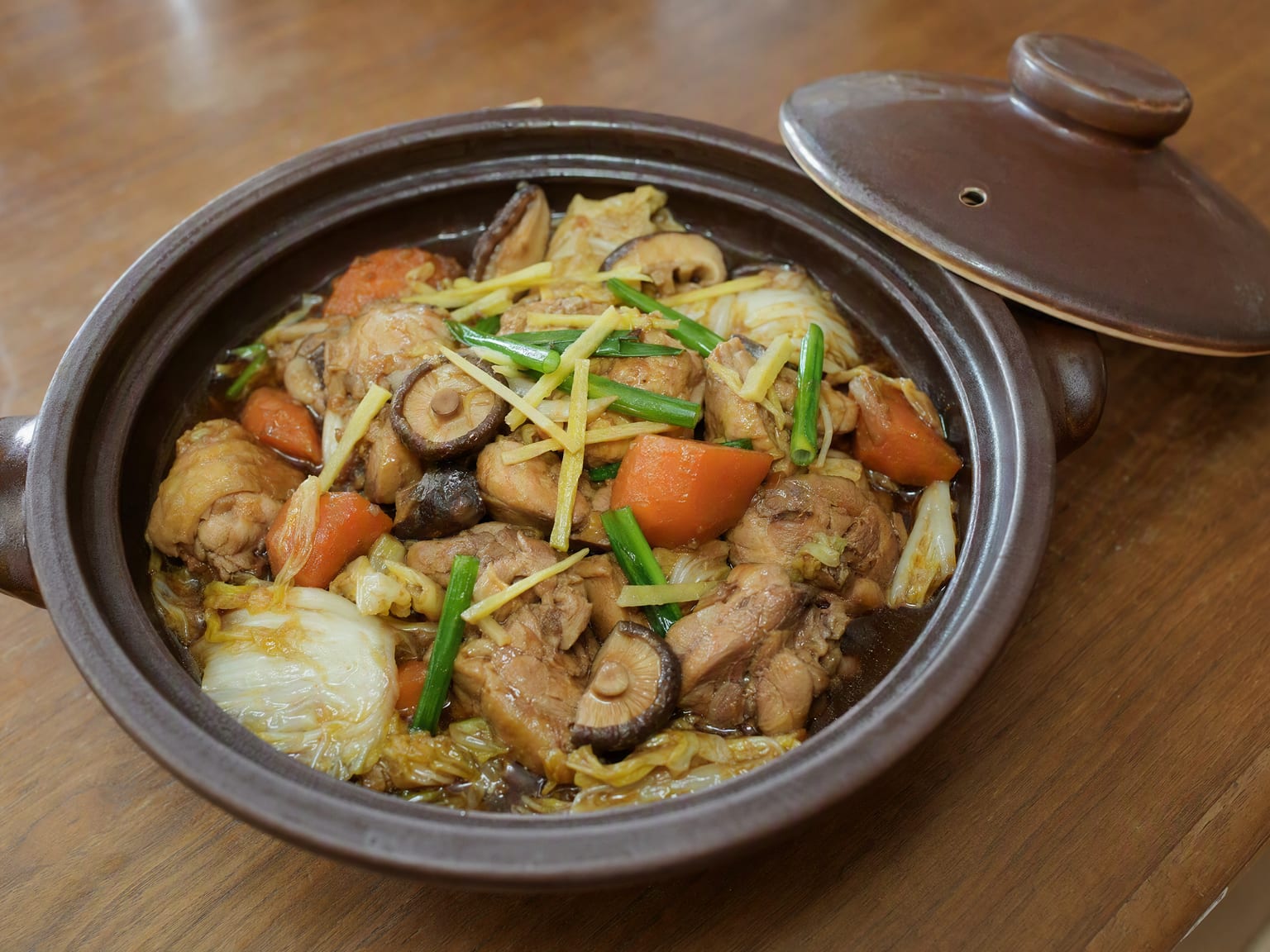
Christoph's version of the claypot ginger dishes on the hot pot section of the menu, with the ginger added twice, sliced for the braise and julienned at the end.
Ingredients
Written for a 3 L pot
Chicken and marinade
- 600 g chicken thigh, boneless, cut into large chunks rounded
- 8 g cornflour rounded
- 15 ml light soy sauce rounded
- 15 ml Shaoxing wine rounded
Braise
- 40 ml neutral oil rounded
- 40 g fresh ginger, sliced into thick coins, for the braise rounded
- 5 garlic cloves, peeled and left whole rounded
- 6 scallions, white parts in 5 cm lengths, green kept for the end rounded
- 350 ml chicken stock rounded
- 30 ml oyster sauce rounded
- 22 ml light soy sauce rounded
- 10 ml dark soy sauce rounded
- 10 g sugar rounded
- 12 g cornflour, slaked in a little cold water rounded
Vegetables and finish
- 200 g carrot, cut into chunks on an angle rounded
- 200 g napa cabbage, cut into large pieces rounded
- 150 g shiitake mushrooms, halved rounded
- 100 g bamboo shoots, from a tin, drained (optional) rounded
- 25 g fresh ginger, julienned, added at the end rounded
- 5 ml toasted sesame oil rounded
Dietary labels are a guide, not a guarantee. If you have an allergy, read the ingredients yourself.
Method
- Marinate the chicken with the cornflour, soy sauce and Shaoxing wine for 15 minutes.
- Brown the chicken and set it aside. Heat half the oil in a heavy pot or claypot over high heat and brown the chunks well on two sides, about 4 minutes total. They do not need to be cooked through. Take them out.
- Perfume the oil with sliced ginger. Add the rest of the oil over medium heat and fry the thick ginger coins, whole garlic cloves and white scallion pieces for 2 to 3 minutes until fragrant and lightly coloured. This slow start is what a claypot dish tastes of.
- Add the liquid and the hard vegetables. Pour in the stock, oyster sauce, both soy sauces and sugar, then add the carrot. Bring to a simmer, cover, and cook 8 minutes.
- Add the rest. Return the chicken with its juices, add the mushrooms, bamboo shoots and cabbage stems. Cover and simmer another 8 minutes, until the chicken is cooked through and the carrot yields with slight resistance.
- Thicken. Stir the slaked cornflour and pour it in, stirring gently, and simmer 1 minute until the sauce coats the pieces and clings to the sides of the pot.
- Finish with the second ginger. Off the heat, fold in the julienned ginger, the cabbage leaves, the green scallion tops and the sesame oil. The raw ginger going in last is what makes this taste of ginger rather than of generic brown sauce. Serve in the pot.
Variations
- Ginger beef hot pot. 600 g braising beef in chunks, browned and simmered 45 minutes before the vegetables go in.
- Ginger BBQ pork hot pot. 400 g sliced char siu, added in the last 5 minutes only since it is already cooked.
- Ginger seafood hot pot. 600 g mixed prawns, squid and scallops, added in the last 3 minutes and no longer. Build and thicken the sauce first, then slide the seafood in.
- Tofu hot pot. 500 g firm tofu, torn and browned separately, added with the mushrooms, with vegetable stock and vegetarian oyster sauce.
Notes
- Ginger twice is the whole idea. Thick coins early give a mellow warmth through the braise; fine julienne at the end gives the sharp fresh bite. Doing only one gives you half a dish.
- This is not a stir-fry. The vegetables are meant to soften and take up sauce. Resist the urge to keep everything crisp.
- A claypot is lovely and not required. Any heavy lidded pot works. If you do use a claypot, never put an empty one over high heat and never move a hot one onto a cold wet surface.
- The hot pot section of a Chinese-Canadian menu is not the same as Chinese hot pot, the communal simmering broth at the table. These are claypot braises, which is a confusion worth knowing about before ordering.
- Reheats very well and is arguably better the next day.
Ingredient substitutions
- Oyster sauce substitutes with vegetarian mushroom oyster-style sauce.
- Napa cabbage can be replaced with pak choi, added later since it cooks faster, or with regular cabbage, added earlier.
- Shaoxing wine substitutes with dry sherry, or stock plus a splash of rice vinegar.
Good with
From Christoph Mayer