Main Chinese restaurant-style Chinese Dairy-free Nut-free
Char Siu BBQ Pork
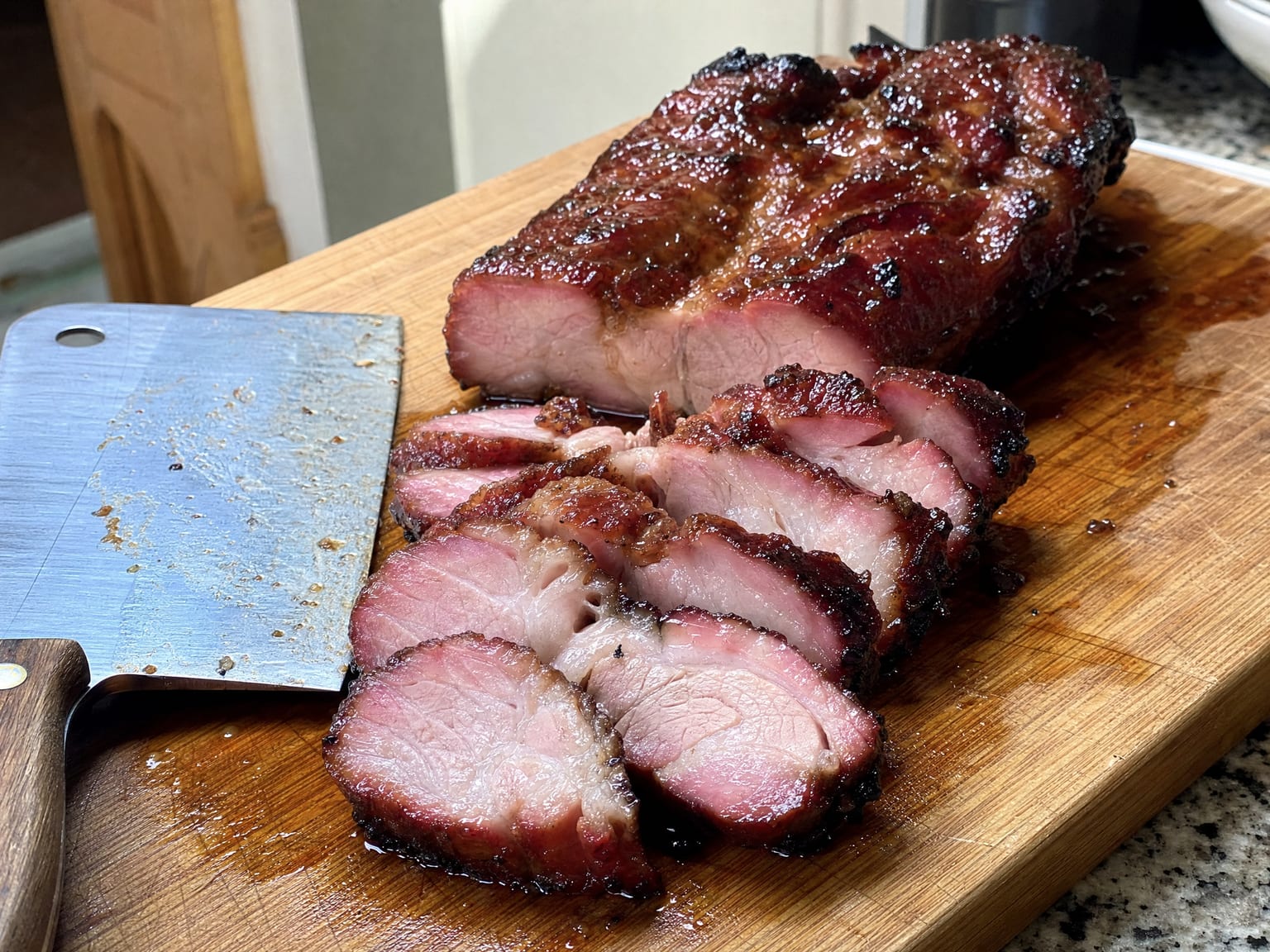
The lacquered red-edged BBQ pork that hangs in Cantonese restaurant windows and turns up sliced through half the other dishes on this shelf. Pork neck is the cut that matters, since its fat marbling bastes the meat from inside during a long roast, and the glossy edge comes from basting with honey only in the last ten minutes, late enough that the sugar catches without burning.
Adapted from RecipeTin Eats and The Woks of Life, keeping their marinade balance and the late honey glaze.
Ingredients
Written for a 23 × 33 cm dish
Units
Temperature
Servings
Pork
- 1 1/6 kg pork neck, also sold as collar or scotch fillet; cut into long strips about 6 cm thick rounded
Marinade
- 60 ml hoisin sauce rounded
- 30 ml light soy sauce rounded
- 15 ml dark soy sauce rounded
- 60 ml honey rounded
- 20 g brown sugar rounded
- 30 ml Shaoxing wine rounded
- 4 g Chinese five spice powder rounded
- 3 garlic cloves, finely grated rounded
- 15 ml neutral oil rounded
- 15 g fermented red bean curd, optional, for the traditional colour and savoury depth; see substitutions (optional) rounded
Glaze
- 40 ml honey, warmed with a tablespoon of hot water to loosen rounded
Dietary labels are a guide, not a guarantee. If you have an allergy, read the ingredients yourself.
Method
- Cut the pork into long strips about 6 cm thick, so every piece has plenty of surface for glaze. Do not trim the fat; it is doing the work.
- Mix the marinade and set aside 3 tablespoons of it in the fridge for later. Mash the red bean curd into the rest if using.
- Marinate overnight. Put the pork and marinade in a bag or covered dish, refrigerate at least 12 hours and up to 24, turning once. This is the step that cannot be shortened. Anything under a few hours seasons only the surface.
- Heat the oven to 200°C and set a rack over a roasting tray. Pour about 400 ml of water into the tray beneath the rack. That water catches drips and stops the sugary marinade smoking the kitchen out, and it keeps the oven humid so the pork does not dry.
- Roast 25 minutes, then turn the pieces and roast another 20 minutes. The pork should be cooked through, about 74°C, and already darkening.
- Glaze late and twice. Brush with the reserved marinade, roast 5 minutes, then brush generously with the loosened honey and roast a final 5 minutes until the edges char and go sticky. Honey earlier than this simply burns; the last ten minutes is the whole window.
- Rest 10 minutes, then slice across the grain. Serve with rice, or cool completely and slice for the other dishes on this shelf.
Notes
- Pork neck, not loin. Loin is too lean and comes out dry and stringy no matter how carefully you cook it. Neck, collar, scotch fillet and shoulder all have the marbling this needs. Ask a German butcher for Schweinenacken and a Canadian one for pork butt or collar.
- The red colour is traditionally from fermented red bean curd, not food dye, though most restaurants use colouring too. Without either it tastes identical and simply looks browner, which is fine.
- Water in the tray matters more than it sounds. Sugar dripping onto a hot dry tray burns and smokes badly.
- This is a component as much as a dish. It slices into wor wonton soup, fried rice, chow mein and egg foo yong. Making a double batch is barely more work.
- Keeps 4 days refrigerated and freezes very well sliced, in portions, with a little of the pan juices.
Ingredient substitutions
- Fermented red bean curd (nam yu, sold in jars at Asian grocers in Germany and Canada) gives the classic colour and a deep fermented savouriness. It has no close substitute. Leaving it out is the normal home compromise; a teaspoon of miso plus a little extra hoisin gets partway to the savoury depth without the colour.
- Hoisin sauce is essential and widely available in both countries. There is no good substitute; a mixture of soy, peanut butter, honey and five spice approximates it badly.
- Shaoxing wine substitutes with dry sherry, or with stock plus a splash of rice vinegar for an alcohol-free marinade.
Sources consulted
Good with
Sources consulted
From Christoph Mayer