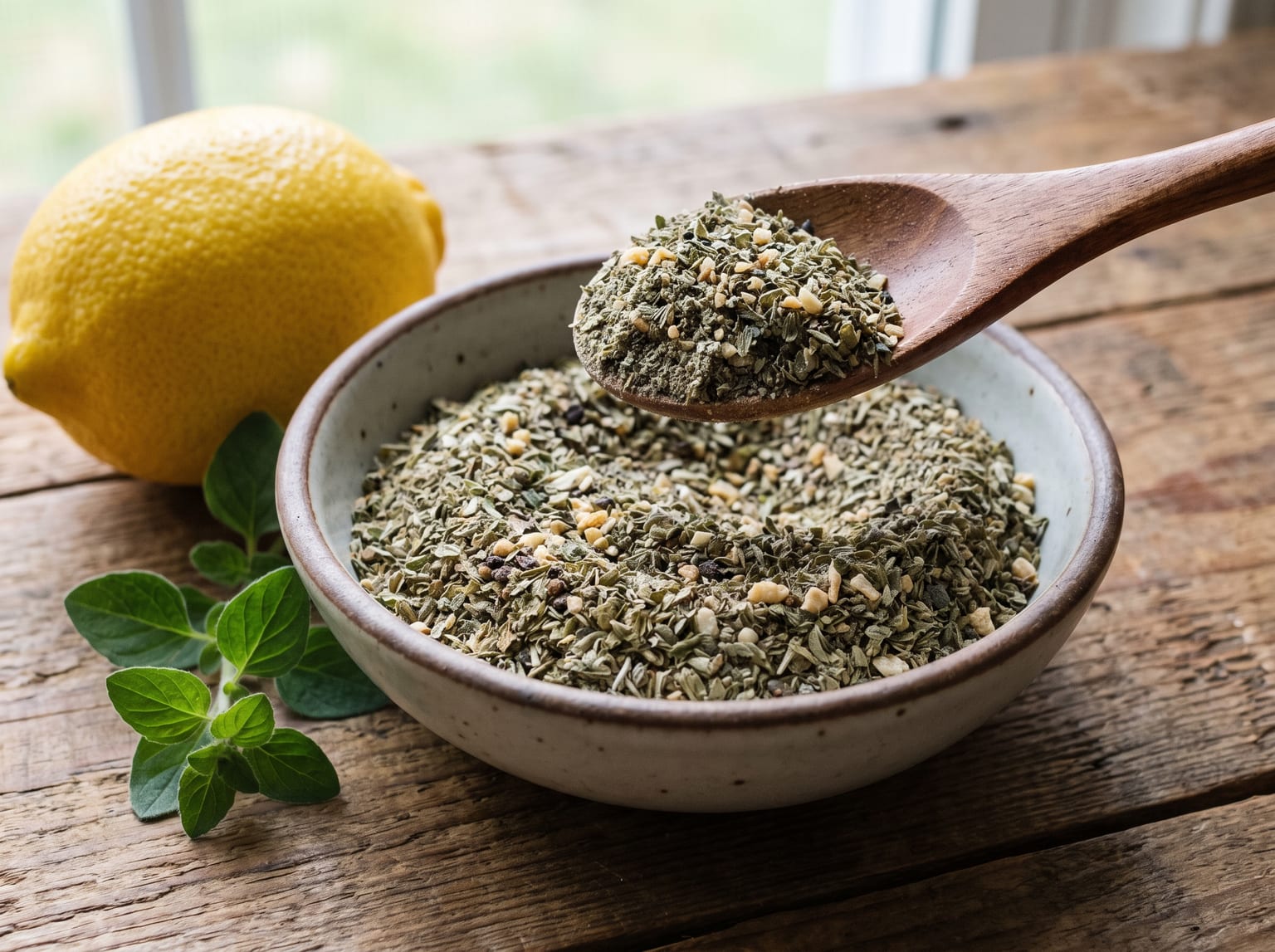
Greek seasoning
Heavily weighted to oregano, with dried mint doing the work people cannot identify, and enough garlic and lemon zest to season chicken, lamb, potatoes or a bowl of feta and oil.
Prep10 min
0 0 Servings35
A house blend, weighted the way a Greek taverna weights it rather than the way a supermarket does
Ingredients
Units
Temperature
Servings
Blend
- 20 g dried Greek oregano, the rubbed kind on the stalk if you can find it rounded
- 8 g dried mint, not optional; this is the flavour people cannot name rounded
- 6 g garlic granules rounded
- 5 g dried lemon zest, dried hard in a low oven, then crumbled; it must be completely dry rounded
- 5 g dried onion granules rounded
- 5 g coarse black pepper rounded
- 3 g dried thyme rounded
- 3 g dried dill rounded
Dietary labels are a guide, not a guarantee. If you have an allergy, read the ingredients yourself.
Method
- Dry the lemon zest properly first. Pare the zest off two lemons with a peeler, avoiding the white pith, and dry it in the oven at 80°C for about an hour until it snaps rather than bends. Crumble it fine. Any moisture at all and the jar will cake and then spoil.
- Rub the oregano through your palms as it goes in, which breaks the leaf up and releases the oil.
- Shake everything together and store sealed and dark.
Notes
- Oregano is more than a third of it. Greek cooking uses oregano at a volume that looks wrong written down. Trust it.
- Dried mint, not fresh, and not peppermint. Spearmint dried is what Greek and Turkish cooking uses. It is drier and hay-like rather than sweet, and it is the note that makes this taste Greek rather than generically herby.
- What to put it on. Chicken thighs with lemon and oil. Potatoes roasted in stock. Lamb. A block of feta with olive oil and nothing else. Whisked into yogurt for a dip.
- No salt again, for the same reason as the Italian blend.
Ingredient substitutions
- Greek oregano is stronger and more savoury than the Italian sort. Either works and Greek is worth seeking out; it is often sold on the stalk in bunches.
- Fresh lemon zest can go in at the point of cooking instead, and is better, but then the jar is not shelf stable and must live in the freezer.
Sources consulted
Good with
From Christoph Mayer