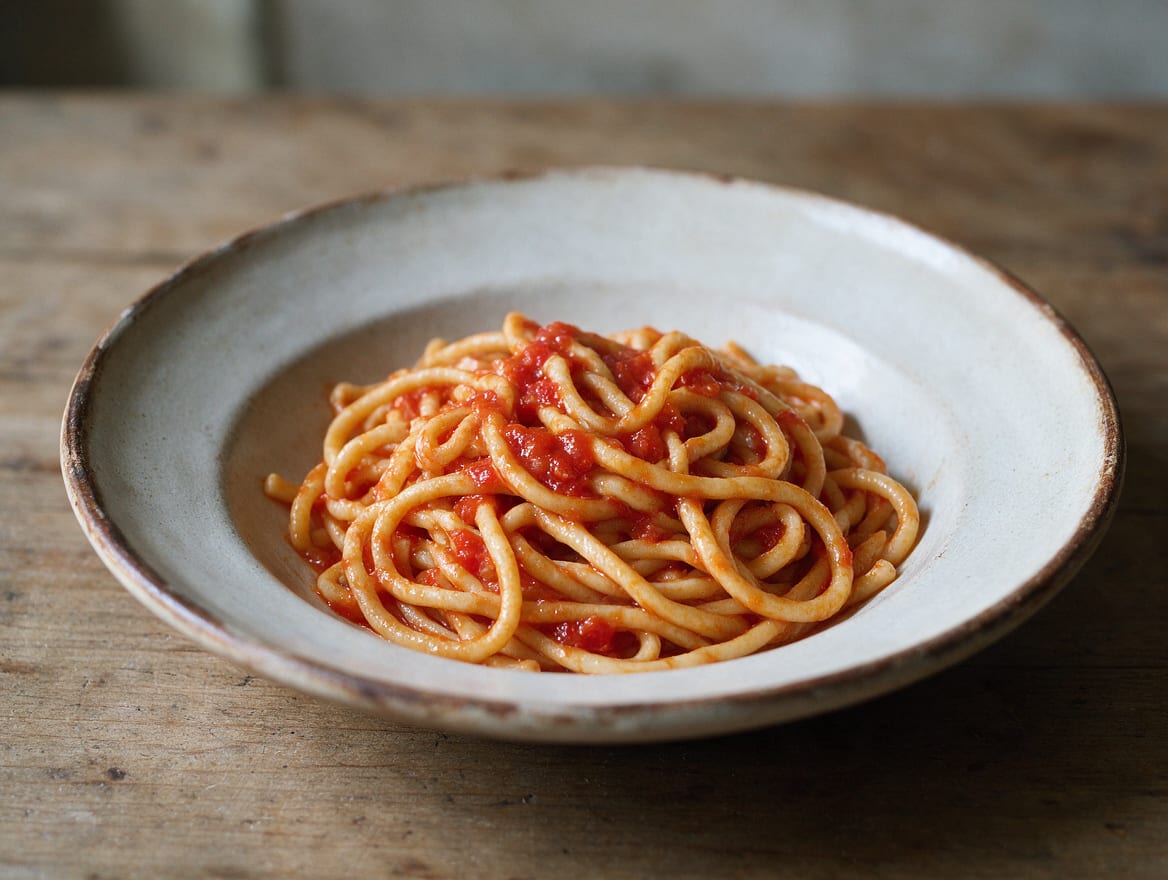
Hand-rolled pici all'aglione
Rustic Tuscan pici, also called pinci around Montalcino, hand-rolled and tossed with a gentle aglione garlic and tomato sauce.
Prep60 min
Cook35 min
Servings4
Adapted from Visit Tuscany's traditional handmade pici and pici all'aglione methods.
Ingredients
Written for a 30 cm pan
Units
Temperature
Servings
Pici dough
- 500 g plain flour, plus a little more only if the dough remains sticky rounded
- 250 ml warm water, begin with 250 ml and add by feel rounded
- 15 ml extra virgin olive oil rounded
- 6 g fine salt rounded
- 60 g fine semolina, for dusting trays rounded
Aglione sauce
- 45 ml extra virgin olive oil rounded
- 80 g Val di Chiana aglione garlic, peeled and thinly sliced; see substitutions rounded
- 500 g canned tomato pulp rounded
- 0.5 g chile flakes rounded
- 5 g fine salt rounded
- 150 ml starchy cooking water, reserved before draining; use as needed rounded
Dietary labels are a guide, not a guarantee. If you have an allergy, read the ingredients yourself.
Method
- Mix the flour and 6 g salt. Make a well, pour in 250 ml warm water and 15 ml olive oil, and mix into a shaggy dough. Knead for 8 to 10 minutes until smooth and supple. If dry flour remains, add the rest of the water 5 ml at a time. The dough should feel firm but roll without cracking and should not stick to clean fingers.
- Cover and rest at room temperature for 30 minutes. Dust two trays lightly with semolina.
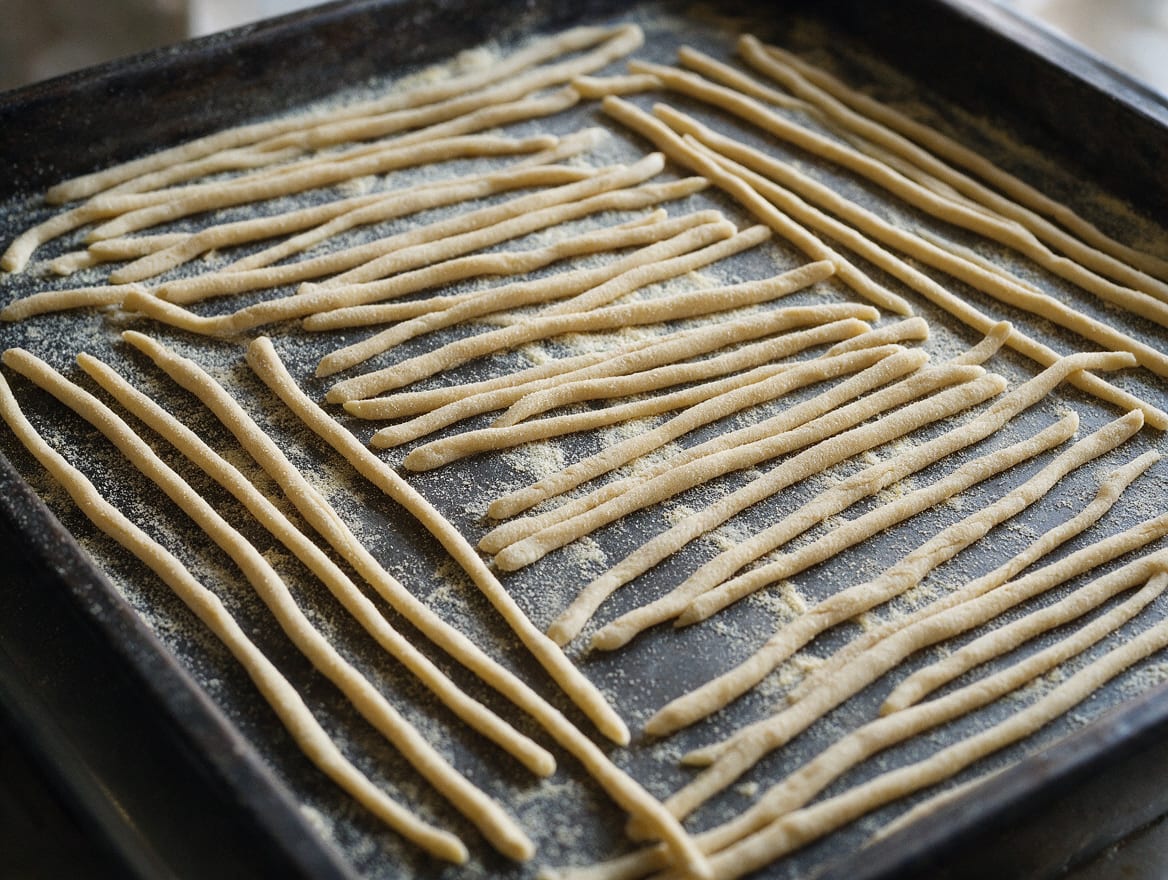
- Roll the dough into a sheet about 5 mm thick. Cut strips just under 10 mm wide. Roll each strip under both palms from the centre out to make an irregular strand about 3 mm thick. Place the pici on the prepared trays without overlapping and dust lightly with semolina. Keep covered while shaping the remainder.
- For the sauce, warm 45 ml olive oil in a 30 cm skillet over low heat. Add the aglione and chile flakes. Cook very gently for 8 to 10 minutes, crushing the softened garlic with a spoon. It must melt into the oil without browning.
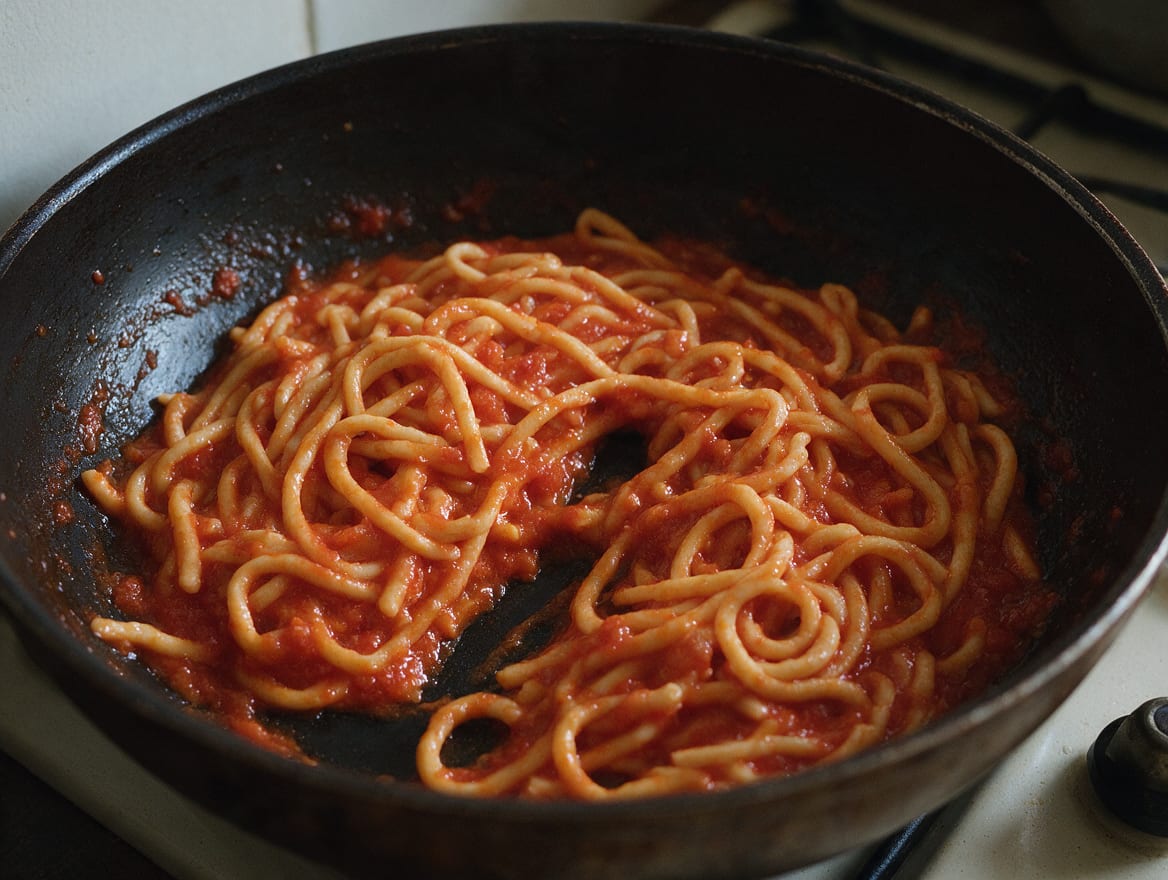
- Add the tomato pulp and 5 g salt. Simmer gently for 20 to 25 minutes, stirring occasionally, until cohesive but still loose enough to coat pasta.
- Bring a large pot of water to a boil and salt it moderately. Shake excess semolina from the pici, lower them into the water, and stir once. Begin tasting after 4 minutes; thickness varies, so tenderness rather than the clock is authoritative. They will usually need about 5 minutes.
- Reserve 150 ml starchy cooking water. Transfer the pici to the sauce and toss over medium-low heat for 1 to 2 minutes, adding cooking water a little at a time until the sauce grips every strand. Serve immediately.
Ingredient substitutions
- In Germany, Weizenmehl Type 405 gives tender pici. Type 550 absorbs a little more water and makes a firmer strand, so use the upper end of the water range only as the dough requires.
- In Canada, regular all-purpose flour works. Strong Canadian flour can absorb more water, so judge the dough after its rest before adding the final 25 ml.
- True aglione from the Val di Chiana is large and unusually mild. If it is unavailable in either country, use only 20 g ordinary garlic. Ordinary garlic is much sharper, so slice it finely and keep the heat very low. The result is useful but not identical to pici all’aglione.
Notes
- Pici are also called pinci in and around Montalcino. Both names describe the thick, hand-rolled Tuscan pasta.
- Do not chase mechanically perfect strands. Slight variation is traditional, but extreme differences make the batch cook unevenly.
- Fresh pici are best cooked the day they are shaped. Refrigerate dusted, covered trays for no more than 1 day. The sauce keeps refrigerated for 4 days or frozen for 3 months.
Sources consulted
Good with
Sources consulted
Hydration is expressed as a range because local flour absorption varies; the regional pinci name is retained for discoverability.
From Christoph Mayer