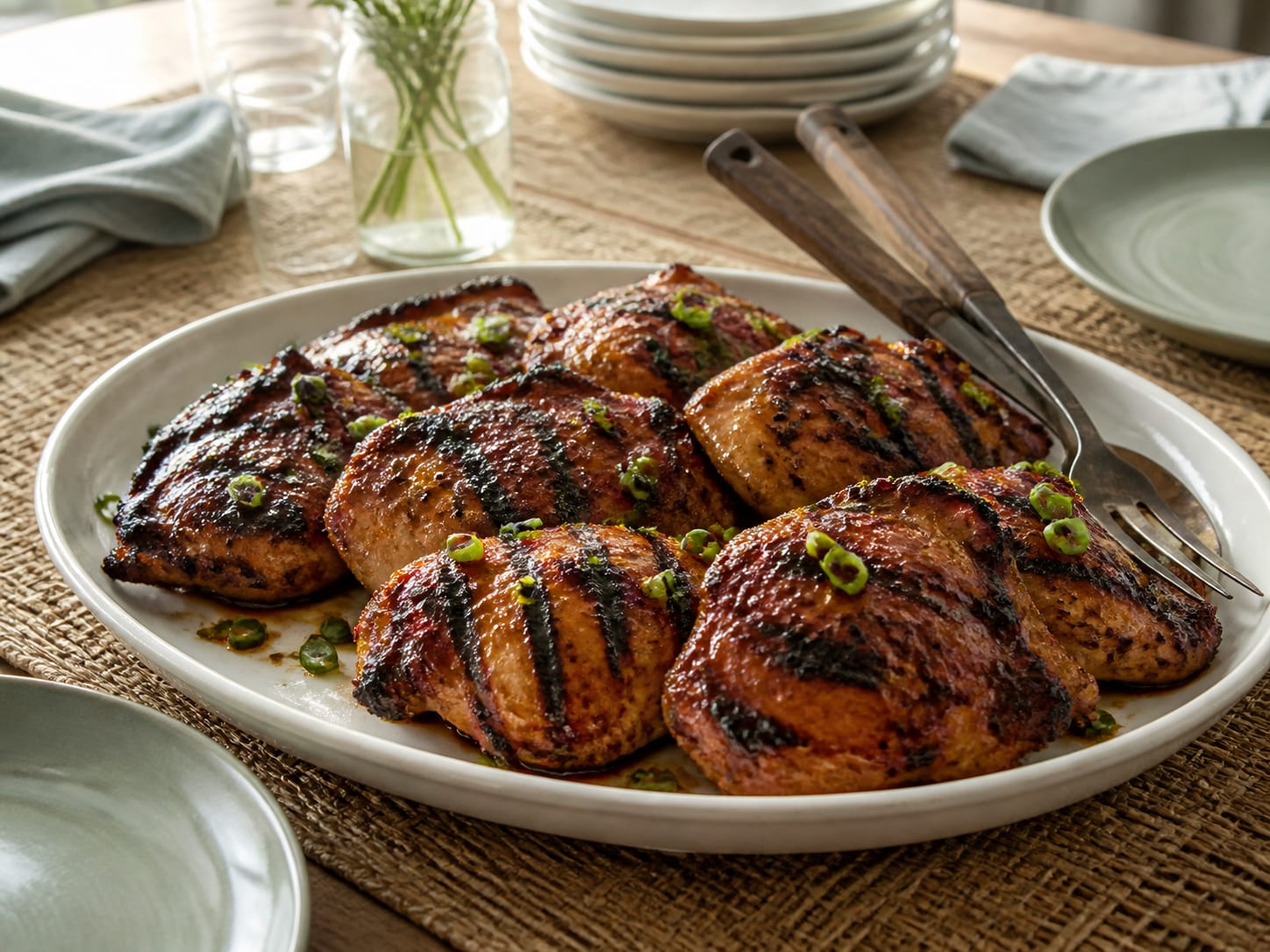
Huli huli chicken
Bone-in chicken thighs marinated in a sweet-savory pineapple and soy glaze, then grilled over direct heat and turned again and again until deeply caramelized.
Research-based adaptation of Hawaii's original Pacific Poultry Company huli huli chicken and widely published home versions of its marinade and grilling technique
Ingredients
Units
Temperature
Servings
Huli huli marinade and glaze
- 240 ml pineapple juice, unsweetened, canned or bottled is fine rounded
- 120 ml soy sauce rounded
- 110 g brown sugar, packed rounded
- 80 g ketchup rounded
- 15 g fresh ginger, finely grated rounded
- 15 g garlic, finely grated or minced rounded
- 14 g toasted sesame oil, optional, a modern addition rather than part of the original recipe (optional) rounded
Chicken and grill
- 6 bone-in, skin-on chicken thighs, about 1.2 kg total; skin-on holds up best over direct heat rounded
- 15 g neutral oil, for the grill grate rounded
To serve
- 15 g scallion, thinly sliced (optional) rounded
- 5 g toasted sesame seeds (optional) rounded
Dietary labels are a guide, not a guarantee. If you have an allergy, read the ingredients yourself.
Method
- Make the marinade. Whisk the pineapple juice, soy sauce, brown sugar, ketchup, grated ginger, grated garlic, and sesame oil (if using) in a bowl until the sugar dissolves.
- Reserve before it touches raw chicken. Pour about half the marinade, roughly 240 ml, into a separate covered container and refrigerate it. This portion never meets raw poultry, so it is safe to use later as a basting glaze without boiling. Pour the rest over the chicken thighs in a shallow dish or zip-top bag.
- Marinate. Turn the chicken to coat, cover, and refrigerate for at least 1 hour. Four to eight hours is the sweet spot for flavor without the texture turning mushy from the pineapple’s acidity; do not go past 24 hours, or the soy sauce starts to over-salt the meat.
- Thicken the reserved glaze. Just before grilling, simmer the reserved marinade in a small saucepan for 5 to 8 minutes, until slightly syrupy. This is also the moment to boil hard, for at least 1 minute, any marinade you did not think to reserve ahead and instead poured off the raw chicken; do not brush that glaze on unboiled.
- Set up the grill. Heat a charcoal or gas grill to medium, with one zone over direct heat and a cooler indirect zone alongside it. Scrape and oil the grate with the neutral oil.
- Grill and huli. Lift the chicken from the marinade, letting the excess drip off, and set it skin side down over direct heat. Turn (“huli” is Hawaiian for turn) every 4 to 5 minutes, brushing with the thickened glaze at every turn, for 25 to 35 minutes total. Watch for flare-ups: the sugar in the glaze scorches fast, so move any piece that catches flame to the indirect zone until it settles down, then bring it back.
- Check doneness. Start probing the thickest part of a thigh, away from the bone, once the skin is deeply caramelized and glossy. Pull the chicken off the grill at 72°C; carryover heat brings it to a safe 74°C as it rests, juices run clear, and the glaze is sticky and dark, not blackened.
- Rest and serve. Rest for 5 minutes under loose foil. Scatter with sliced scallion and sesame seeds if using, and serve with the rest of the thickened glaze on the side.
Notes
- Reserving a separate portion of marinade before it ever touches raw chicken is what makes basting safe without a last-minute boil. If you skip that step and want to reuse the marinade the chicken sat in, it must come to a hard boil for at least 1 minute first.
- This glaze is mostly sugar, so it burns much faster than a plain oil baste. Keep a cooler indirect zone ready on the grill and check every few minutes once the glaze starts to darken; do not walk away from the grill during the last 10 minutes.
- The chicken can marinate up to 24 hours ahead, which makes this an easy do-ahead for a weekend cookout; just pull it from the fridge and light the grill when you are ready.
- No grill on hand: broil instead. Set an oven rack about 15 cm from the element, broil on high on a wire rack set over a foil-lined tray, and turn and baste on the same schedule as the grill method, watching closely since a broiler element scorches the sugary glaze even faster than open flame.
Ingredient substitutions
- Pineapple juice. Canned or bottled unsweetened pineapple juice is the honest, practical default here, not a compromise; it is what most home versions of this recipe, and Hawaii’s own bottled huli huli sauces, actually use. Fresh-pressed juice tastes brighter on its own but the difference mostly disappears once it is cooked down into a glaze.
- Soy sauce. Regular light soy sauce, such as Kikkoman, is a direct match for what most published huli huli recipes use; Hawaii’s own Aloha Shoyu brand is the local favorite but is not exported everywhere. For a gluten-free version, swap in tamari at the same quantity; both Germany and Canada carry tamari in any well-stocked supermarket.
- Fresh ginger and garlic. Jarred grated ginger and jarred minced garlic work in a pinch and keep the quantities the same, though the flavor is milder and less bright than fresh.
- Ketchup. Any standard tomato ketchup works; in Germany, ordinary Tomatenketchup from the supermarket is fine, and in Canada any regular brand such as Heinz is exactly what most American recipes assume already.
- Chicken. Bone-in, skin-on drumsticks or a whole chicken cut into pieces both work in place of thighs; boneless skinless thighs also work but cook faster and need closer watching to avoid drying out, and give up some of the char that the skin provides.
Sources consulted
- Wikipedia: Huli-huli chicken
- Dinner at the Zoo: Huli Huli Chicken
- Cooking for My Soul: Hawaiian Huli Huli Chicken
- Our Best Bites: Huli Huli Chicken
Sources consulted
From Christoph Mayer