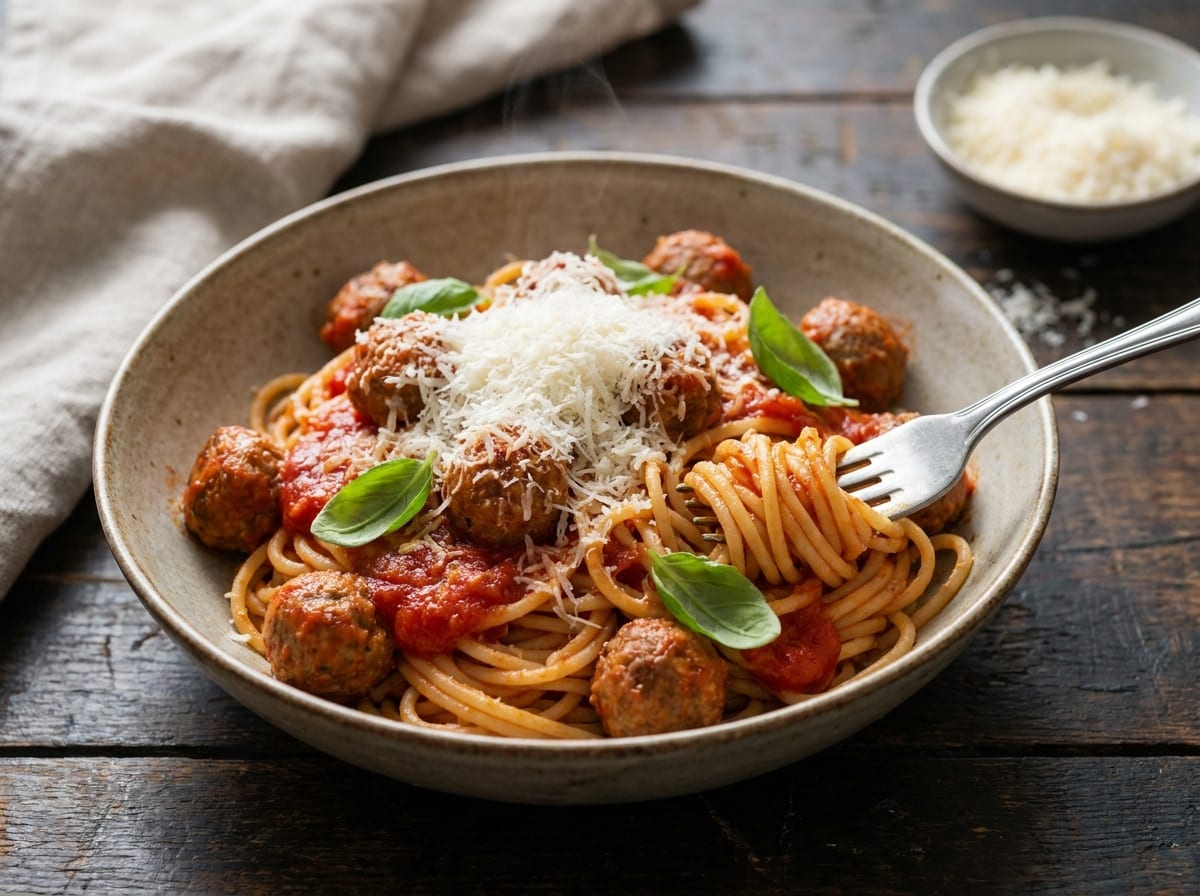
Italian Small Meatballs (Polpette)
Real Italian polpette, small enough to disappear into a bowl of soup or a pot of Sunday sauce, built on a milk-soaked breadcrumb panade rather than dry crumbs or starch, since the soaked crumb is what keeps a small, fast-cooking meatball tender instead of dense. Searing them first and then finishing gently in simmering sauce, rather than cooking them through in the pan alone, is what lets them season the sauce as much as the sauce seasons them.
Christoph's Italian polpette, milk-soaked breadcrumbs for a tender crumb, seared then simmered gently in the sauce.
Ingredients
Written for a 28 cm pan
Units
Temperature
Servings
Meatballs
- 60 g fresh breadcrumbs rounded
- 100 ml milk rounded
- 500 g ground beef and pork, mixed, roughly equal parts rounded
- 60 g parmesan-style hard cheese, finely grated rounded
- 1 egg rounded
- 2 garlic cloves, minced rounded
- 15 g fresh parsley, chopped rounded
- 2 g grated nutmeg rounded
- 9 g fine salt rounded
- 2 g black pepper rounded
- 30 ml olive oil, for searing rounded
Sauce
- 700 g passata or crushed tomatoes rounded
- 15 g fresh basil, torn rounded
Method
- Combine the breadcrumbs and milk in a bowl. Let sit for 10 minutes, until soaked to a soft paste.
- Add the meat, parmesan, egg, garlic, parsley, nutmeg, salt and pepper to the breadcrumb paste. Mix with your hands just until evenly combined.
- Roll into small balls, about 15 g each, roughly the size of a walnut.
- Heat the olive oil in a wide pan over medium-high heat. Sear the meatballs in batches for 3 to 4 minutes, turning to colour them on most sides. They won’t be cooked through; that’s fine.
- Pour the passata into the pan and bring to a gentle simmer. Return all the meatballs to the pan.
- Simmer gently, uncovered, for about 20 minutes, spooning sauce over occasionally, until the internal temperature reaches 71°C and the sauce has thickened slightly.
- Stir in the basil just before serving.
Notes
- Soak the breadcrumbs in milk rather than adding them dry. A small, fast-cooking meatball like this one has little margin for error; the soaked crumb is what keeps it tender through both the sear and the simmer, where dry crumbs or starch alone would give a denser, tighter result.
- Sear first, then finish in the sauce. The sear builds flavour on the surface that a pure simmer never develops; finishing gently in the sauce afterward keeps the inside tender and lets the meatballs release flavour into the sauce as they cook the rest of the way through.
- Keep them genuinely small. These are built for soup and for tucking into a bowl of pasta, not as a standalone main; a 15 g ball cooks through gently in the sauce without needing to be seared for long enough to dry out the outside.
- They freeze well, sauce and all. Cool completely, then freeze in the sauce; reheat gently from frozen.
Ingredient substitutions
- All beef, or all pork, works if that’s what’s on hand, though the mix is the more traditional choice.
- A handful of dried oregano in the meatball mixture is a common regional variation.
- Serve over pasta, in a sub roll, or stirred through a light broth for a simple soup.
From Christoph Mayer