condiment Kansas CityAmerican Dairy-freeNut-freeVegetarian optionGluten-free option barbecuemake-aheadspicy
Kansas City barbecue sauce
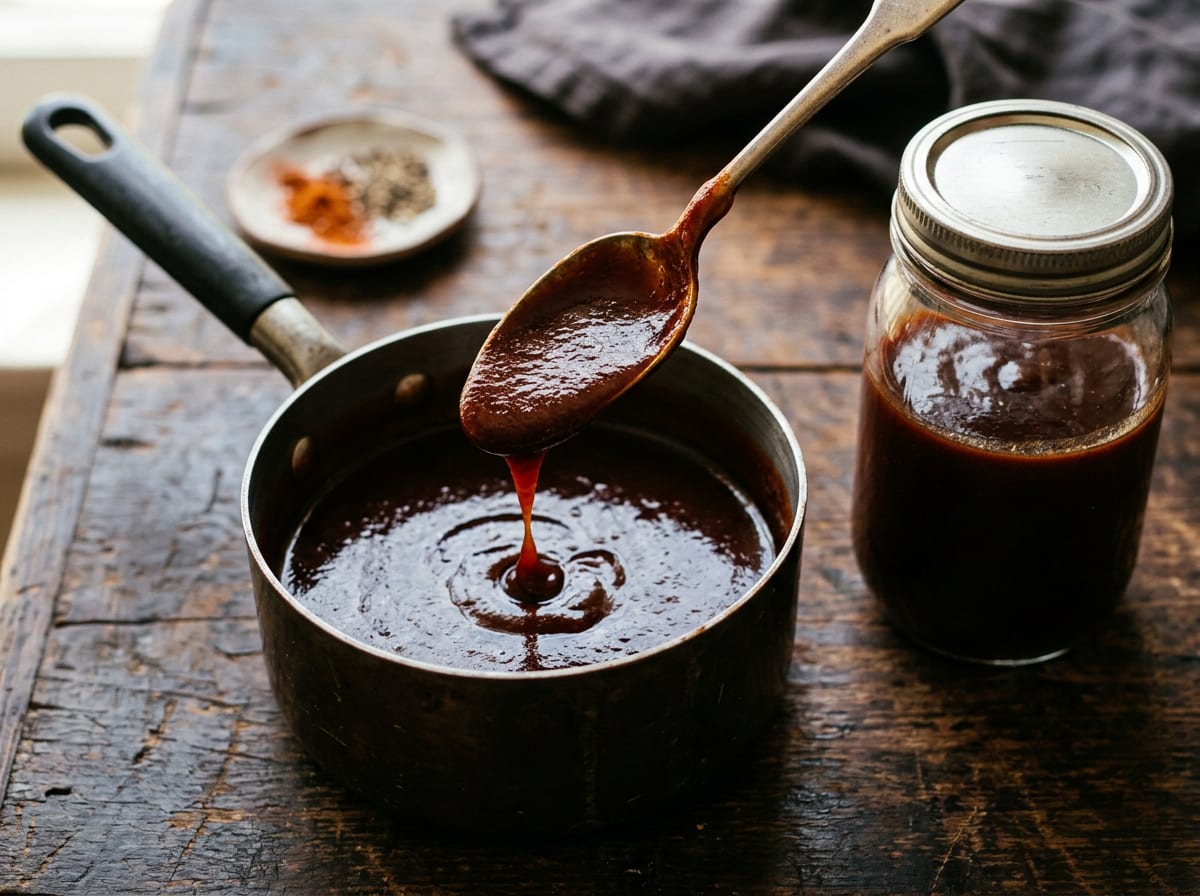
Thick, sweet, dark with molasses, and the sauce almost everyone pictures when they hear the words barbecue sauce. It is a finishing glaze rather than a marinade, because the sugar that makes it good is also the sugar that burns.
Prep10 min
Cook30 min
0 Servings20
Kansas City style, tomato and molasses, cooked down rather than shaken together
Ingredients
Written for a 2 L pot
Units
Temperature
Servings
Sauce
- 500 g ketchup, the base; a plain one, not a reduced-sugar one, which will not behave rounded
- 120 ml cider vinegar rounded
- 80 g molasses, the colour and the bitter edge underneath the sweetness rounded
- 60 g dark brown sugar rounded
- 60 ml water rounded
- 30 g tomato paste, for depth the ketchup alone does not have rounded
- 30 ml Worcestershire sauce, see the notes if this needs to be vegetarian rounded
- 20 g yellow mustard rounded
- 8 g smoked paprika rounded
- 6 g garlic granules rounded
- 6 g onion granules rounded
- 6 g fine salt rounded
- 4 g coarse black pepper rounded
- 2 g cayenne, not for heat so much as to stop the sweetness sitting flat rounded
Dietary labels are a guide, not a guarantee. If you have an allergy, read the ingredients yourself.
Method
- Whisk everything together cold in the pan before any heat goes under it. Tomato paste and mustard will not disperse once the sauce is hot and you will be chasing lumps.
- Bring it to a bare simmer, then turn it as low as it will go. It should barely move.
- Cook 30 minutes uncovered, stirring every few minutes and scraping the bottom properly. This sauce catches and burns more readily than anything else on the stove, because it is mostly sugar in a thin layer.
- Taste at the end, not the start. Raw it is aggressively sweet and sharp at once; thirty minutes turns it into one thing.
Notes
- It is a finishing sauce, not a marinade. Sugar starts to burn around 160°C. Brush it on in the last 20 minutes of a cook, or after the meat comes off. Put it on at the start and you get a black bitter shell over raw-tasting meat.
- Two coats beat one thick one. Brush, let it set for 10 minutes in the heat, brush again. A single heavy coat slides off and pools in the tray.
- The molasses is doing more than sweetening. It brings a bitterness that stops the sauce being one-note, which is exactly what most bottled versions are missing. Do not swap all of it for more brown sugar.
- It keeps a month in a clean jar in the fridge. The vinegar and sugar do the preserving.
- If it is too thick the next day, which it will be, loosen it with a spoon of water or cider vinegar rather than reheating it.
Ingredient substitutions
- Worcestershire sauce contains anchovy in every standard bottle, so this is not vegetarian as written. For a vegetarian version use a tablespoon of soy sauce plus a teaspoon of white miso, which covers the same savoury ground. Most Worcestershire is also made with malt vinegar and so is not gluten-free; the soy and miso route needs tamari to stay gluten-free.
- Molasses is sold in Germany as Zuckerrübensirup, which is beet rather than cane and slightly less bitter. It works. Black treacle is closer still. Do not use blackstrap, which is genuinely bitter rather than pleasantly so.
- Ketchup is the shortcut the style is actually built on, so there is no purism to defend here. If you want to start from passata instead, use 400 g of passata plus 60 g of sugar and expect to cook it twice as long.
Sources consulted
Good with
Sources consulted
From Christoph Mayer