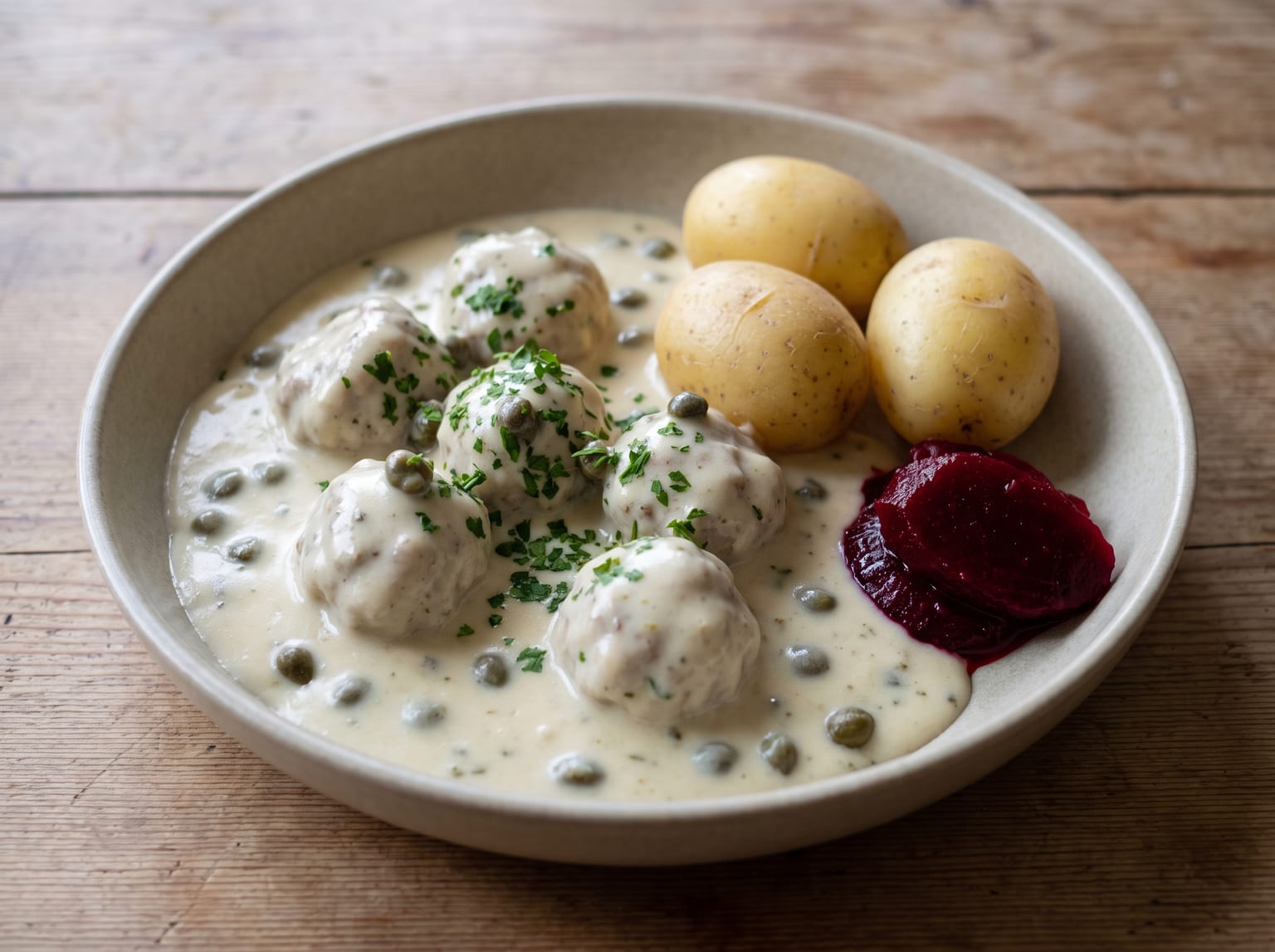
Königsberger Klopse
Pale beef dumplings poached rather than fried, in a white sauce sharp with capers and lemon. The anchovy in the mix is not optional and nobody will taste it as anchovy, and the sauce is built on the poaching stock rather than on cream.
Classic East Prussian method, beef alone rather than the usual veal and pork mix
Ingredients
Written for a 24 cm pot
Units
Temperature
Servings
Klopse
- 600 g ground beef, finely ground, about 15 percent fat rounded
- 80 g stale white bread roll, soaked in milk and squeezed out rounded
- 100 ml whole milk, for soaking the roll rounded
- 1 onion, very finely diced and softened in butter first rounded
- 4 anchovy fillets, mashed to nothing; this is the traditional seasoning and it does not taste of fish rounded
- 1 egg rounded
- 6 g fine salt rounded
- 3 g black pepper rounded
- 1 g ground allspice, the quiet warm note behind everything rounded
Poaching stock
- 1 1/6 L beef or vegetable stock rounded
- 1 onion, halved, studded with 2 bay leaves and 4 cloves rounded
- 5 g black peppercorns rounded
Caper sauce
- 50 g butter rounded
- 50 g plain flour rounded
- 60 g capers, with a good splash of their brine rounded
- 100 ml cream rounded
- 1 egg yolk, for finishing off the heat rounded
- 20 ml lemon juice rounded
- 4 g fine salt rounded
Method
- Soften the onion first. A little butter, low heat, 6 to 8 minutes until translucent and sweet, then cool completely. Raw onion in the mix stays crunchy through poaching, which is wrong here: everything about this dish is soft and pale.
- Soak the roll in the milk for 5 minutes, then squeeze it out and crumble it in.
- Mix. Beef, roll, cooled onion, mashed anchovy, egg, salt, pepper and allspice. Work it for 3 minutes until smooth and slightly tacky, then rest it 30 minutes in the fridge.
- Bring the stock to a bare shiver with the studded onion and peppercorns. Not a boil. A rolling boil tears the Klopse apart and clouds the stock, and you need that stock clear because it becomes the sauce.
- Shape and poach. Wet hands, roll balls of about 60 g. Lower them in and poach 15 to 20 minutes at the barest tremble, until they float and feel springy. Lift them out with a slotted spoon and keep them warm. Strain the stock and keep 700 ml of it.
- Make the sauce. Melt the butter, stir in the flour and cook 2 minutes without colouring: this is a white sauce and any browning at all puts it in the wrong dish. Whisk in the reserved stock a ladle at a time until smooth, then simmer 10 minutes.
- Add the capers with a good splash of their brine, then the cream, and simmer another 2 minutes.
- Finish off the heat. Take the pan off the heat, let it stop bubbling, then whisk in the egg yolk and the lemon juice. The yolk will scramble if the sauce is still boiling. Taste: it should be noticeably sharp. Return the Klopse to warm through for 2 minutes and serve with boiled potatoes.
Notes
- The anchovy. It is traditional, it is not a modern flourish, and it does not read as fish. It reads as depth, and the dish is oddly hollow without it. Four fillets mashed into 600 g of beef is right.
- Why poached and not fried. The whole identity of Königsberger Klopse is pale and delicate, in contrast to Frikadellen, which are browned and robust. Frying them first would be a different and much less interesting dish.
- Beef alone. The traditional mix is veal with some pork, occasionally beef. Straight beef is a little firmer and darker in flavour, and it works. Keep the fat around 15 percent so they are not dry.
- The sauce is stock-based, not cream-based. Cream is there to round it off, not to carry it. Making it with mostly cream gives you something bland and heavy that could be any white sauce.
- Ahead. Better the next day. Keep the Klopse in the sauce, reheat gently and never let it boil once the yolk is in.
Ingredient substitutions
- Anchovy can be replaced with 10 ml of a good fish sauce or, at a push, left out and the salt raised slightly. It will be noticeably flatter.
- Capers in salt rather than brine are better if you can get them. Rinse them well and add a splash of the caper vinegar or extra lemon in place of the brine.
Sources consulted
Good with
Sources consulted
From Christoph Mayer