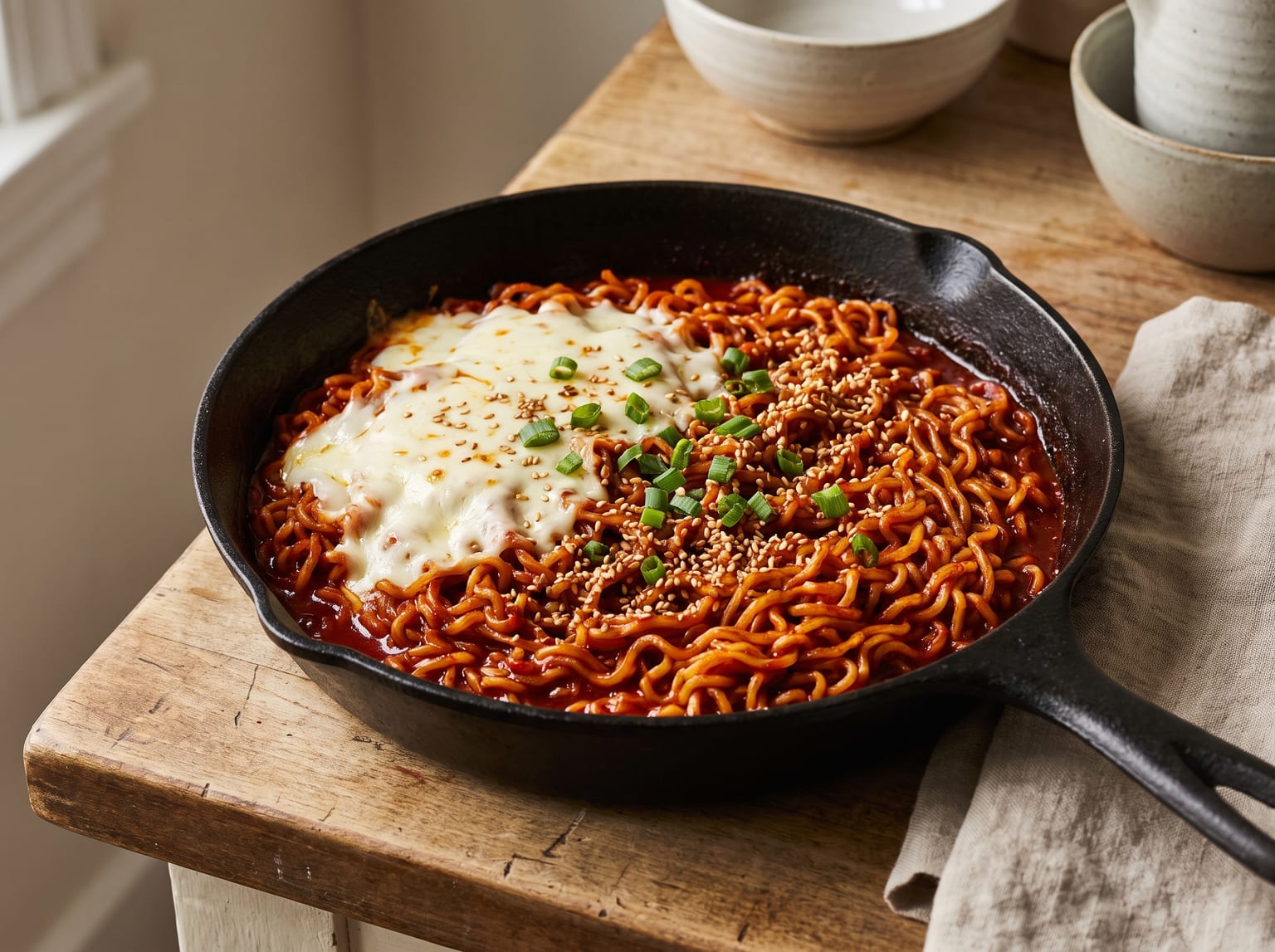
Korean Fire Noodles
A from-scratch take on the viral instant fire noodle, the sauce built as a genuine paste of gochugaru, gochujang, garlic and sugar rather than a thin drizzle, and loosened only with starchy noodle cooking water rather than plain water, since the starch is what lets the sauce actually cling to every strand instead of pooling in the bottom of the bowl. Toasting the gochugaru briefly in the hot sauce base before the noodles go in is what gives it real roasted depth instead of the flat, one-note heat of chili powder stirred in raw.
Christoph's fire noodles, the sauce toasted as a real paste and loosened with starchy noodle water so it clings rather than pools.
Ingredients
Written for a 28 cm pan
Sauce
- 30 g gochujang rounded
- 15 g gochugaru rounded
- 4 garlic cloves, minced rounded
- 20 g sugar rounded
- 20 ml soy sauce rounded
- 15 ml neutral oil rounded
- 10 ml toasted sesame oil rounded
Noodles and topping
- 2 Korean instant ramyeon noodle blocks, seasoning packets discarded rounded
- 80 g mozzarella, shredded rounded
- 10 g toasted sesame seeds rounded
- 10 g scallion, thinly sliced rounded
Dietary labels are a guide, not a guarantee. If you have an allergy, read the ingredients yourself.
Method
- Bring a pot of water to a boil. Cook the noodle blocks for 1 minute less than the package instructs, until still quite firm. Drain, reserving a small cup of the starchy cooking water.
- While the noodles cook, whisk the gochujang, gochugaru, garlic, sugar and soy sauce together in a small bowl to form a thick paste.
- Heat the neutral oil in a wide skillet or wok over medium heat. Add the sauce paste and cook for 1 to 2 minutes, stirring constantly, until fragrant and slightly darkened. This toasts the gochugaru and is what builds real depth rather than flat chili heat.
- Add the undercooked noodles to the pan along with a few tablespoons of the reserved noodle water. Toss constantly over medium heat for 2 to 3 minutes, adding a little more noodle water as needed, until every strand is coated in a thick, glossy sauce and the noodles are fully cooked.
- Remove from the heat and stir in the sesame oil.
- Scatter the mozzarella over the noodles. Cover the pan and let sit off the heat for 1 to 2 minutes, until melted.
- Top with sesame seeds and scallion and serve immediately.
Notes
- Toast the sauce paste in oil before the noodles go in. Raw gochugaru stirred straight into noodles tastes dusty and one-dimensional; a minute or two in hot oil blooms it into something rounder and more complex.
- Loosen the sauce with starchy noodle water, not plain water. The starch is what lets the sauce actually cling to every strand instead of running off and pooling; plain water just dilutes the flavour without helping it stick.
- Undercook the noodles before they meet the sauce. They finish cooking as they absorb it, which is part of how they end up coated rather than just wet.
- This is meant to be seriously spicy. Cut the gochugaru back by a third for a milder version without losing the technique.
Ingredient substitutions
- A drizzle of condensed milk stirred through at the end is a common way to round out the heat, in the spirit of the original instant version.
- Crumbled seaweed snacks scattered on top add crunch and a nod to the classic packet.
- A soft-boiled or fried egg on top turns this into a heartier meal.
From Christoph Mayer