Main Chinese restaurant-style Chinese Dairy-free
Kung Pao Chicken
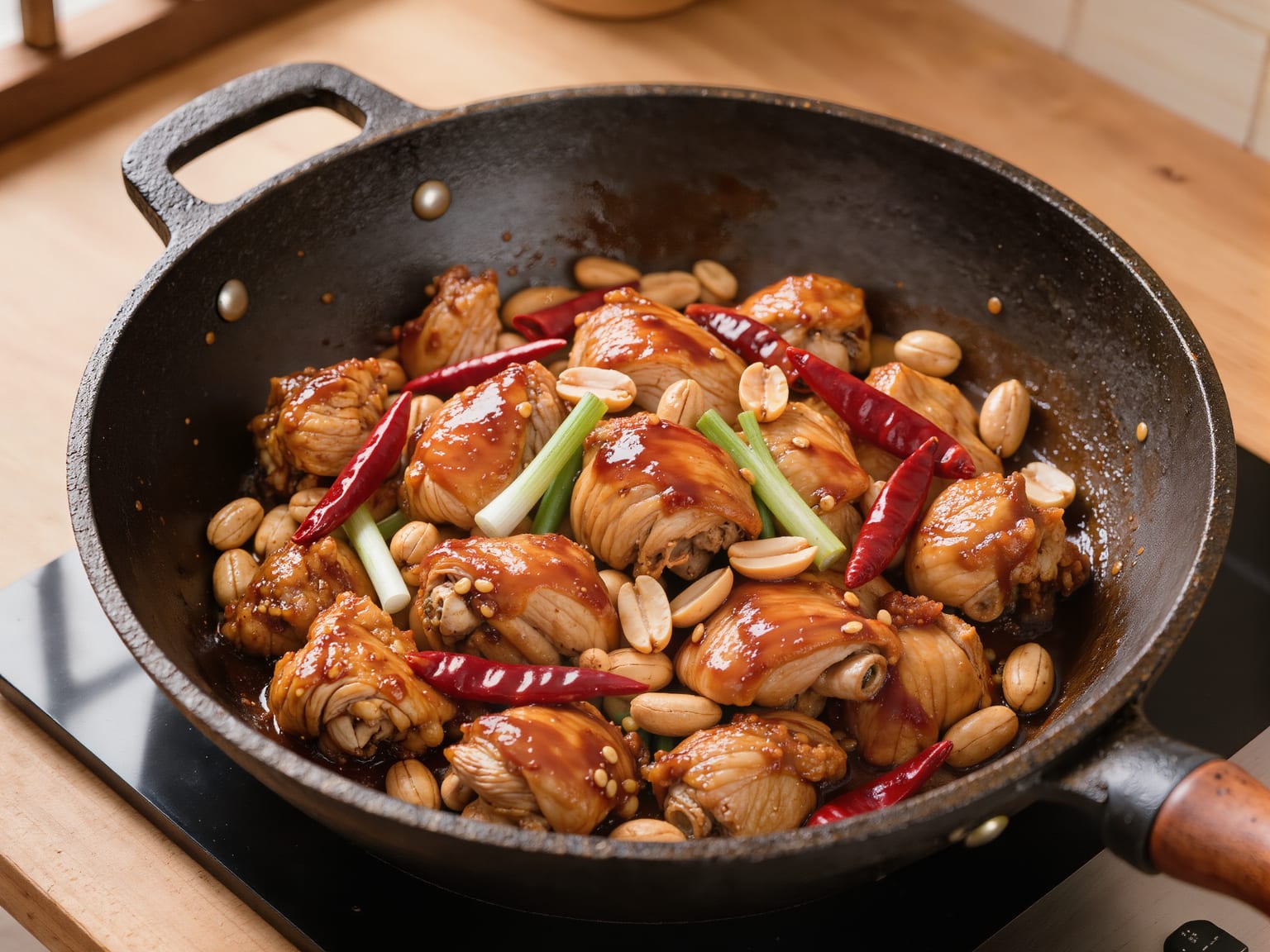
Sichuan gong bao ji ding as it reaches a restaurant menu, chicken cubes in a dark sweet-sour sauce with dried chillies, Sichuan peppercorns and peanuts. The chillies are fried whole to perfume the oil rather than to make the dish fiery, and the peanuts go in at the last possible second, because a peanut that sits in sauce for even a minute goes soft and loses the whole point.
Adapted from RecipeTin Eats and The Woks of Life, keeping the black vinegar and sugar balance and the rule that the peanuts go in last.
Ingredients
Written for a 30 cm pan
Units
Temperature
Servings
Chicken and marinade
- 500 g chicken thigh, boneless, cut into 2 cm cubes rounded
- 5 g cornflour rounded
- 15 ml light soy sauce rounded
Sauce
- 22 ml dark soy sauce rounded
- 30 ml Chinese black vinegar, Chinkiang; see substitutions rounded
- 15 ml Shaoxing wine rounded
- 38 g sugar rounded
- 3 ml toasted sesame oil rounded
- 80 ml water rounded
- 5 g cornflour rounded
Stir-fry
- 30 ml peanut oil rounded
- 8 dried red chillies, cut into 2 cm pieces, most seeds shaken out rounded
- 3 g ground Sichuan peppercorns, toasted and ground; adjust to taste rounded
- 2 garlic cloves, minced rounded
- 5 g fresh ginger, finely chopped rounded
- 3 scallions, cut into 2 cm pieces, white and green separated rounded
- 110 g roasted unsalted peanuts, added in the last seconds rounded
Dietary labels are a guide, not a guarantee. If you have an allergy, read the ingredients yourself.
Method
- Marinate the chicken with the cornflour and soy sauce for 15 minutes.
- Mix the sauce in a jug, whisking the cornflour in last, and stir it again just before it goes in.
- Toast and grind the Sichuan peppercorns if using whole ones. Thirty seconds in a dry pan until fragrant, then grind. Pre-ground loses its numbing tingle fast, and that tingle is half the dish.
- Perfume the oil with the chillies. Heat the peanut oil over medium heat, add the dried chilli pieces and Sichuan pepper, and fry 20 to 30 seconds until the chillies darken slightly and the oil smells sharp. Do not let them blacken, which turns the whole pan acrid. If they go too far, start again; there is no recovering it.
- Sear the chicken. Turn the heat to high, add the chicken in one layer and leave it 90 seconds before tossing. Cook about 3 minutes total until browned and just cooked through.
- Add the aromatics. Garlic, ginger and the white parts of the scallions for 30 seconds.
- Sauce and reduce. Pour in the stirred sauce and boil hard, tossing, for about 1 minute until it thickens to a dark glossy coating that clings rather than pools.
- Peanuts and green scallion last, off the heat. Fold them through in the residual heat and serve at once. Peanuts added earlier absorb sauce and go soft.
Variations
- Kung pao prawns. 500 g peeled prawns instead of chicken, seared 60 to 90 seconds only. A restaurant favourite and slightly sweeter against the vinegar.
- Kung pao with cashews. Straight swap for the peanuts. Cashews are softer and less traditional, and are what many Canadian menus actually serve.
- Kung pao with almonds. Whole blanched almonds, which stay crunchier than cashews and are common on western Canadian menus.
- Kung pao tofu. 400 g firm tofu, pressed, torn, dusted in cornflour and fried crisp separately, folded in with the sauce at the very end.
Notes
- The chillies are aromatics, not the heat source. They are fried whole to flavour the oil and are traditionally left on the plate rather than eaten. The tingling numbness comes from the Sichuan peppercorns, which is a completely different sensation from chilli heat.
- Restaurant versions in Canada are usually sweeter and milder than the Sichuan original, and often use cashews or almonds. Both are on the menu here as variations because both are what people actually order.
- Black vinegar is what makes this taste right. Its malty, almost balsamic depth against the sugar is the flavour people recognise as kung pao.
- Reduce hard at the end. A watery kung pao is the most common home failure; the sauce should barely pool.
Ingredient substitutions
- Chinese black vinegar (Chinkiang) is sold in every Asian grocer in Germany and Canada and keeps for years. The nearest substitute is balsamic vinegar cut with a little rice vinegar, which is sweeter and less malty but recognisably close.
- Sichuan peppercorns have no substitute for the numbing effect. Without them the dish is still good, just a straightforward sweet-sour chilli stir-fry rather than kung pao. Both German and Canadian Asian grocers carry them.
- Peanut oil can be any neutral high-smoke-point oil. For a nut allergy, use sunflower oil and swap the peanuts for toasted sunflower seeds, which keeps the crunch.
Sources consulted
Good with
Sources consulted
From Christoph Mayer