Loco moco
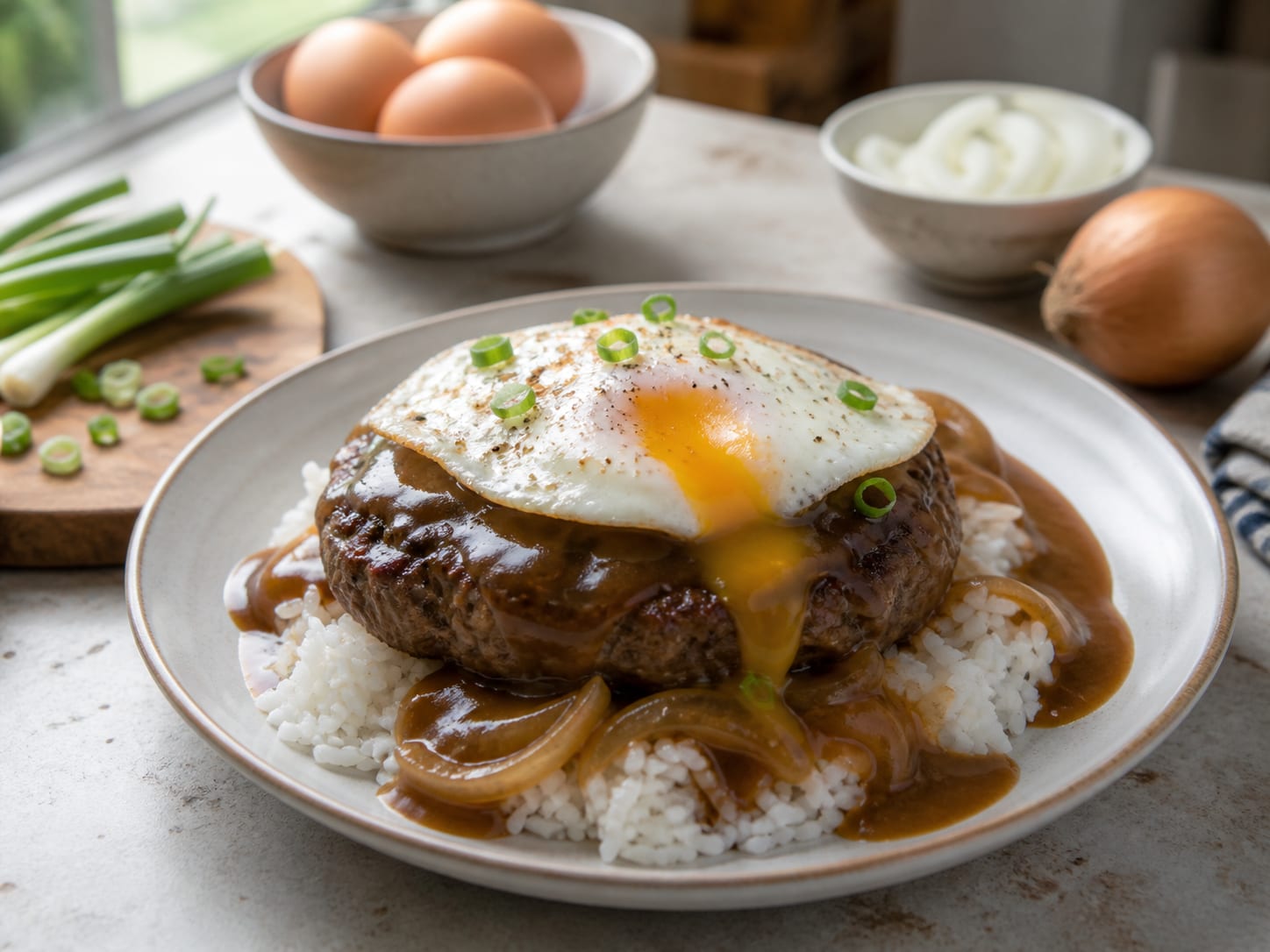
A Hawaiian plate-lunch classic of steamed rice topped with a pan-seared beef patty, a savory brown pan gravy, and a fried egg with a soft, runny yolk.
Adapted from the traditional Hilo-style loco moco and modern pan-drippings gravy techniques described across several tested home recipes; not represented as personally tested
Ingredients
Written for a 28 cm pan
For the rice
- 600 g cooked short-grain white rice, warm, or day-old rice reheated with a splash of water rounded
For the beef patties
- 500 g ground beef, 80/20 lean, not leaner, or the patties turn dry rounded
- 1 egg, beaten, for binding rounded
- 30 g panko breadcrumbs rounded
- 50 g yellow onion, finely grated rounded
- 2 garlic, finely grated or crushed rounded
- 15 ml soy sauce, for the patty mix rounded
- 5 ml Worcestershire sauce, for the patty mix rounded
- 3 g fine salt rounded
- 1 g black pepper rounded
- 15 g neutral oil, for searing rounded
For the brown gravy
- 30 g plain flour rounded
- 500 ml beef broth rounded
- 15 ml soy sauce, for the gravy rounded
- 10 ml Worcestershire sauce, for the gravy rounded
- 15 g unsalted butter, whisked in off the heat, to finish rounded
For the eggs and to serve
- 4 egg, for frying rounded
- 15 g unsalted butter, for frying the eggs rounded
- 15 g green onion, thinly sliced, to finish (optional) rounded
Dietary labels are a guide, not a guarantee. If you have an allergy, read the ingredients yourself.
Method
- Mix and shape the patties. In a bowl, combine the ground beef, grated onion, garlic, beaten egg, panko, 15 ml soy sauce, 5 ml Worcestershire sauce, salt, and pepper. Mix gently by hand until just combined; overworking makes the patties dense. Divide into 4 portions and shape into patties about 1.5 cm thick, pressing a shallow dimple into the center of each so they stay flat as they sear.
- Sear the patties. Heat the oil in a heavy skillet over medium-high heat. Sear the patties for 3 to 4 minutes per side, without pressing down on them, until deeply browned and the internal temperature reaches 71°C. Transfer to a plate and tent loosely with foil, leaving the fond and any rendered fat in the skillet for the gravy.
- Build the gravy from the drippings. Reduce the heat to medium. If there is less than about 2 tablespoons of fat left in the pan, add a little extra butter. Sprinkle in the flour and cook, stirring constantly, for 1 to 2 minutes, scraping up the browned bits, until it smells toasty and turns light brown. This is the roux.
- Thin and season the gravy. Whisking constantly, pour in the beef broth a little at a time so no lumps form. Add the remaining soy sauce and Worcestershire sauce, bring to a simmer, and cook for 4 to 5 minutes, whisking now and then, until the gravy coats the back of a spoon. Off the heat, whisk in the 15 g butter for shine, then taste and adjust the seasoning. Keep the gravy warm over the lowest heat while you fry the eggs.
- Fry the eggs. In a separate nonstick or well-seasoned pan, melt the butter over medium heat. Crack in the eggs and fry sunny-side up for 3 to 4 minutes, until the whites are fully set and opaque but the yolks are still soft and runny. Season lightly with salt.
- Assemble. Divide the warm rice among four bowls or plates. Set a beef patty on each mound of rice, ladle the hot gravy generously over the patty and rice, and top with a fried egg. Scatter with the sliced green onion, if using, and serve immediately while the gravy is hot and the yolk is still runny.
Notes
- Variant proteins. Spam loco moco (fried thick-cut Spam slices in place of the patty), chicken katsu loco moco (a fried, panko-crusted chicken cutlet), and kalua pork loco moco (shredded slow-roasted pork) are all common on Hawaiian plate-lunch menus. Keep the rice, gravy, and egg the same and simply swap the protein.
- A food-safety note on the egg. The patty is cooked to a safe 71°C internal temperature, but the fried egg is deliberately left with a soft, runny yolk, which is the traditional presentation of the dish. A soft-cooked or raw yolk carries a small salmonella risk; for pregnant people, young children, older adults, or anyone immunocompromised, fry the egg until the yolk is fully set, or use pasteurized eggs.
- Rice. Day-old rice reheated in the microwave with a splash of water works as well as fresh-steamed, and is what many plate-lunch counters actually use.
- On the gravy volume. The amount here is generous, which is traditional; a dry loco moco misses the point. If you want a lighter plate, hold some of the gravy back rather than making a smaller batch.
Ingredient substitutions
All the ingredients here, ground beef, eggs, rice, flour, soy sauce, Worcestershire sauce, and butter, are routinely available in both Germany and Canada, so no substitutions are needed. The one thing worth flagging is the beef broth: a good German Rinderbrühe, or a bouillon cube dissolved in hot water, works fine and is exactly what this recipe assumes, so there is no real gap to bridge.
Sources consulted
- Wikipedia: Loco moco
- Girls Can Grill: Loco Moco
- Plays Well With Butter: Rich and Hearty Loco Moco
- Sense & Edibility: Loco Moco (Hawaiian Beef Patty in Brown Gravy with Egg)
From Christoph Mayer