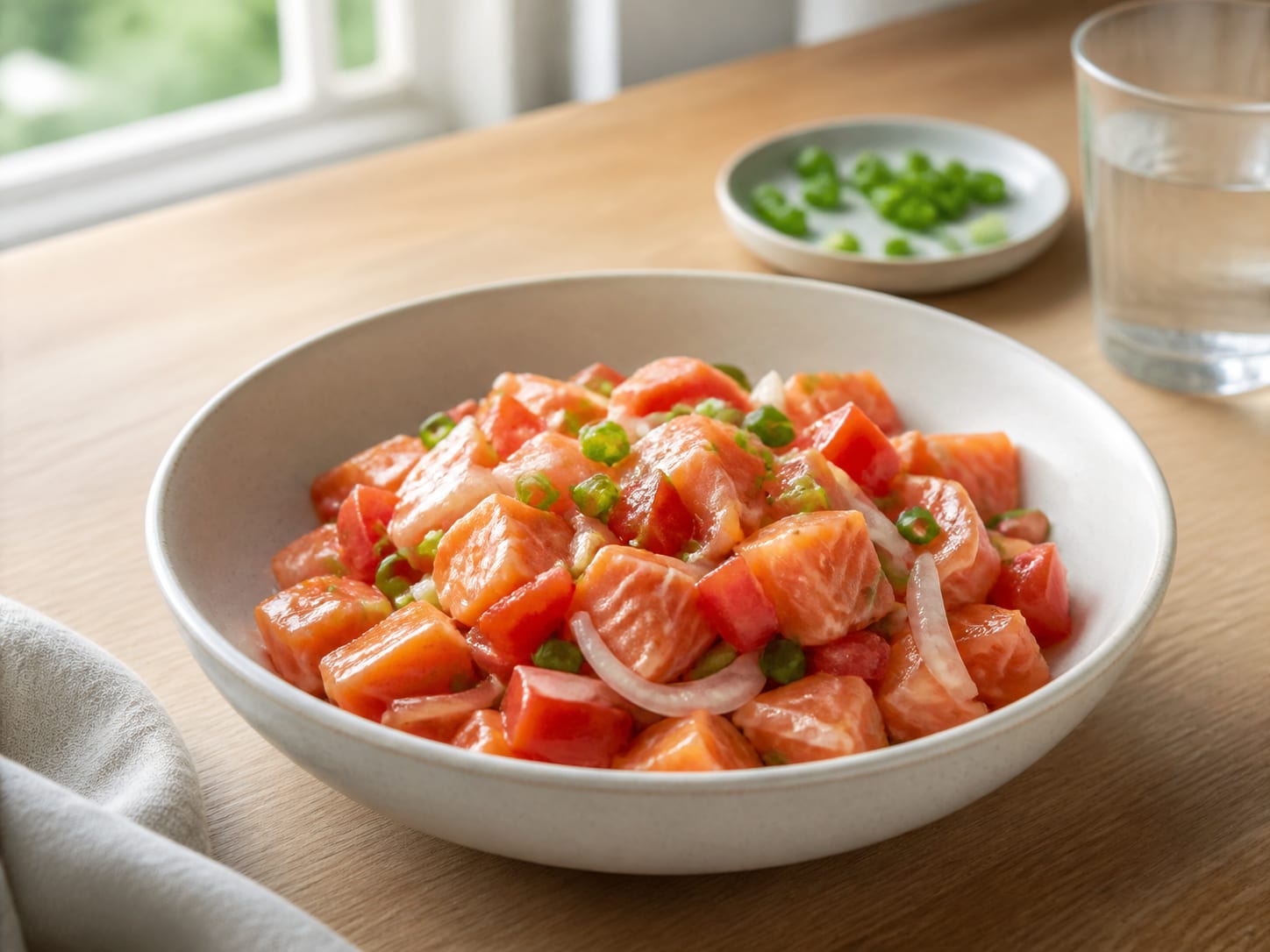
Lomi lomi salmon
A chilled Hawaiian starter of lightly salt-cured salmon tossed with ripe tomato, sweet onion, and green onion.
Prep25 min
Rest180 min
Servings6
Research-based adaptation of traditional and modern lomi lomi salmon references covering the historical salt-cure and the common lighter home version; not represented as personally tested
Ingredients
Units
Temperature
Servings
Salt-cured salmon
- 450 g sashimi-grade salmon fillet, skin and pin bones removed rounded
- 20 g fine sea salt, for the dry cure rounded
Lomi lomi mix
- 300 g ripe tomato, diced small rounded
- 150 g sweet onion, such as Maui or Vidalia, finely diced rounded
- 40 g green onion, thinly sliced rounded
- to taste Hawaiian chili pepper water, or a few dashes of hot sauce, added to taste (optional) rounded
Dietary labels are a guide, not a guarantee. If you have an allergy, read the ingredients yourself.
Method
- Dry-cure the salmon. Pat the salmon fillet dry, then coat it evenly on all sides with the fine sea salt. Set it on a rack over a plate or tray, uncovered or loosely covered, and refrigerate for 2 to 3 hours. The salt will draw out surface moisture and firm the flesh; do not cure longer than about 4 hours or the fish will turn too salty and dense for this lighter style.
- Rinse and dry. Rinse the cured salmon briefly under cold water to remove surface salt, then pat it thoroughly dry with paper towels.
- Dice the salmon. Cut the cured salmon into small, even 1 cm cubes.
- Dice the vegetables. Cut the tomato into small dice roughly matching the salmon, and finely dice the sweet onion. Thinly slice the green onion.
- Combine and massage. In a large bowl, gently combine the diced salmon, tomato, sweet onion, and green onion. Using clean hands, massage (“lomi”) the mixture together for a minute or two, just until everything is well mixed and starting to release a little juice. Do not overwork it to a mush.
- Season and chill. Taste and add the Hawaiian chili pepper water or hot sauce if using. Cover and refrigerate for at least 30 minutes, and up to a few hours, so the flavors meld and the salad turns very cold.
- Serve ice-cold. Give the mixture one more gentle toss, then serve in a chilled bowl, ideally nested in a larger bowl of ice, as a starter alongside other luau dishes.
Notes
- This lighter dry-cure is the working method above and the common modern home approach: a few hours of salting on fresh, high-quality salmon firms the texture and adds seasoning without the intense saltiness of the traditional cure.
- The traditional version salt-cures raw salmon far more heavily, packing it under a generous layer of coarse or Hawaiian sea salt and holding it in the refrigerator for a day or more, sometimes up to several days, until firm and quite salty throughout. Before use, the cured salmon is rinsed and soaked in cold water, often for an hour or more with a few changes of water, to pull out excess salt before dicing. That long, heavy cure is closer to Hawaii’s pre-contact fish-salting traditions and to the salted salmon that Hawaiian sailors first brought home from the Pacific Northwest in the early 1800s, which is how this dish came to exist at all.
- Food safety matters here because the salmon is never cooked with heat. Start with fresh, high-quality salmon labeled sashimi-grade or otherwise sold for raw consumption, keep it refrigerated until the moment you cure it, and keep the finished dish well chilled from cure through serving. Do not leave it at room temperature for more than about an hour, and discard leftovers left out longer than that.
- Ripe, in-season tomatoes make a real difference; this is a good dish for peak summer tomatoes.
- Leftovers keep, well chilled, for up to 2 days; the tomato and onion will continue to release liquid, so drain briefly before serving again.
Ingredient substitutions
- Traditional ingredient: heavily salt-cured raw salmon, packed in coarse salt and held for a day or more, then rinsed and soaked before dicing.
- Germany and Canada, quick home cure: buy fresh sashimi-grade salmon from a trusted fishmonger and dry-cure it yourself, as in the method above, with kosher or fine sea salt (and a pinch of sugar, if you like a rounder flavor) for a few hours in the refrigerator, then rinse and pat dry. This gives the closest flavor and texture to the traditional dish without the multi-day cure.
- Germany and Canada, smoked-salmon shortcut: substitute a mild cold-smoked salmon, widely available in both countries, in place of the salt-cured salmon. Rinse it briefly under cold water and pat dry to soften its saltiness before dicing, since it is usually saltier than the fresh-cured version. This shortcut shifts the flavor toward smoke rather than the traditional clean, pure salt-cure profile, but it is a common and convenient substitute.
- Sweet onion can be replaced with a mild red onion if a true sweet onion variety is not available; soak the diced onion briefly in cold water and drain if its flavor is too sharp.
Sources consulted
- Wikipedia: Lomi-lomi salmon
- Onolicious Hawaiʻi: Lomi Lomi Salmon
- Taste of Home: Lomi Lomi Salmon Recipe
- University of Hawaiʻi CTAHR Nutrition Center: Lomi Lomi Salmon
Sources consulted
From Christoph Mayer