condiment LouisianaSouthern US VeganVegetarianDairy-freeNut-freeGluten-free option barbecuemake-aheadspicy
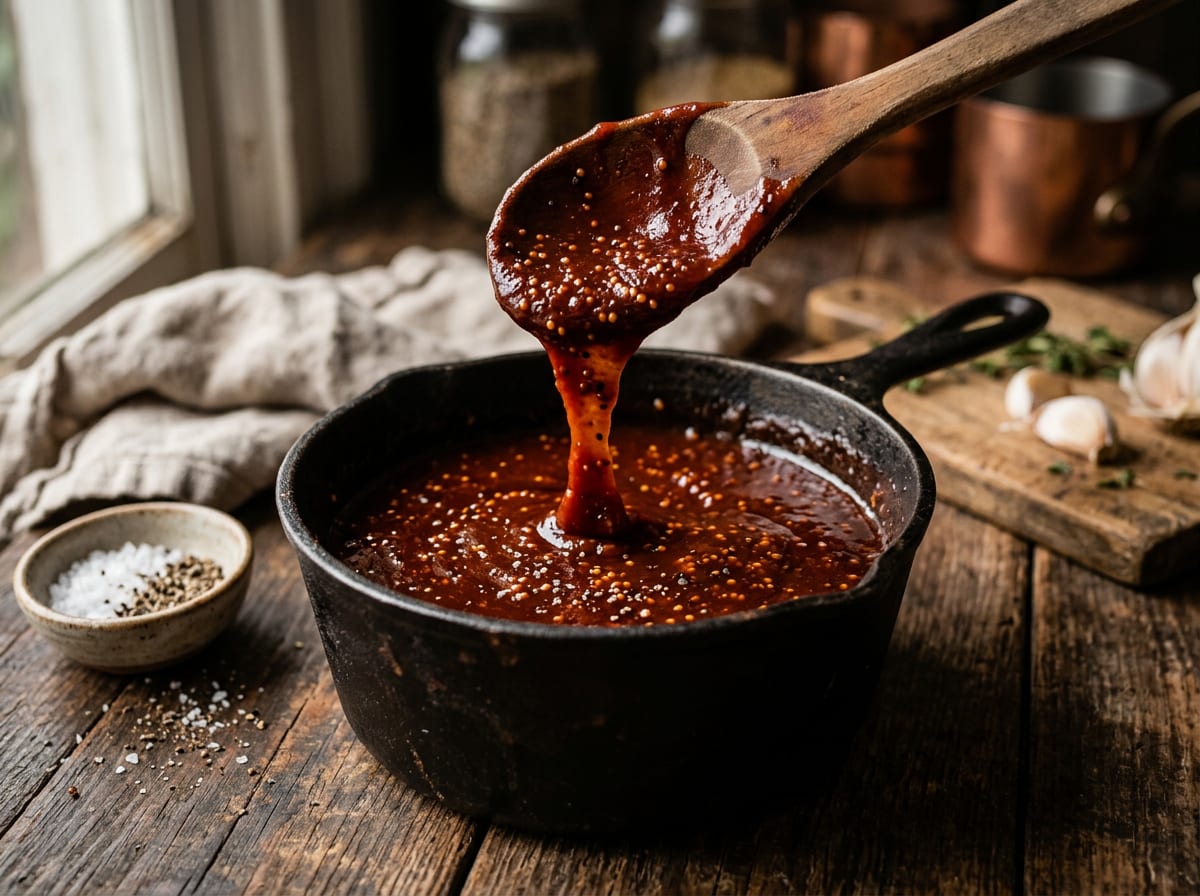
Louisiana barbecue sauce
Cane syrup, Creole mustard and enough hot sauce to notice, over a tomato base. It is the only one of the American barbecue sauces that tastes of a whole cuisine rather than of a technique, because Louisiana had its own pantry long before it had barbecue.
Prep10 min
Cook20 min
0 Servings16
Built on the Louisiana pantry rather than on any one house sauce
Ingredients
Written for a 2 L pot
Units
Temperature
Servings
Sauce
- 300 g tomato passata rounded
- 100 g cane syrup, Steen's is the Louisiana bottle; it is darker and less sweet than golden syrup rounded
- 80 ml cider vinegar rounded
- 60 g Creole mustard, coarse, brown and vinegary; a whole grain mustard is the closest substitute rounded
- 40 ml hot sauce, a Louisiana cayenne one such as Crystal or Tabasco rounded
- 20 g dark brown sugar rounded
- 12 g Creole seasoning, the house blend, and it already contains salt rounded
- 6 g garlic granules rounded
- 6 g onion granules rounded
- 5 g coarse black pepper rounded
- to taste fine salt, at the end only, because the seasoning and the hot sauce are both salty rounded
Dietary labels are a guide, not a guarantee. If you have an allergy, read the ingredients yourself.
Method
- Everything except the salt into the pan cold, whisked smooth.
- Twenty minutes at a bare simmer, stirring and scraping the bottom. The cane syrup wants to catch.
- Salt at the very end, and taste first. Between the Creole seasoning and the hot sauce it may well need none at all.
Notes
- Cane syrup is the ingredient that makes this Louisiana rather than a generic red sauce with chilli in it. It is pressed sugar cane cooked down, closer to a mild molasses than to honey, and it carries a slight bitterness and a mineral edge that sugar cannot.
- Creole mustard is the second one. It is a coarse brown mustard with the seeds left whole and a good deal of vinegar, and it gives the sauce its texture as much as its bite.
- It is hotter than the other four sauces on this site and it is meant to be. Louisiana does not treat heat as a garnish.
- On chicken thighs it is unbeatable. The sugar in it wants skin and fat to work against. On lean white meat it reads as too sweet.
- It keeps a month in the fridge.
Ingredient substitutions
- Cane syrup is hard to find outside the American South. Zuckerrübensirup is the closest thing on a German shelf, being dark, slightly bitter and not very sweet. Golden syrup is much sweeter and much less interesting; if that is the route, use 80 g rather than 100 g and add a squeeze more vinegar.
- Creole mustard substitutes well with a coarse German or French whole grain mustard plus a teaspoon of extra vinegar. Do not use Dijon, which is smooth and much hotter and will dominate the sauce.
- Hot sauce brands matter here. Crystal and Tabasco are thin, vinegary cayenne sauces. Sriracha is sweet and garlicky, chipotle sauces are smoky, and either changes the sauce into something else.
- Gluten. Most Creole mustards and cayenne hot sauces are gluten-free, but check the mustard, which is the one likely to carry wheat.
Sources consulted
Good with
Sources consulted
From Christoph Mayer