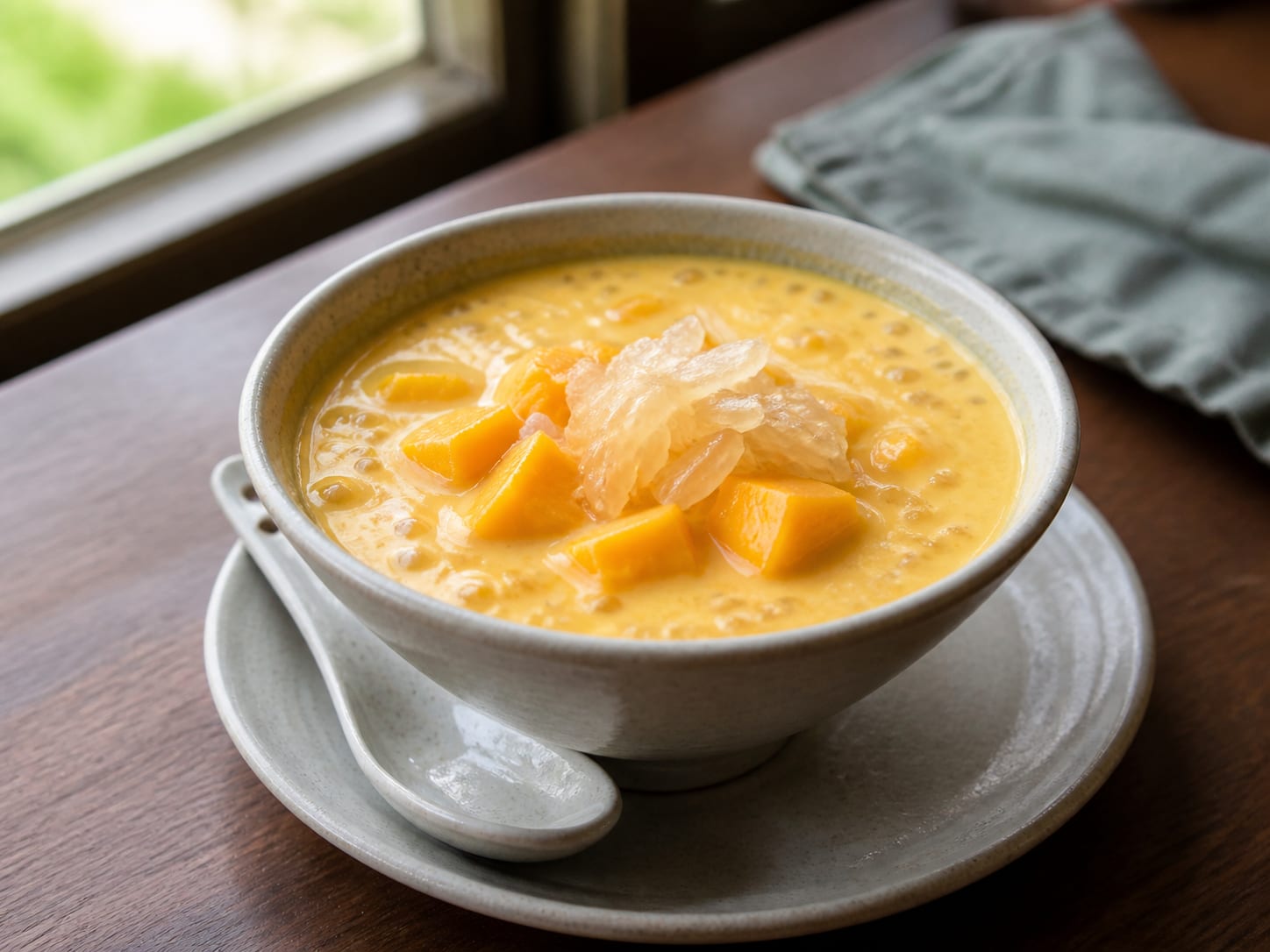
Mango pomelo sago
Yeung Ji Gam Lou, 楊枝甘露: a chilled Hong Kong dessert of pureed mango blended with coconut and evaporated milk, studded with bouncy sago pearls and fresh pomelo. Invented in 1984 at Lei Garden in Hong Kong, and only as good as the mangoes you put into it.
Prep25 min
Cook8 min
Rest60 min
Servings4
Sago cooking method and ingredient ratios adapted from SBS Food's Yeung Chi Kam Lo recipe
Ingredients
Units
Temperature
Servings
Sago
- 150 g small sago pearls, the small tapioca-style pearls, not the large ones used for bubble tea rounded
- 1 L water, for boiling the sago rounded
Mango coconut cream
- 3 ripe mangoes, peeled and stoned; keep two-thirds of the flesh for the puree and dice the rest for topping rounded
- 200 ml coconut milk, full-fat, well shaken before measuring rounded
- 150 ml evaporated milk rounded
- 50 g sugar, caster or rock sugar, to taste depending on how sweet the mangoes are rounded
- 1 pinch of fine sea salt rounded
To finish
- 1 pomelo, peeled and segmented, pith and membranes removed, flesh separated into small pieces rounded
Dietary labels are a guide, not a guarantee. If you have an allergy, read the ingredients yourself.
Method
- Bring the water to a boil in a medium saucepan. Add the sago pearls and boil for about 8 minutes, stirring occasionally so they do not stick to the bottom. Take the pan off the heat, cover, and let the sago stand for 15 to 20 minutes, until every pearl has turned from a chalky white to fully translucent with no white core left. Drain in a fine sieve and rinse under cold running water, working the pearls gently with your fingers, until they are cool and no longer sticking together. Drain well.
- While the sago steeps, peel and stone the mangoes. Set aside about a third of the flesh, cut into small dice, for the topping. Roughly chop the rest and blend it with the coconut milk, evaporated milk, sugar, and salt until smooth and pale orange.
- Peel the pomelo down to the flesh, break it into segments, and pick off the pith and inner membrane. Gently separate each segment into small pieces with your fingers, keeping them as intact as you can.
- Stir the drained sago into the mango-coconut cream. Divide between 4 bowls, or pour into one serving bowl, cover, and chill for at least 1 hour.
- Just before serving, top with the reserved diced mango and the pomelo pieces so they stay bright and the pomelo keeps its texture instead of sinking into the cream.
Notes
- Pomelo is often hard to find outside of Asian grocers in Germany. Segmented red or pink grapefruit is the closest substitute in texture, but it is noticeably more bitter and tart than pomelo, so taste a piece first and stir a little extra sugar into the cream if you need to balance it. Peel the grapefruit segments completely of membrane, the same way you would the pomelo, so no bitterness comes from that.
- The whole dish rides on the mangoes. Use the ripest, most fragrant ones you can find; if they lean tart rather than sweet, add sugar to the cream a spoonful at a time and taste as you go.
- The mango-coconut cream with sago keeps well covered in the fridge for up to 2 days. Add the diced mango and pomelo only when you are ready to serve, since both lose their texture and the mango’s color dulls if they sit in the cream too long.
- Rinse the sago thoroughly after draining. Leftover surface starch is what makes sago pearls clump into a single mass as they cool.
Sources Consulted
Sources consulted
The sago boil-and-steep timing, the coconut cream and evaporated milk combination, and the two-thirds puree, one-third diced mango split come from the source. Quantities scaled for four, the salt pinch, and the wording are original.
From Christoph Mayer