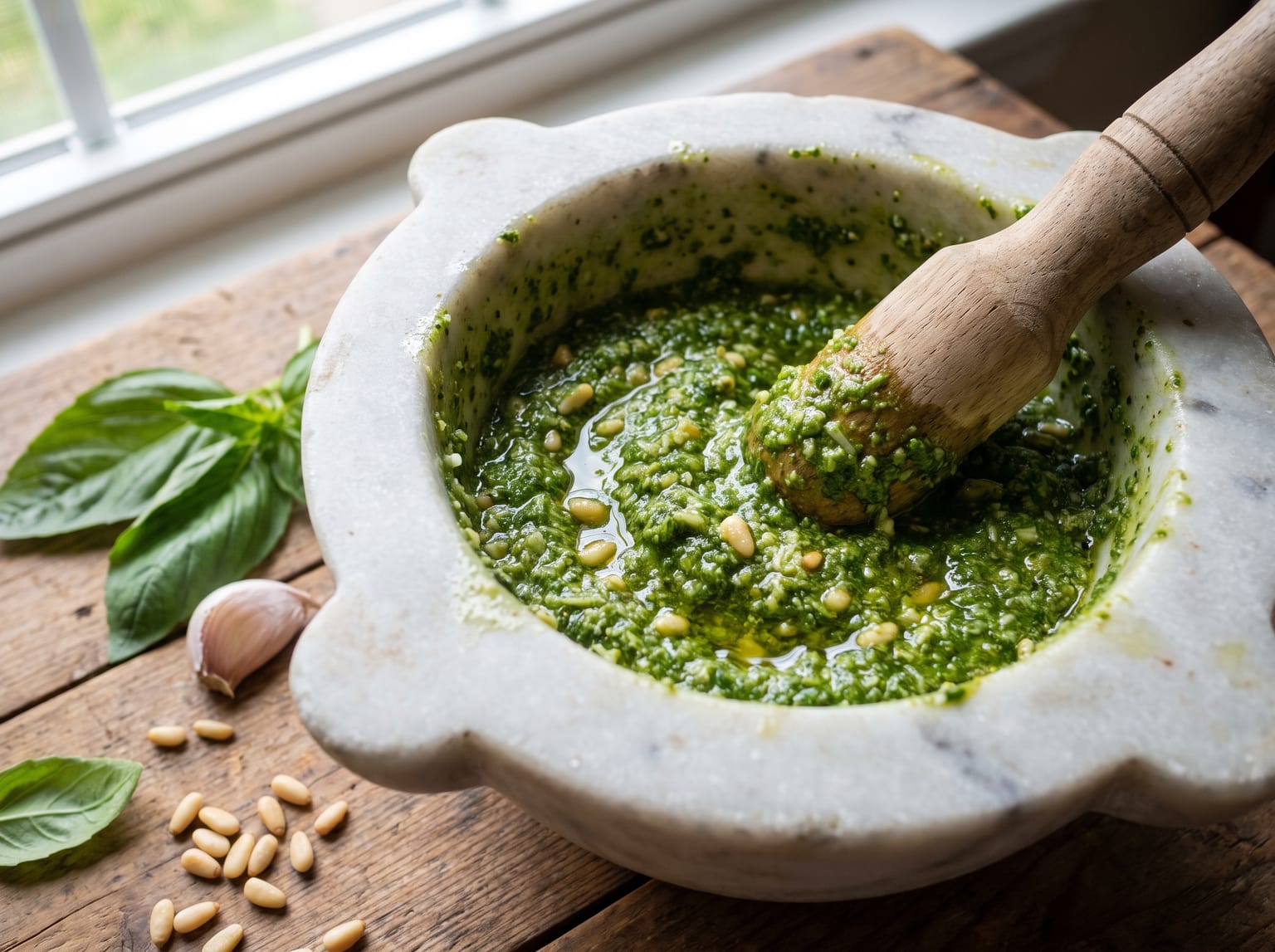
Pesto, by ratio
One set of proportions that makes every pesto. Pick a leaf, a nut, a hard cheese and an aromatic, keep the weights the same, and the thing works. The classic Genovese version is written out here and the swaps are in the table below.
Classic Genovese proportions, written as a ratio so the parts can be swapped
Ingredients
The ratio
- 120 g fresh basil leaves, the leaf; swap freely, see the table rounded
- 80 g pine nuts, the nut; swap freely, and pistachio or walnut is cheaper and arguably better rounded
- 70 g grated parmesan, the hard cheese; swap freely rounded
- 2 garlic cloves, the aromatic; swap freely rounded
- 180 ml olive oil, roughly 1.5 times the weight of the leaves rounded
- 5 g fine salt rounded
- 15 ml lemon juice, not traditional in Genoa, and it keeps the colour and lifts everything rounded
Dietary labels are a guide, not a guarantee. If you have an allergy, read the ingredients yourself.
Method
- Dry the leaves completely. Wet leaves will not emulsify and the pesto separates in the jar.
- Garlic and salt to a paste first, in a mortar or with the flat of a knife. Salt is the abrasive that does the work.
- Nuts to a rubble, then the leaves a handful at a time.
- Cheese, then oil last, poured in a thin stream while stirring.
- Season with lemon and salt and taste it on bread rather than off the spoon.
With a food processor: freeze the bowl and blade for 15 minutes first and pulse in short bursts. Heat from the blade is what turns pesto brown.
The swap table
Keep the weights. Change the parts. Every row works with every other row.
| Leaf (120 g) | Nut (80 g) | Cheese (70 g) | Aromatic |
|---|---|---|---|
| Basil | Pine nut | Parmesan | Garlic, 2 cloves |
| Wild garlic | Pistachio | Pecorino | Garlic, 1 clove |
| Rocket | Walnut | Grana padano | Shallot |
| Parsley | Almond | Manchego | Garlic and lemon zest |
| Coriander | Cashew | Feta, crumbled | Green chilli |
| Basil and mint | Hazelnut | Ricotta salata | Garlic and anchovy |
| Carrot tops | Sunflower seed | Nutritional yeast | Garlic, 2 cloves |
| Kale, blanched | Pumpkin seed | Parmesan | Garlic and chilli |
| Sun-dried tomato, 60 g plus basil 60 g | Almond | Pecorino | Garlic |
Four combinations worth knowing. Rocket, walnut and pecorino is bitter and excellent on beef. Parsley, almond and manchego is a Spanish direction that suits fish. Coriander, cashew and green chilli is not Italian at all and is very good with noodles. Carrot top and sunflower seed costs nothing and uses the part you throw away.
Notes
- The ratio in round numbers is 3 parts leaf, 2 parts nut, 2 parts cheese by weight, with oil at about 1.5 times the leaf weight. Everything else is seasoning.
- Adjust the oil to the job. Less for spreading on bread or dolloping on soup, more for coating pasta. And always loosen pasta pesto with a spoon of the cooking water, off the heat, which emulsifies it and makes it cling.
- Never heat pesto. Add it to drained pasta off the heat. Cooked basil goes dark and tastes of hay.
- Bitter greens want more cheese and more nut, softer leaves want less. Rocket and kale need the extra fat to balance them.
- Freeze it without the cheese in ice cube trays, then stir the cheese in on thawing. A year in the freezer.
- Salt varies with the cheese. Pecorino and feta bring a lot; nutritional yeast brings none. Always season last.
Ingredient substitutions
- Nut allergies. Sunflower and pumpkin seeds both work at the same weight and are genuinely good rather than a compromise.
- Dairy-free. Nutritional yeast at half the weight of the cheese, plus a teaspoon of white miso for the savoury depth the cheese was providing.
- Vegetarian. The anchovy in the basil and mint row is optional, and a teaspoon of white miso with a few chopped capers covers the same ground. The cheese is the harder part: most parmesan and pecorino are made with animal rennet, so look for a vegetarian hard cheese or use nutritional yeast as above.
Sources consulted
Good with
From Christoph Mayer