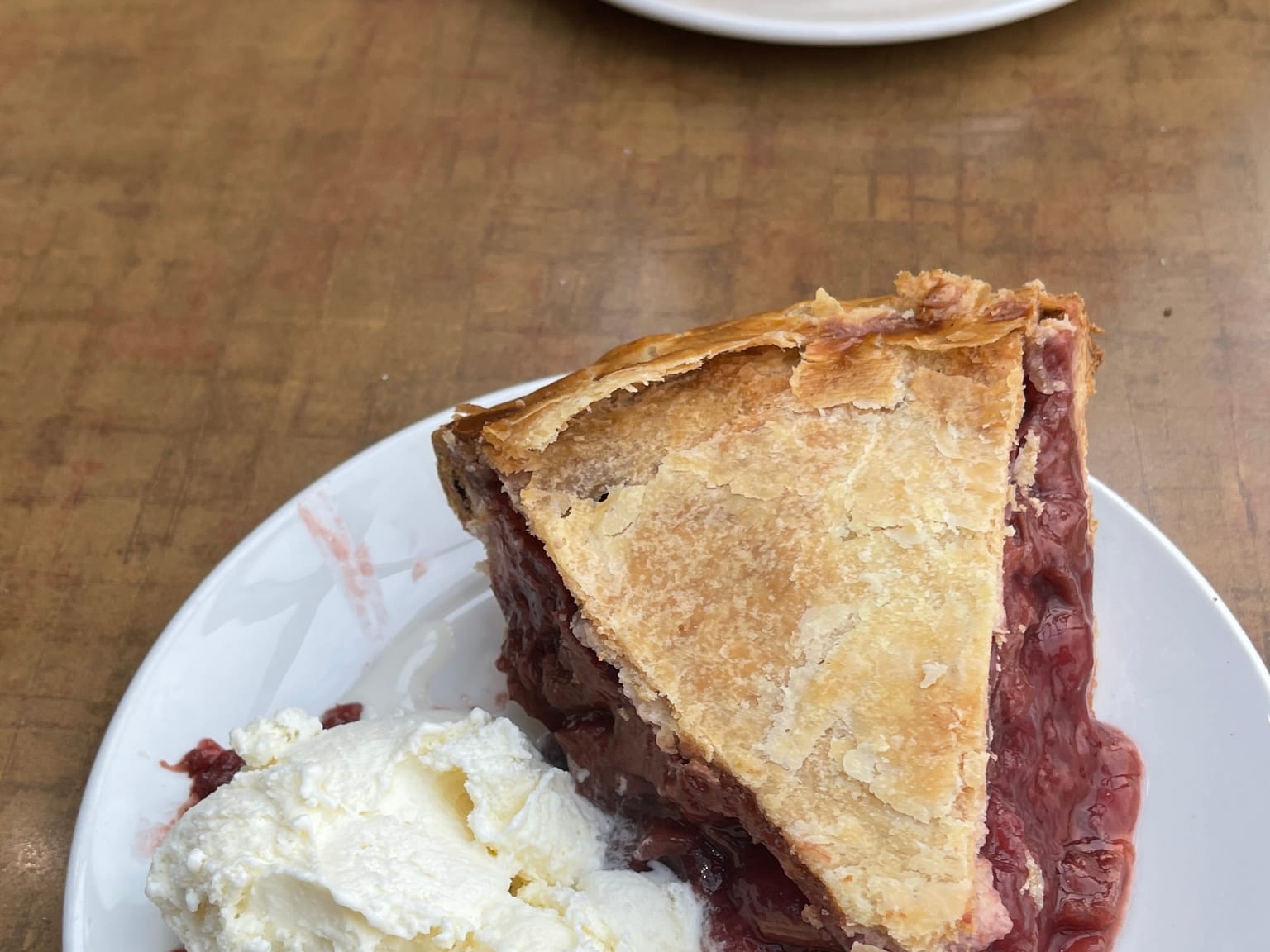
Plum pie
A double-crust American pie packed with plums that collapse into something dark and jammy, under a short, flaky lid. Tapioca rather than cornstarch, so the juice sets clear instead of cloudy, and a cut lid so it never turns to soup.
Prep40 min
Cook65 min
Rest300 min
Oven220°C
Servings8
Reconstructed from a pie eaten at home, using standard American double-crust method
Ingredients
Written for a 23 cm round tin
Units
Temperature
Servings
Pastry
- 320 g plain flour rounded
- 12 g granulated sugar rounded
- 6 g fine salt rounded
- 225 g unsalted butter, very cold, cut into 1 cm cubes rounded
- 90 ml ice water, add the last of it only if the dough will not come together rounded
Filling
- 1 1/8 kg ripe plums, stoned and quartered; about 1.3 kg before stoning rounded
- 150 g granulated sugar rounded
- 40 g instant tapioca, ground fine; cornstarch works but sets cloudy rounded
- 15 ml lemon juice rounded
- 2 g ground cinnamon rounded
- 1 g fine salt rounded
- 20 g unsalted butter, cut small, dotted over the fruit rounded
To finish
- 1 egg, beaten with a splash of milk rounded
- 10 g demerara sugar, for the lid rounded
- to taste whipped cream, to serve, and be generous rounded
Dietary labels are a guide, not a guarantee. If you have an allergy, read the ingredients yourself.
Method
- Make the pastry. Whisk the flour, sugar, and salt. Add the cold butter and rub or cut it in until the largest pieces are the size of a flattened pea. Leave them visibly larger than breadcrumbs; those sheets of butter are what make the lid flaky rather than sandy. Sprinkle over 75 ml of the ice water and cut it through until the dough holds when squeezed. Add the rest only if it will not.
- Divide into two discs, one slightly larger for the base. Wrap and chill for at least 1 hour. This is not optional: warm pastry shrinks down the sides of the plate as it bakes and leaves the filling exposed.
- Macerate the fruit. Toss the plums with the sugar, tapioca, lemon juice, cinnamon, and salt. Leave for 30 minutes. The sugar pulls juice out, and the tapioca sits in that juice and begins to hydrate, which is what lets it set cleanly later.
- Line the plate. Roll the larger disc to about 3 mm and line a 23 cm plate, leaving the overhang. Chill it while the oven heats to 220°C with a heavy tray on the lowest rack. The hot tray under the plate is what cooks the base; without it the bottom crust stays pale and damp.
- Fill and lid. Tip in the fruit and all its juice and dot the butter over. Roll the second disc, lay it over, trim to a 2 cm overhang, fold the edges under, and crimp firmly. Cut at least five generous vents. Steam that cannot leave lifts the lid off the fruit and boils the filling into soup.
- Brush the lid with egg wash and scatter the demerara over it.
- Bake. 20 minutes at 220°C, then drop to 190°C and bake for another 40 to 50 minutes. Shield the rim with foil once it is as brown as you want it. It is done when the lid is gold all over and the juice bubbles slowly and thickly at the vents.
- Cool completely. At least 4 hours, and overnight is better. This is the hardest instruction in the recipe and the one that decides whether you get a slice or a puddle: the tapioca only sets as it cools. Serve at room temperature with whipped cream.
Notes
- Which plums. Italian prune plums or Zwetschgen hold their shape and go dark and concentrated. Round dessert plums are wetter and sweeter, so drop the sugar to about 120 g and add another 10 g of tapioca.
- Tapioca over cornstarch. Cornstarch works and is easier to find, but it sets the juice opaque and can taste chalky at the quantity a wet fruit pie needs. Tapioca sets it glossy and clear. Grind the instant pearls in a spice mill so they dissolve rather than staying as beads.
- The base. If the bottom crust worries you, blind-bake the base for 15 minutes with weights before filling. The preheated tray usually makes that unnecessary.
- Getting ahead. The pastry keeps 3 days in the fridge and 2 months frozen. A whole baked pie is fine at room temperature for a day, covered, and does not want the fridge, which softens the crust.
- Not a Zwetschgenkuchen. That is a yeasted sheet cake with the fruit packed on top and nothing over it. This is a closed pie with a lid, and the two are not versions of each other.
Sources consulted
Good with
Sources consulted
The photograph is Christoph's own.
From Christoph Mayer