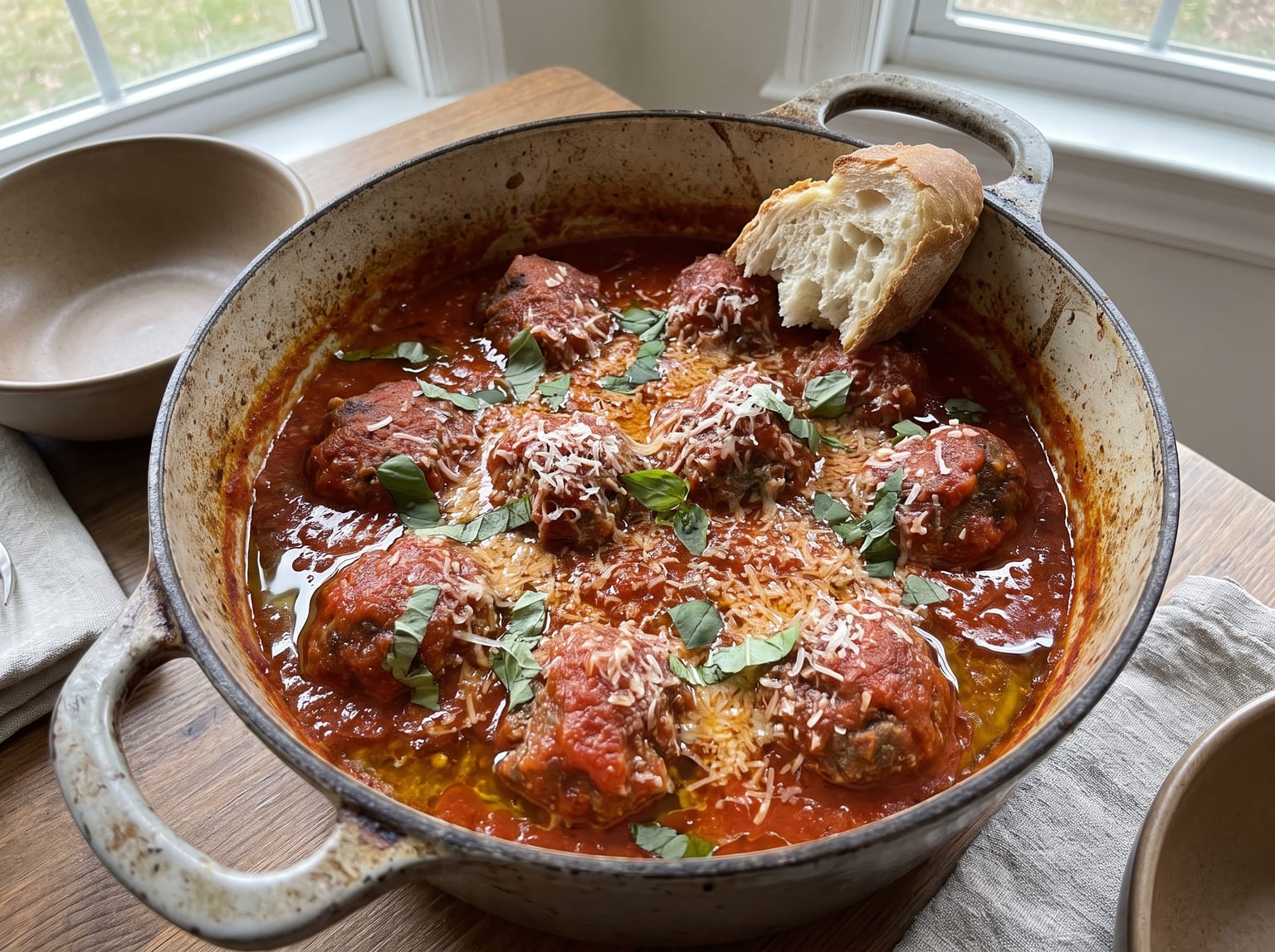
Polpette al sugo
Neapolitan beef meatballs simmered slowly in tomato until the sauce takes on the meat and the meat takes on the sauce. Soaked bread rather than breadcrumbs, a lot of pecorino, and two hours at a bare simmer that cannot be rushed.
Prep35 min
Cook130 min
Rest30 min
Servings6
Neapolitan Sunday method, beef alone rather than the usual mixed mince
Ingredients
Written for a 26 cm pot
Units
Temperature
Servings
Meatballs
- 800 g ground beef, about 15 percent fat rounded
- 120 g stale white bread, crusts off, soaked in milk and squeezed out rounded
- 150 ml whole milk, for soaking the bread rounded
- 100 g grated pecorino, or parmesan; this much is correct rounded
- 2 eggs rounded
- 3 garlic cloves, crushed to a paste rounded
- 20 g flat-leaf parsley, finely chopped rounded
- 9 g fine salt rounded
- 3 g black pepper rounded
- 60 ml olive oil, for browning rounded
Sugo
- 1 3/8 kg tinned whole plum tomatoes, crushed by hand, and buy the good ones rounded
- 1 onion, finely diced rounded
- 30 ml olive oil rounded
- 100 ml dry red wine rounded
- 15 g fresh basil, a whole sprig in, torn leaves at the end rounded
- 6 g fine salt rounded
Method
- Soak the bread in milk, not water. Ten minutes, then squeeze it out. This is the Italian grandmother trick that most recipes replace with dry breadcrumbs, and dry breadcrumbs are why so many meatballs are dense. Soaked bread keeps them light for two hours in a pot.
- Mix gently and rest. Beef, bread, pecorino, eggs, garlic, parsley, salt and pepper. Combine with your hands until it just comes together and stop there. Unlike ćevapi, you do not want the protein worked here: overworked polpette are bouncy and tight. Rest 30 minutes in the fridge.
- Roll big. About 70 g each, rolled loosely with wet hands. Neapolitan polpette are a mouthful and a half, not a canapé.
- Brown them properly. Olive oil in a wide heavy pot over medium-high heat. Brown in two batches, turning to get colour on most sides, about 6 minutes a batch. Lift them out. The brown crust and the fond left in the pot are half the flavour of the finished sauce.
- Build the sugo in the same pot. Pour off all but a couple of spoons of fat, add the second oil and the onion and cook 8 minutes until soft. Pour in the wine, scrape the base clean and let it reduce almost away.
- Add the hand-crushed tomatoes, the basil sprig and the salt. Bring to a simmer.
- Return the meatballs and go slow. Lowest heat, lid ajar, 2 hours, stirring gently every 20 minutes so nothing catches. Do not let it boil. The sauce should barely move.
- It is ready when the oil separates. A slick of orange oil at the surface and a colour closer to brick than to red. Fish out the basil sprig, add torn fresh leaves, and rest 30 minutes off the heat before serving.
Notes
- Two hours is the recipe. Thirty minutes gives you meatballs sitting in tomato sauce. Two hours gives you polpette al sugo, where the two things have become one thing. There is no shortcut and there is no substitute for time here.
- Cook the pasta in the sauce, not the meatballs with the pasta. In Naples the sugo dresses pasta as a first course and the polpette come after as the meat course. Doing both from one pot is the entire point of making this much.
- Do not work the mince. This is the opposite instruction to the ćevapi and köfte on this site, and the difference is real: those are grilled and need to bind, these are simmered and need to stay tender.
- Ahead and freezing. Better on day two, keeps 4 days, and freezes for 3 months in the sauce.
Ingredient substitutions
- Pecorino is saltier and sharper than parmesan and is the Neapolitan choice. Parmesan works and you may want slightly more salt.
- Tinned whole plum tomatoes crushed by hand beat pre-chopped tins, which are usually lower-grade fruit held together with added tomato juice. Passata is smoother and fine but gives a less interesting texture.
Sources consulted
Good with
Sources consulted
From Christoph Mayer