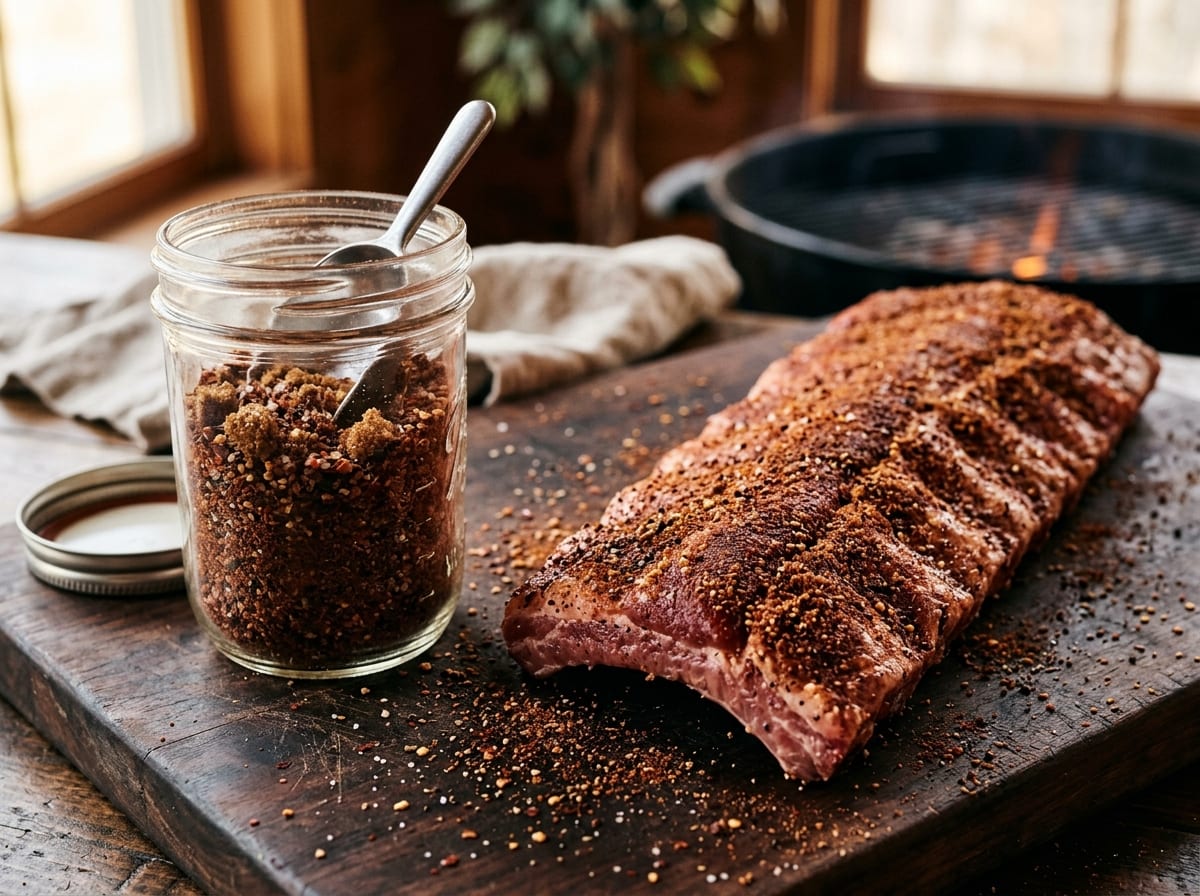
Pork rib rub
The sweetest rub on the site, and the only one where that is correct. Ribs cook low and slow at 135°C, which is below the point sugar burns, so it caramelises into a lacquer instead of turning bitter.
Prep5 min
0 0 Servings14
The house rib jar, sugar-forward because the cook stays low
Ingredients
Units
Temperature
Servings
Rub
- 60 g dark brown sugar, three times what the chicken jar takes, and that is the whole difference rounded
- 50 g sweet paprika rounded
- 40 g fine salt rounded
- 20 g coarse black pepper rounded
- 15 g celery salt, the quiet savoury note under all that sweetness rounded
- 12 g mustard powder rounded
- 12 g garlic granules rounded
- 10 g onion granules rounded
- 6 g cayenne rounded
Dietary labels are a guide, not a guarantee. If you have an allergy, read the ingredients yourself.
Method
- Mix the sugar in last and crush every lump. A lump of brown sugar on a rib becomes a black spot.
- Apply thickly and leave at least an hour, or overnight in the fridge.
- Keep the cook at 135°C. The whole recipe assumes it.
Notes
- This is where the sugar belongs. Across the rubs on this site the sugar goes from zero on brisket to three parts here, and the only variable driving it is cooking temperature. Ribs are the one cut cooked slowly enough for a heavily sweet rub to work as intended.
- Celery salt and mustard powder are the two that stop it being a dessert. Both are savoury and slightly bitter and neither announces itself.
- Store it airtight and dark. Anything with this much brown sugar draws moisture and will set into a brick in a damp cupboard. A bay leaf in the jar helps.
- It is very good on pork shoulder too, which cooks at 150°C, though you can drop the sugar to 40 g there.
Ingredient substitutions
- Celery salt is easy to make: grind celery seed with an equal weight of fine salt.
- Muscovado in place of ordinary brown sugar is darker and more molasses-heavy and makes a noticeably better lacquer, but it clumps far more, so sieve it.
Sources consulted
Good with
Sources consulted
From Christoph Mayer