Main Chinese restaurant-styleChinese Dairy-freeVegetarian option chickenwarm-spicesdeep-friedricetofuvegetablesbakingmake-aheadstir-fry
Shanghai-style crispy chicken curry
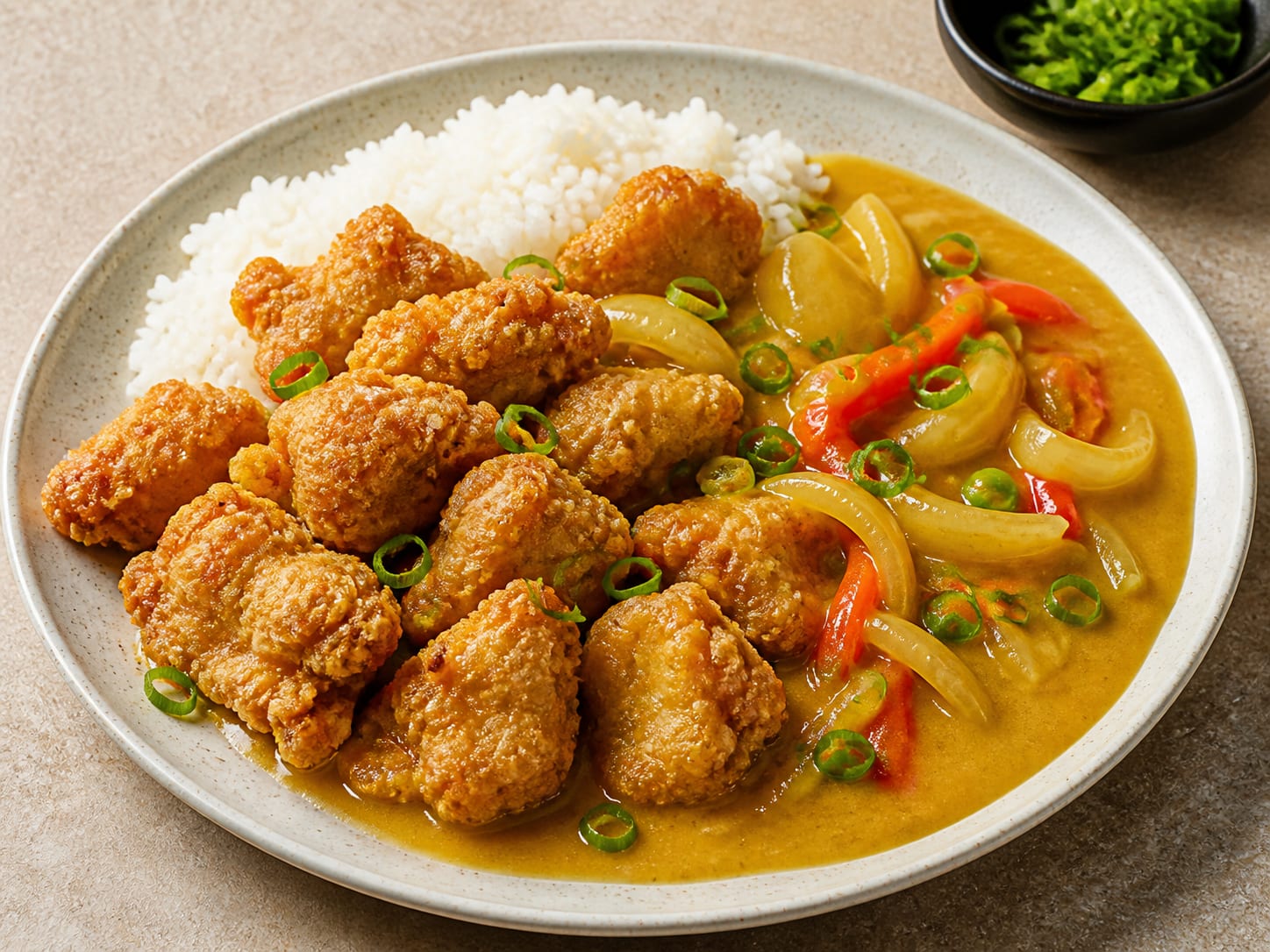
Lightly battered chicken stays audibly crisp beside a glossy Chinese restaurant curry of onion, carrot, pepper, peas, turmeric, and five-spice, with a complete rough-torn tofu route.
Adapted as a German Chinese-restaurant-style curry from The Woks of Life and Omnivore's Cookbook, with the light restaurant batter from The Woks of Life
Ingredients
Written for a 4 L pot
Units
Temperature
Servings
Crispy chicken
- 600 g boneless skinless chicken breast or thigh, cut into even 3 cm pieces rounded
- 15 ml Shaoxing wine, or dry sherry rounded
- 10 ml light soy sauce rounded
- 2 g fine salt rounded
- 1 g ground white pepper rounded
- 100 g all-purpose flour rounded
- 45 g cornstarch rounded
- 4 g baking powder rounded
- 1 g baking soda rounded
- 170 ml ice-cold sparkling water or water rounded
- 15 ml neutral oil, mixed into the batter rounded
- 1 1/6 L neutral frying oil, rapeseed or sunflower; enough for 4 to 5 cm depth rounded
Shanghai-style restaurant curry sauce
- 30 ml neutral oil rounded
- 180 g yellow onion, cut into 2 cm wedges rounded
- 120 g carrot, thinly sliced on the diagonal rounded
- 120 g red bell pepper, cut into bite-size pieces rounded
- 15 g fresh ginger, finely grated rounded
- 3 garlic, finely grated rounded
- 16 g mild Madras or Chinese curry powder, about 2 tablespoons, preferably S&B or a mild Madras blend rounded
- 4 g ground turmeric rounded
- 1 g Chinese five-spice powder, about 1/2 teaspoon; do not free-pour rounded
- 500 ml unsalted chicken stock, use vegetable stock for the tofu version rounded
- 15 ml light soy sauce rounded
- 15 ml oyster sauce, use vegetarian mushroom oyster sauce for the tofu version rounded
- 10 g sugar rounded
- 100 g frozen peas rounded
- 20 g cornstarch rounded
- 40 ml cold water rounded
To serve
- 300 g jasmine rice, dry weight rounded
- 3 scallions, thinly sliced rounded
Dietary labels are a guide, not a guarantee. If you have an allergy, read the ingredients yourself.
Method
- Rinse the rice and cook it by your preferred method. Keep it covered while you make the curry.
- Mix the chicken with the Shaoxing wine, soy sauce, salt, and white pepper. Leave it for 15 minutes while you prepare the vegetables and sauce ingredients.
- For the batter, whisk the flour, 45 g cornstarch, baking powder, and baking soda. Add the ice-cold sparkling water and 15 ml oil, then stir only until no dry pockets remain. A few small lumps are better than an overworked batter. Keep it cold.
- Heat the frying oil to 170°C in a deep, stable pot. Dip six or seven chicken pieces in the batter, let the heavy excess drip away, and lower them into the oil one at a time. Fry for about 3 minutes, turning, until pale gold, crisp, and 74°C in the centre. Drain on a wire rack and repeat. Skim loose batter between batches.
- Heat 30 ml oil in a wide saucepan or wok over medium-high. Stir-fry the onion and carrot for 3 minutes. Add the bell pepper and cook 1 minute more; the vegetables should keep some bite.
- Push the vegetables aside. Add the ginger and garlic to the exposed oil for 30 seconds, then add the curry powder, turmeric, and five-spice. Stir constantly for another 30 seconds, just until fragrant. Five-spice burns quickly and turns bitter.
- Pour in the stock while stirring. Add the soy sauce, oyster sauce, and sugar. Bring to a simmer and cook for 5 minutes, until the carrot is tender but not soft.
- Stir the 20 g cornstarch into the 40 ml cold water again just before using it. Keep the curry moving and pour in half the slurry. Simmer for 30 seconds, then add only enough of the remainder for a glossy sauce that coats a spoon in a smooth sheet. Add the peas and simmer for 2 minutes. Taste for salt, sweetness, and curry warmth.
- Raise the frying oil to 185°C. Re-fry the chicken in two batches for 40 to 60 seconds, until deep gold and audibly crisp. Return it to the rack and season lightly with salt.
- Spoon rice into wide bowls and ladle the curry beside it. Set the crispy chicken partly over the rice and only just touching the sauce, then scatter with scallions. Serve extra curry at the table rather than drowning the crust.
Tofu version
- Replace the chicken with 600 g extra-firm tofu, the chicken stock with vegetable stock, and oyster sauce with vegetarian mushroom oyster sauce. The curry itself is then vegan.
- Press the tofu for 15 minutes and pat it very dry, or simmer it whole for 3 minutes in salted water instead (see the tofu prep formula), then tear the tofu by hand into rough 3 cm pieces. The craggy faces create more surface area for starch, browning, and sauce than clean cubes.
- Toss with 45 g cornstarch, 2 g salt, 1 g white pepper, and 30 ml neutral oil. Bake at 220°C for 25 to 30 minutes, air-fry at 200°C for 16 to 18 minutes, or shallow-fry until crisp on several irregular faces.
- Make the sauce as written. Fold half the tofu through it for 30 seconds so those pieces absorb sauce, and keep half on top for contrast.
Notes
- The name. “Shanghai curry” is not a canonical Shanghainese dish with one fixed recipe. German and Western Chinese restaurants use Shanghai as a house label for several unrelated sauces. This version is labelled Shanghai-style because it reconstructs the glossy yellow restaurant curry the name commonly points to, rather than pretending to document a regional Shanghai classic.
- Why it recalls Japanese curry. Both begin with mild commercial curry powder, turmeric, sweetness, stock, and a thick sauce over rice. Chinese takeaway curry uses cornstarch rather than a dark flour roux and tastes brighter. The small measure of five-spice adds cinnamon, star anise, clove, fennel, and pepper, the warm aromatic note that can make it feel uncannily close to Japanese curry while still tasting different.
- If yours was coconut-red. Some German restaurant dishes sold under Shanghai-themed names are actually red coconut curry. Replace 150 ml of stock with full-fat coconut milk, omit the turmeric and five-spice, and fry 35 g red Thai curry paste with the aromatics. That is a useful variant, but it is a different sauce.
- Keep the crunch. Sauce under and beside the chicken gives you both textures. Tossing every piece through a starch-thickened sauce turns the crust soft within minutes.
- Air-fryer shortcut. Use the same tofu instructions for the best meat-free result. For chicken, a starch-flour-egg dredge works better in an air fryer than wet batter; the wet restaurant batter needs hot oil to set.
- Make ahead. The curry sauce keeps four days and freezes for two months. Reheat it with a splash of stock. Fry the chicken fresh.
Sources consulted
- The Woks of Life: 15-Minute Chinese Chicken Curry
- Omnivore’s Cookbook: Easy Chinese Curry Chicken
- Kitchen Sanctuary: Chinese Chicken Curry
- The Woks of Life: Sweet and Sour Chicken restaurant batter
Good with
From Christoph Mayer