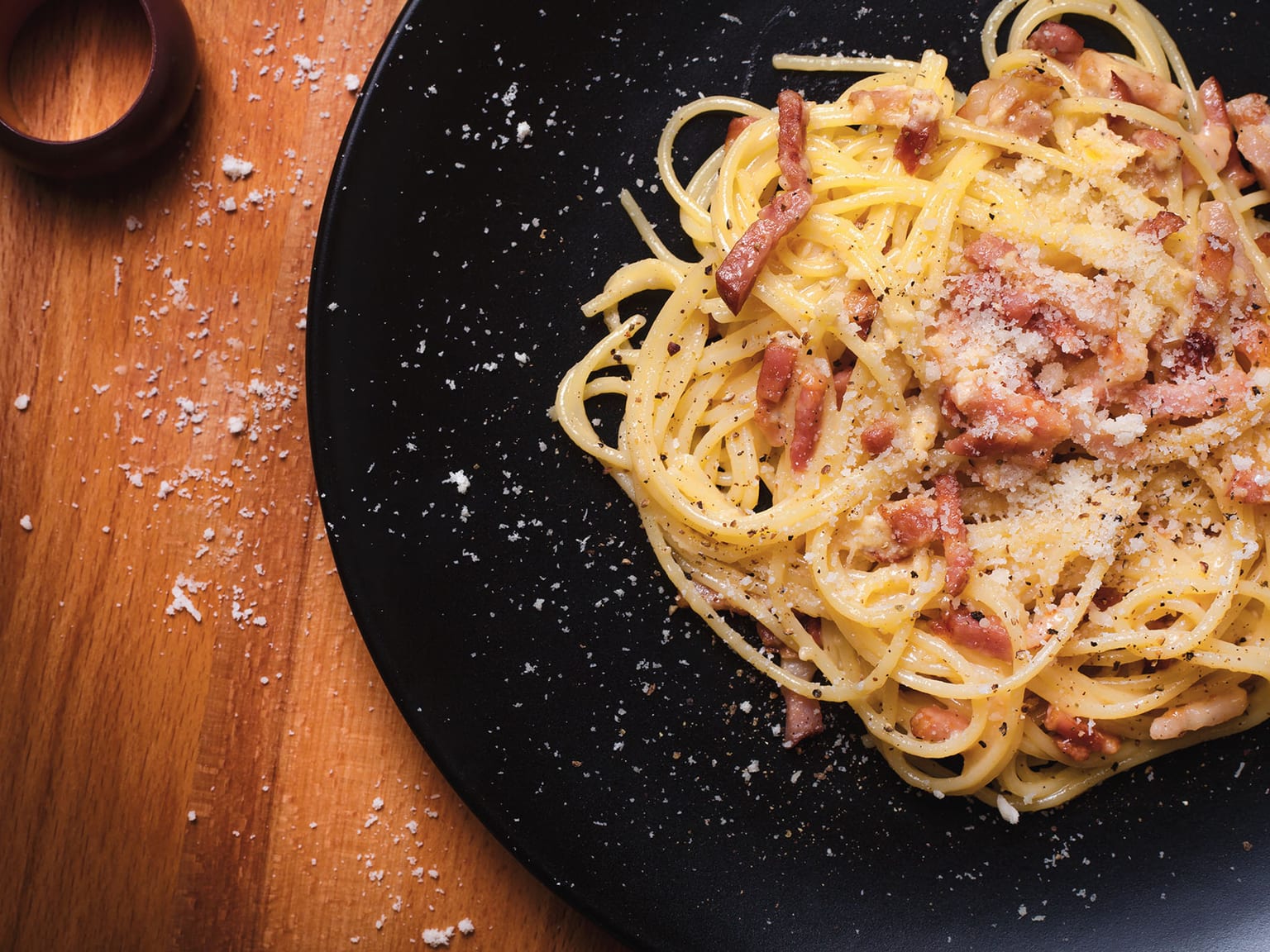

Traditional spaghetti alla carbonara
Roman spaghetti coated off the heat with pasteurized egg yolks, Pecorino Romano, guanciale fat, black pepper, and starchy cooking water, with no cream.
Prep15 min
Cook20 min
Servings4
Adapted from documented Roman carbonara technique with a pasteurized-yolk safety choice and region-specific substitution guidance.
Ingredients
Written for a 30 cm pan
Units
Temperature
Servings
Pasta and guanciale
- 320 g spaghetti rounded
- 150 g guanciale, skin removed, cut into short 5 mm batons rounded
- to taste fine salt, for the pasta water, used sparingly rounded
Egg and cheese sauce
- 6 pasteurized egg yolks, about 100 g total rounded
- 60 g Pecorino Romano, finely grated; traditional formula, no cream rounded
- 4 g black pepper, coarsely ground rounded
- 200 ml starchy cooking water, reserved before draining; use only as needed rounded
Method
- Bring a large pot of water to the boil. Salt it more lightly than usual because guanciale and Pecorino are both salty. Add the spaghetti and cook until about 2 minutes short of the package’s al dente time.
- Put the guanciale in a cold 30 cm skillet. Set it over medium-low heat and render for 8 to 10 minutes, stirring occasionally, until the fat is clear and the batons are golden with crisp edges. No oil is needed. Transfer one quarter of the guanciale to a plate for finishing and leave the remaining guanciale and fat in the pan.
- Toast half the black pepper in the guanciale fat for 30 seconds, then take the skillet off the heat. In a heatproof bowl, mix the pasteurized egg yolks, Pecorino Romano, and remaining pepper into a thick paste.
- Before draining, reserve at least 200 ml starchy cooking water. Add 30 ml of the hot water to the yolk mixture in a thin stream while whisking. This loosens and tempers the sauce, but it does not pasteurize an unpasteurized egg.
- Transfer the spaghetti straight to the skillet. Add 60 ml pasta water and toss over medium heat for 45 to 60 seconds, until the pasta is al dente and a light emulsion coats the strands. Remove the pan from the heat and wait 30 seconds so its most aggressive heat subsides.
- Add the yolk and cheese mixture. Toss vigorously and continuously, adding more starchy cooking water 15 ml at a time until the sauce is glossy and fluid. Keep the pan off the heat unless it becomes genuinely cool. If reheating is necessary, use the lowest heat for only a few seconds while tossing constantly.
- Divide immediately among warm bowls. Finish with the reserved guanciale and extra black pepper. Carbonara waits for no one.
Ingredient substitutions
- In Germany, unsmoked Pancetta is the closest practical substitute for guanciale. Durchwachsener Speck is often smoked and leaner, so it changes the flavour and may need 5 ml olive oil to render cleanly.
- In Canada, seek imported guanciale or unsmoked pancetta. Canadian bacon is lean, cured loin rather than jowl and is a distinctly nontraditional substitute; dice it and add 5 ml olive oil because it will release little fat.
- Pecorino Romano gives the expected sharp, salty profile. Parmigiano Reggiano melts well but makes a milder and less Roman carbonara.
- Use commercially pasteurized shell eggs or pasteurized yolks when available, especially for pregnant people, young children, older adults, and anyone with a weakened immune system. Off-heat tossing does not reliably bring every part of the sauce to a pathogen-killing temperature.
Notes
- Traditional carbonara contains no cream. Starchy cooking water, rendered guanciale fat, egg yolks, and finely grated cheese form the sauce.
- Finely grated cheese and controlled heat prevent clumps. Visible curds mean the pan was too hot.
- Serve immediately. Refrigerate leftovers within 2 hours and use within 1 day. Reheat once to 74°C, understanding that the sauce will become firmer and lose its original gloss.
Sources consulted
- GialloZafferano: Spaghetti Carbonara
- FoodSafety.gov: Salmonella and eggs
- German Federal Institute for Risk Assessment: Preventing foodborne infection at home
Good with
Sources consulted
The six-yolk formula is designed for a glossy sauce without cream and does not claim that residual heat pasteurizes raw egg.
From Christoph Mayer