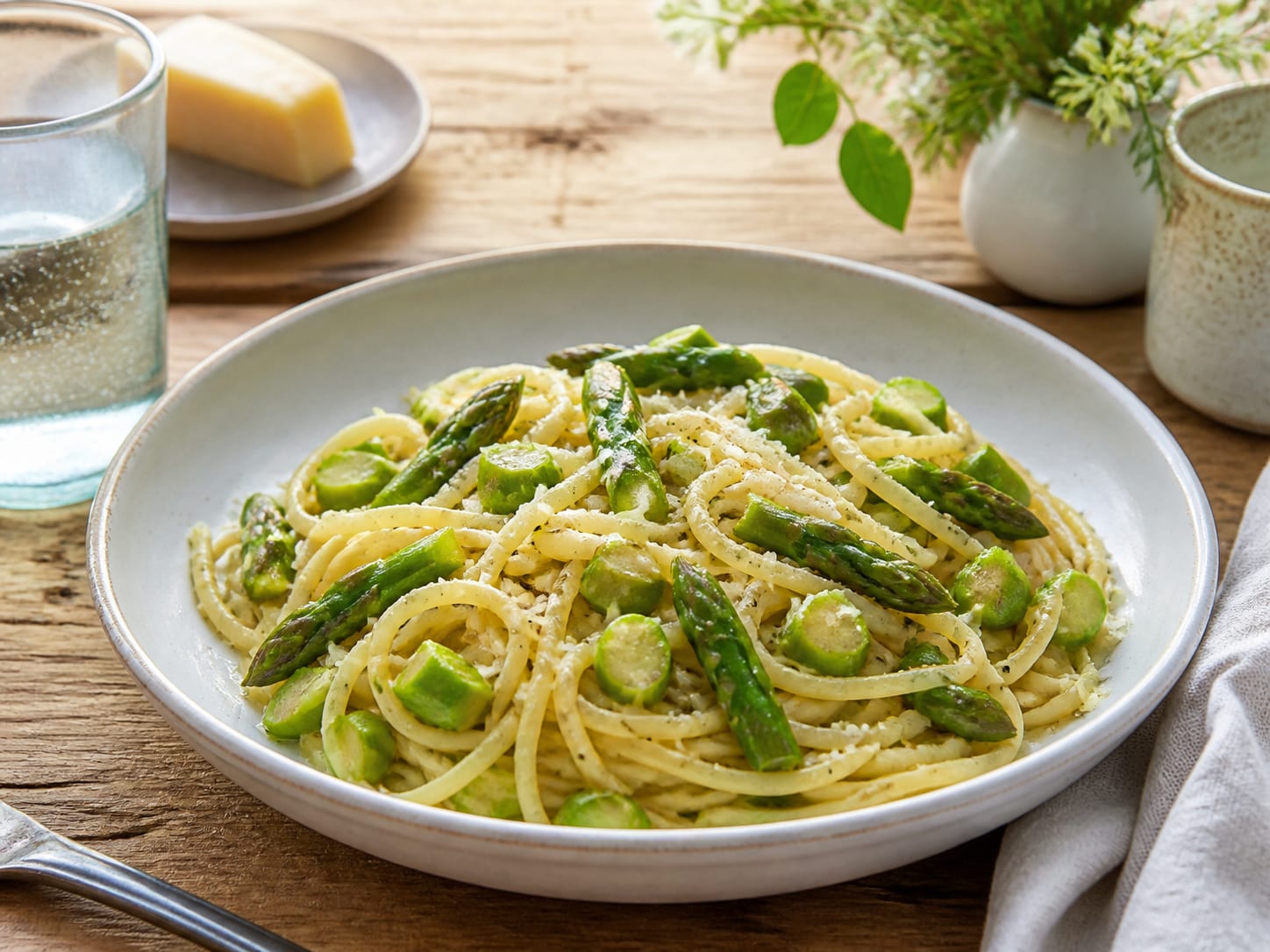
Spargelnudeln (asparagus pasta)
A quick spring pasta where the asparagus cooking water joins the sauce, carrying its flavour through rather than being poured away, and the asparagus itself is cut into two different shapes, sliced rounds that soften into the sauce and whole tips that stay distinct on top. Cutting it this way gets both textures out of one vegetable instead of a single uniform cut.
Prep15 min
Cook20 min
Servings4
Christoph's asparagus pasta, the cooking water reused in the sauce and the asparagus cut two ways for two different textures.
Ingredients
Written for a 4 L pot
Units
Temperature
Servings
Pasta
- 400 g green asparagus, woody ends trimmed; tips kept whole, stalks sliced rounded
- 350 g short pasta rounded
- 40 g butter rounded
- 2 garlic cloves, thinly sliced rounded
- 1 lemon, zest and juice rounded
- 60 g grated hard cheese rounded
- to taste fine salt rounded
- to taste freshly ground black pepper rounded
Dietary labels are a guide, not a guarantee. If you have an allergy, read the ingredients yourself.
Method
- Bring a large pot of well-salted water to the boil. Blanch the asparagus tips for 2 to 3 minutes, until bright green and tender-crisp. Lift out with a slotted spoon and set aside; leave the water boiling.
- Add the pasta to the same pot and cook according to the packet instructions, reserving a cup of the starchy cooking water before draining.
- Meanwhile, melt the butter in a large pan over medium heat. Add the sliced asparagus stalks and garlic, and sweat 5 minutes, until the asparagus has softened and started to break down slightly.
- Add the drained pasta to the pan with a splash of the reserved cooking water. Toss well, letting the sauce loosen and coat the pasta.
- Fold in the blanched asparagus tips, lemon zest and juice, and cheese. Season with salt and pepper, adding more pasta water if the sauce looks too thick.
Notes
- Blanch the tips separately from cooking the stalks in the pan. The tips cook fast and stay distinct; the stalks sweated in butter soften and partly break down, giving the sauce body. One vegetable, two textures, from two different cooking methods.
- Reuse the pasta cooking water in the sauce. It carries starch and some of the vegetable’s flavour, and helps the sauce cling to the pasta rather than pooling at the bottom of the bowl.
- Add the lemon at the end, off any hard heat. Cooked too long, the acidity fades and the brightness it is meant to add is lost.
- This is best made and eaten fresh; asparagus loses its texture noticeably on reheating.
Ingredient substitutions
- Green asparagus can be white asparagus, peeled first; it needs a slightly longer blanch.
- Grated hard cheese can be any good melting cheese; a stronger, more mature one gives more flavour.
- A few strips of prosciutto, crisped in a dry pan and scattered on top, is a common, non-vegetarian addition.
From Christoph Mayer