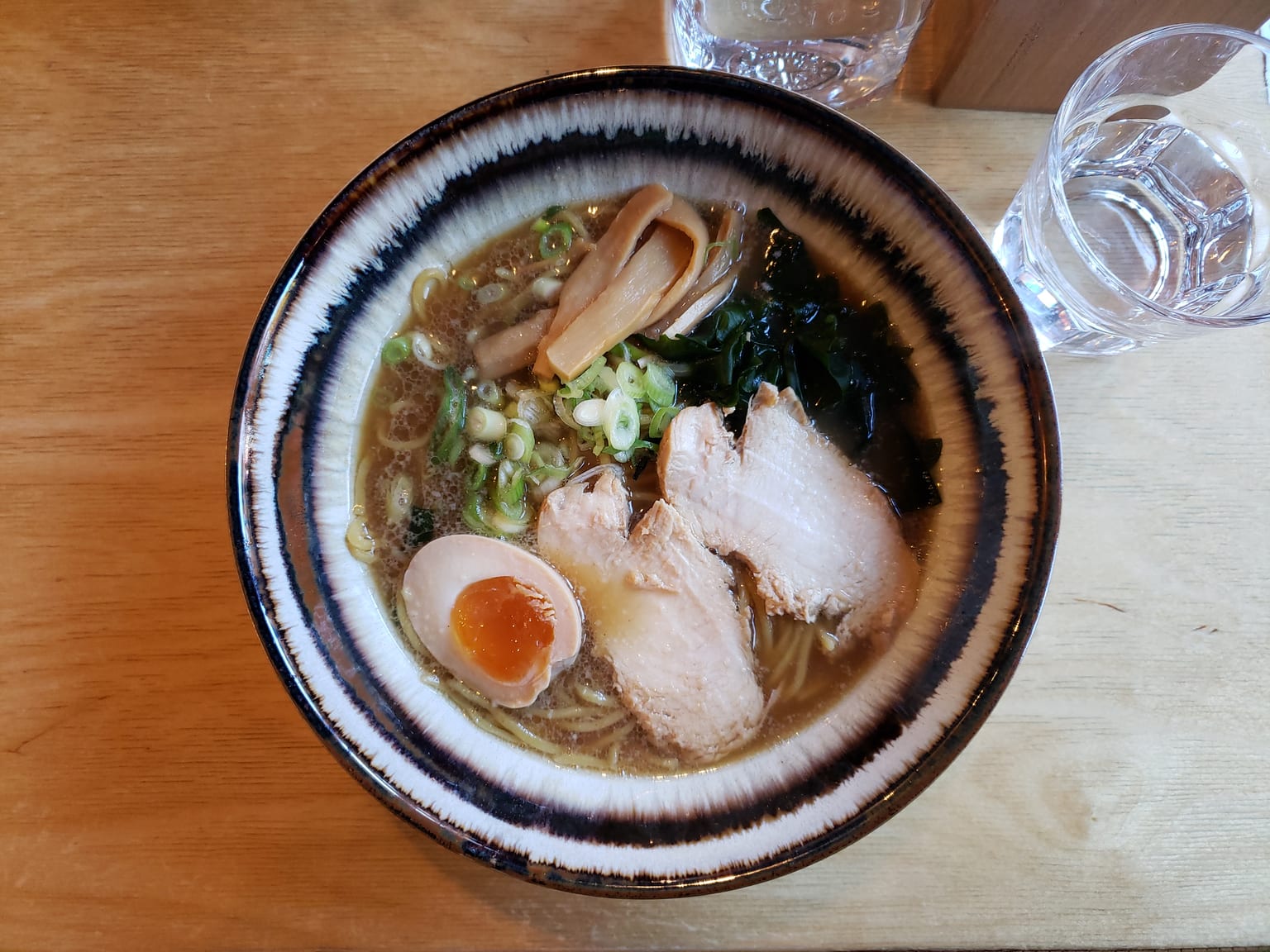

Spicy Shoyu Ramen
The lightest and most classic bowl in the ramen family, a clear chicken-and-dashi broth seasoned with a quick tare of soy sauce, doubanjiang, ginger and garlic that is built directly in the pot. Shoyu ramen is where the ramen-shop logic is easiest to see at home, the seasoning and the broth are two separate things, and because the tare carries all the salt and character, the broth itself only needs to be good stock rather than an all-day project.
Prep10 min
Cook15 min
Servings2
Adapted from Just One Cookbook's spicy shoyu ramen. Their classic Tokyo shoyu ramen from Bizentei is the non-spicy reference for the same method.
Ingredients
Written for a 3 L pot
Units
Temperature
Servings
Broth and tare
- 360 ml chicken stock rounded
- 360 ml dashi, from a dashi packet or instant dashi powder; see substitutions rounded
- 12 g doubanjiang, spicy chili bean paste; see substitutions rounded
- 38 ml soy sauce rounded
- 5 g fresh ginger, grated rounded
- 2 garlic cloves, minced rounded
- 13 ml toasted sesame oil rounded
- 2 g fine salt, to taste rounded
- 1 g white pepper rounded
Noodles
- 280 g fresh ramen noodles, or 180 g dried ramen noodles rounded
Toppings
- 2 ramen eggs, halved lengthwise; make a day ahead (optional) rounded
- 20 g scallions, thinly sliced rounded
- 1 nori sheet, cut in half (optional) rounded
- 40 g menma, seasoned bamboo shoots, from a jar (optional) rounded
- 5 ml chili oil (optional) rounded
Method
- Get the noodle water going. Bring a large pot of unsalted water to a boil while you make the broth.
- Bloom the tare. Heat the sesame oil in a medium pot over medium heat. Cook the garlic, ginger and doubanjiang for about 1 minute, until fragrant and brick-red.
- Build the broth. Add the chicken stock, dashi and soy sauce. Bring to a bare simmer and season with salt and white pepper. Taste; it should be noticeably saltier than a soup you would eat on its own, because the noodles carry no salt.
- Cook the noodles. Boil the ramen noodles in the unsalted water according to the packet, usually 1 to 2 minutes for fresh, and drain well. Never cook them in the broth.
- Assemble. Divide the noodles between two warmed bowls, pour the hot broth over, and arrange the toppings on the surface. Serve immediately.
Notes
- This bowl teaches the tare idea. In a ramen shop, the concentrated seasoning waits in the bowl and neutral broth is poured over it. At home it is easier to combine them in the pot, but the principle is the same, and it is why the broth needs no long simmering to taste finished.
- Warm the bowls. A thin, clear broth loses heat fast. Thirty seconds of hot tap water in the serving bowls makes a real difference.
- For the classic, non-spicy Tokyo shoyu bowl, leave out the doubanjiang and add an extra half tablespoon of soy sauce. That is essentially the Bizentei recipe this adaptation descends from.
- The richer, cloudier siblings on this site are miso ramen and tantanmen; this is the one to make when you want the noodles and the broth to stay distinct.
Ingredient substitutions
- Dashi is the second half of this broth’s backbone. The convenient forms, in order of preference, are dashi packets (steep like tea), instant dashi powder such as Hondashi, or a 10-minute homemade kombu and katsuobushi steep. All are Asian-grocery staples in Germany and Canada. Kombu-only dashi keeps the broth pescatarian-free and works fine, just a little less smoky.
- Doubanjiang substitutes as in the miso ramen, an equal amount of gochujang plus a few drops of soy sauce, with some loss of fermented depth.
- A vegetarian bowl works with vegetable stock plus kombu dashi and soft tofu cubes warmed in the broth, cut cleanly rather than torn so the clear broth stays clear.
Sources consulted
Good with
Sources consulted
From Christoph Mayer