_-_Goemon_Ramen_Bar_2025-12-10.jpg)
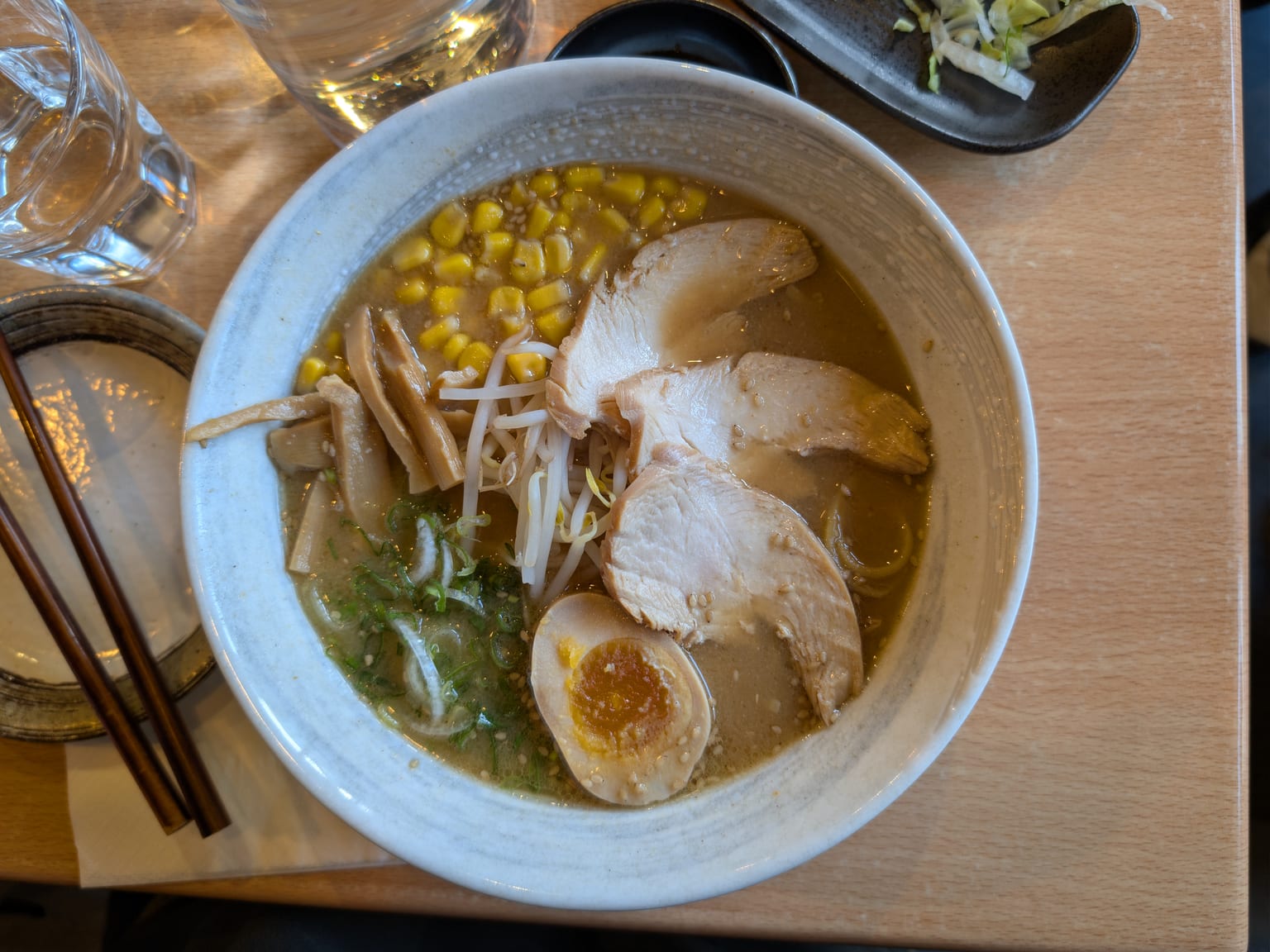
Miso Ramen
A Sapporo-style miso ramen that is honestly weeknight-fast because the broth is built like a sauce, aromatics and ground pork sautéed with miso and a little doubanjiang, then loosened with good chicken stock, rather than simmered for hours. The ground pork does double duty, flavouring the broth as it browns and then standing in for chashu on top, which is exactly why this particular shortcut tastes like far more work than it is.
Prep10 min
Cook15 min
Servings2
Adapted from Just One Cookbook's homemade miso ramen, the weeknight standard that builds the broth like a sauce instead of simmering bones.
Ingredients
Written for a 3 L pot
Units
Temperature
Servings
Broth base
- 2 garlic cloves, minced rounded
- 5 g fresh ginger, grated rounded
- 1 shallot, finely chopped rounded
- 9 g toasted white sesame seeds, ground in a mortar rounded
- 13 ml toasted sesame oil rounded
- 115 g ground pork rounded
- 6 g doubanjiang, spicy chili bean paste; see substitutions rounded
- 54 g miso, any everyday type; avoid sweet Saikyo and dark Hatcho miso rounded
- 12 g sugar rounded
- 15 ml sake, or dry white wine rounded
- 950 ml chicken stock rounded
- 2 g fine salt, to taste rounded
- 1 g white pepper rounded
Noodles
- 280 g fresh ramen noodles, or 180 g dried ramen noodles rounded
Toppings
- 2 ramen eggs, halved lengthwise; make a day ahead (optional) rounded
- 60 g corn kernels, drained (optional) rounded
- 20 g scallions, thinly sliced rounded
- 1 nori sheet, cut into quarters (optional) rounded
- 5 ml chili oil (optional) rounded
Method
- Get the noodle water going. Bring a large pot of unsalted water to a boil for the noodles while you build the broth.
- Sauté the aromatics. Heat the sesame oil in a medium pot over medium heat. Cook the garlic, ginger and shallot for about 1 minute, until fragrant but not browned.
- Brown the pork. Add the ground pork and cook, breaking it up, until no longer pink and starting to catch at the edges.
- Fry the seasonings. Add the doubanjiang and miso and stir them into the meat for a minute so they toast against the bottom of the pot. This step wakes the miso up; skipping it leaves the broth flat. Stir in the ground sesame seeds, sugar and sake.
- Add the stock. Pour in the chicken stock, bring to a simmer, and season with salt and white pepper. Keep it at a bare simmer; miso goes muddy at a rolling boil.
- Cook the noodles. Boil the ramen noodles in the unsalted water according to the packet, usually 1 to 2 minutes for fresh, and drain them well. Never cook them in the broth; the starch would thicken it.
- Assemble. Divide the noodles between two warmed bowls, ladle the broth and pork over them, and finish with the toppings. Serve immediately, while the noodles still have their spring.
Notes
- The miso choice matters less than the miso treatment. Any everyday miso from awase to red works. What matters is frying it briefly with the pork before the stock goes in, and never boiling it hard afterwards.
- Fresh ramen noodles are worth the trip to an Asian grocer and keep for weeks refrigerated. Dried ramen is the honest second choice. In a pinch, instant noodle blocks with the packets discarded work; they are just softer.
- No chashu, on purpose. The browned pork in the broth is the meat. If you want more on top, shredded rotisserie chicken or an extra ramen egg is the weeknight answer; proper chashu is its own project for another day.
- Sapporo tradition puts butter and corn on miso ramen. A small knob of butter melting into the broth is not a joke; try it once.
Ingredient substitutions
- Doubanjiang is the traditional chili bean paste here and is worth finding in an Asian grocery in Germany or Canada (look for Sichuan or Taiwanese brands, sold as chili bean sauce or Doubanjiang). The practical substitute is an equal amount of gochujang plus a few drops of soy sauce; it is sweeter and less fermented-tasting, so the broth loses a little of its edge but stays very good. For the non-spicy original, use only miso and add chili oil at the table.
- Sake can be replaced with dry white wine, or simply left out; the broth is a touch less fragrant without it.
- Ground pork in Germany should be pure pork Hackfleisch, not gemischtes Hack; the beef half muddies the broth. A vegetarian version works with 200 g firm tofu, pressed and hand-crumbled, browned hard in the sesame oil before the aromatics go in, plus vegetable stock in place of chicken.
Sources consulted
Good with
Sources consulted
From Christoph Mayer