Main Chinese restaurant-style Chinese Dairy-free Nut-free
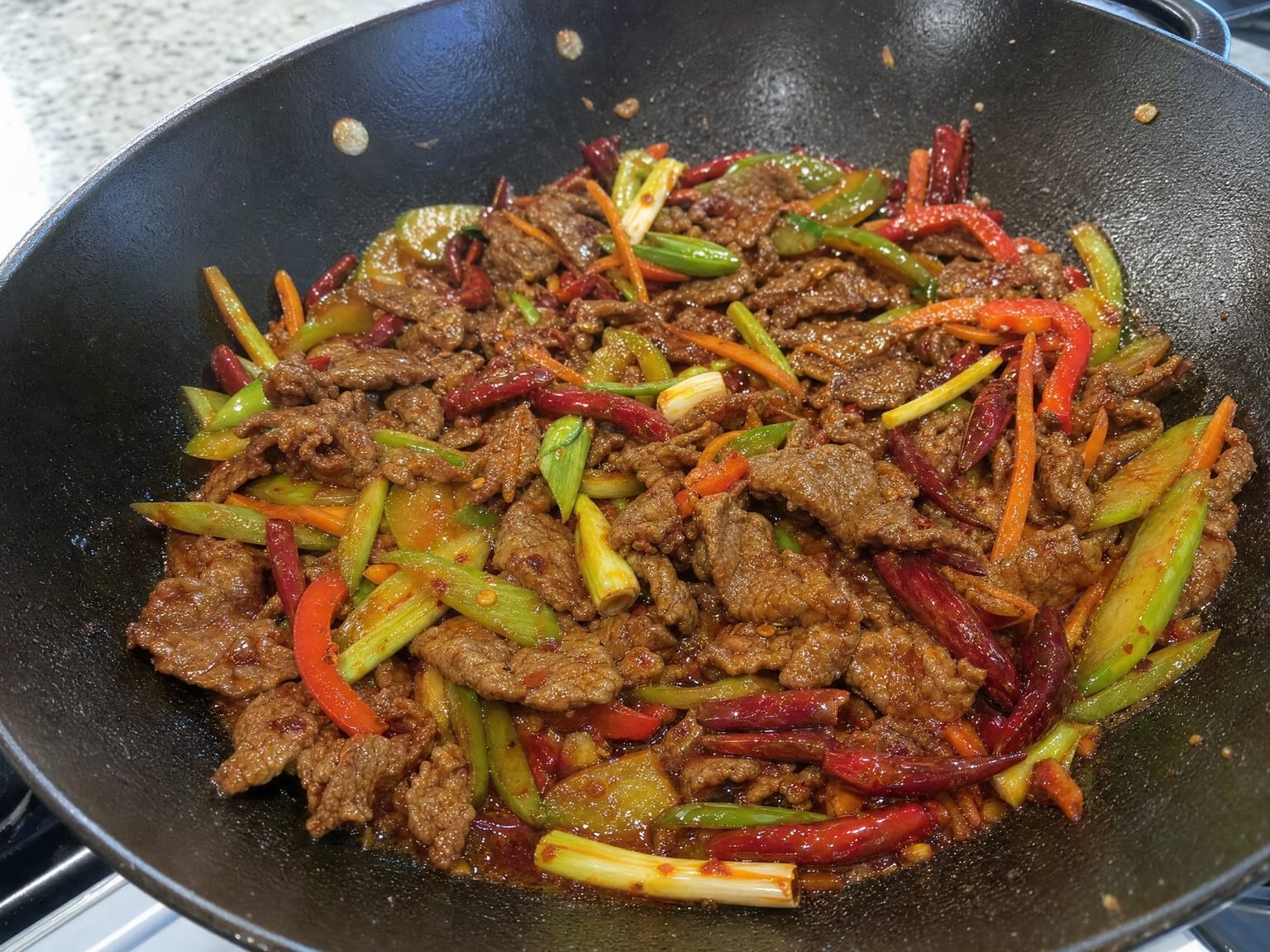
Szechuan Style Spicy Beef
The restaurant version of Szechuan beef, which is a sweet-hot chilli bean sauce stir-fry rather than anything a cook in Chengdu would recognise, built on doubanjiang with dried chillies and a little vinegar for lift. Restaurant Szechuan dishes outside China are usually spicy without being numbing, so the Sichuan peppercorn is optional here and marked as the thing that takes it closer to the original.
Christoph's version of the restaurant Szechuan stir-fry, built on doubanjiang with black vinegar for lift and the numbing Sichuan pepper left optional.
Ingredients
Written for a 30 cm pan
Beef and marinade
- 400 g flank or rump steak, sliced thinly against the grain rounded
- 15 ml water rounded
- 1 g bicarbonate of soda, tenderiser; rinse off after 30 minutes rounded
- 8 g cornflour rounded
- 15 ml light soy sauce rounded
Sauce
- 200 ml water or beef stock rounded
- 25 g doubanjiang, Sichuan chilli bean paste; see substitutions rounded
- 22 ml light soy sauce rounded
- 15 ml Chinese black vinegar rounded
- 15 ml Shaoxing wine rounded
- 15 g sugar rounded
- 12 g cornflour rounded
- 5 ml toasted sesame oil rounded
Stir-fry
- 40 ml neutral oil rounded
- 6 dried red chillies, halved, most seeds shaken out rounded
- 2 g ground Sichuan peppercorns, optional, for the numbing version (optional) rounded
- 4 garlic cloves, minced rounded
- 10 g fresh ginger, minced rounded
- 150 g carrot, julienned rounded
- 150 g celery, sliced on an angle rounded
- 1 red pepper, sliced rounded
- 3 scallions, cut into 3 cm lengths rounded
Dietary labels are a guide, not a guarantee. If you have an allergy, read the ingredients yourself.
Method
- Tenderise the beef. Water and bicarbonate of soda, 30 minutes, rinse thoroughly, pat dry, then toss with cornflour and soy sauce.
- Mix the sauce, cornflour last, and stir again before use.
- Sear the beef and remove it. Screaming hot wok, a third of the oil, one layer, 60 to 90 seconds undisturbed, out while slightly underdone.
- Fry the chillies and doubanjiang in the oil. Add more oil over medium heat, then the dried chillies and Sichuan pepper if using for 20 seconds, then a spoonful of the doubanjiang scooped from the sauce and fried for 30 seconds until the oil turns deep red. Frying the paste rather than just stirring it in is what gives the dish its colour and depth.
- Aromatics and hard vegetables. Garlic and ginger for 20 seconds, then carrot and celery for 2 minutes, then pepper for 1 minute.
- Sauce and thicken. Pour in the rest of the sauce and boil 1 minute until glossy.
- Return the beef, toss 30 seconds with the scallions and serve with plenty of rice.
Variations
- Szechuan prawns with vegetables. 400 g peeled prawns, no bicarbonate of soda, seared 60 to 90 seconds and returned at the end. Common on Canadian menus and slightly sweeter against the chilli.
- Szechuan chicken. 400 g sliced thigh, velveted without bicarbonate of soda.
- Szechuan tofu. 400 g firm tofu, pressed, torn, fried crisp separately and folded in at the end. Doubanjiang is already vegan; use vegetable stock.
- Milder version. Halve the doubanjiang and the dried chillies. Most Canadian menus mark this dish mild and mean it.
Notes
- This is restaurant Szechuan, not Sichuan. Genuine Sichuan cooking leans on the numbing tingle of huajiao and a much drier, more layered heat. What arrives on a North American menu under this name is a sweet-hot chilli bean sauce stir-fry, which is what this recipe is. Both are worth eating and they are not the same thing.
- Fry the chilli bean paste in oil. Doubanjiang stirred straight into liquid tastes raw and muddy. Thirty seconds in hot oil transforms it.
- The vinegar is not optional. A tablespoon of black vinegar against all that sugar and chilli is what keeps the sauce from being flat and cloying.
- The book has the real Sichuan versions too, in dan dan noodles and mala noodle soup, if you want to taste the difference.
Ingredient substitutions
- Doubanjiang is the Sichuan chilli bean paste at the heart of this. Asian grocers in Germany and Canada stock it, often as chilli bean sauce. Gochujang plus a few drops of soy is the workaround, sweeter and less fermented. Sambal oelek plus a spoonful of miso is closer in savouriness.
- Chinese black vinegar substitutes with balsamic cut with a little rice vinegar.
- Shaoxing wine substitutes with dry sherry.
Good with
From Christoph Mayer