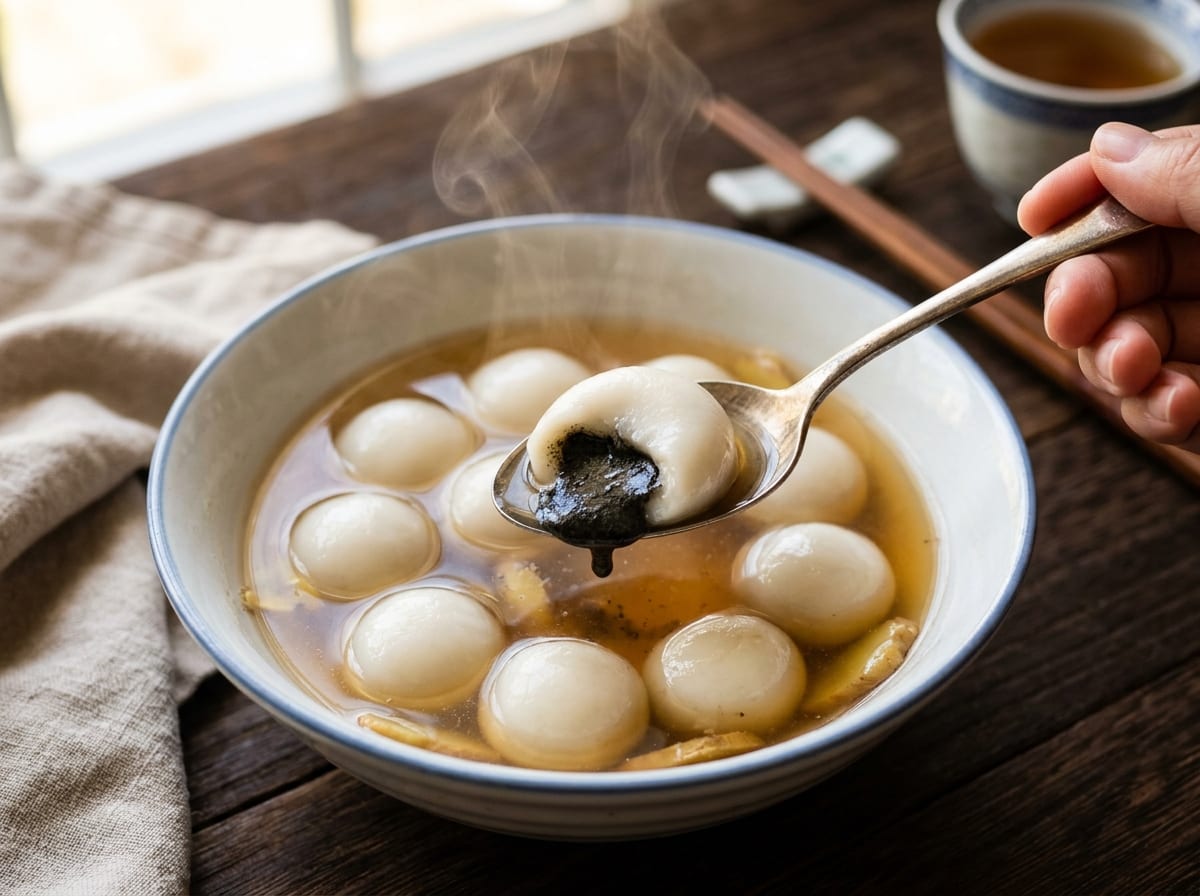
Tang Yuan (Chinese Glutinous Rice Balls)
Chewy glutinous rice balls, plain or filled with black sesame paste, boiled until they float and served warm in a clear ginger and sugar syrup. The dish of family reunion for the Winter Solstice Festival and Chinese New Year.
Prep40 min
Cook20 min
Rest30 min
Servings4
Dough and filling ratios adapted from Taste of Asian Food and Red House Spice tang yuan recipes, ginger syrup ratio from Taste of Asian Food
Ingredients
Written for a 3 L pot
Units
Temperature
Servings
Dough
- 200 g glutinous rice flour, also sold as sweet rice flour or mochiko rounded
- 70 ml boiling water rounded
- 70 ml room-temperature water, added gradually, you may not need it all rounded
Black sesame filling
- 40 g black sesame seeds rounded
- 20 g granulated sugar rounded
- 25 g unsalted butter, softened, or coconut oil rounded
Ginger syrup
- 1 L water rounded
- 40 g fresh ginger, peeled and thinly sliced rounded
- 100 g rock sugar, or granulated sugar rounded
Dietary labels are a guide, not a guarantee. If you have an allergy, read the ingredients yourself.
Method
- Make the dough: put the glutinous rice flour in a bowl. Pour in the boiling water and stir with chopsticks or a spoon until it forms rough clumps; this partly cooks the flour and keeps the dough from crumbling. Add the room-temperature water a little at a time, kneading by hand, until you have a smooth, soft dough like an earlobe, not sticky, not stiff. Cover and set aside.
- Make the filling: toast the black sesame seeds in a dry pan over medium-low heat for 2 to 3 minutes, stirring constantly, until fragrant. Let cool slightly, then grind in a spice grinder or mortar with the sugar to a coarse paste. Work in the softened butter until you have a uniform, dark paste. Chill for about 30 minutes, until firm enough to roll.
- Roll the chilled filling into 10 to 12 small balls, about the size of a hazelnut. Keep them cold until you are ready to wrap.
- Divide the dough into about 20 pieces. Roll each into a smooth ball, then flatten one into a small disc in your palm. For a filled ball, place a piece of filling in the centre, gather the edges up and over the filling, and pinch to seal completely, then roll gently between your palms to smooth it back into a ball. For a plain ball, simply roll the dough piece round. Keep the finished balls covered with a damp cloth so they do not dry out.
- Make the syrup: combine the water, ginger, and rock sugar in a saucepan. Bring to a boil, then reduce to a simmer and cook for about 10 minutes, until the ginger has released its flavour and the sugar has dissolved. Taste and adjust the sweetness.
- Bring a separate large pot of water to a boil. Slide in the rice balls and stir gently for the first 30 seconds so they do not stick to the bottom. Boil the plain balls for about 3 minutes and the filled ones for about 4 to 5 minutes: they will sink at first, then rise and float once cooked through. Once a ball is floating, let it simmer a further minute; filled balls benefit from this extra minute so the filling melts fully.
- Lift the rice balls out with a slotted spoon straight into serving bowls. Ladle the hot ginger syrup over them and serve at once, while the dough is still soft and warm.
Notes
- The dough should feel like a soft earlobe: too dry and it cracks while shaping, too wet and it will not hold a filling. Add the second measure of water gradually and stop as soon as it comes together.
- To freeze raw balls for later, arrange them without touching on a tray, freeze until solid, then bag them. Boil straight from frozen, allowing an extra minute or two.
- Tang yuan turn firm quickly once they cool, so cook them just before serving rather than ahead of time.
- Rock sugar gives the syrup a cleaner sweetness than white sugar, but either works.
Sources Consulted
- Red House Spice, “Tang Yuan, Chinese glutinous rice balls (汤圆)”
- Taste of Asian Food, “Tang Yuan 汤圆, How to Make Traditional Glutinous Rice Balls”
Sources consulted
The flour-to-water ratio for the dough, the black sesame filling, and the ginger syrup ratio come from the sources. Quantities scaled to a batch of four servings, the split between plain and filled balls, and the wording are original.
From Christoph Mayer