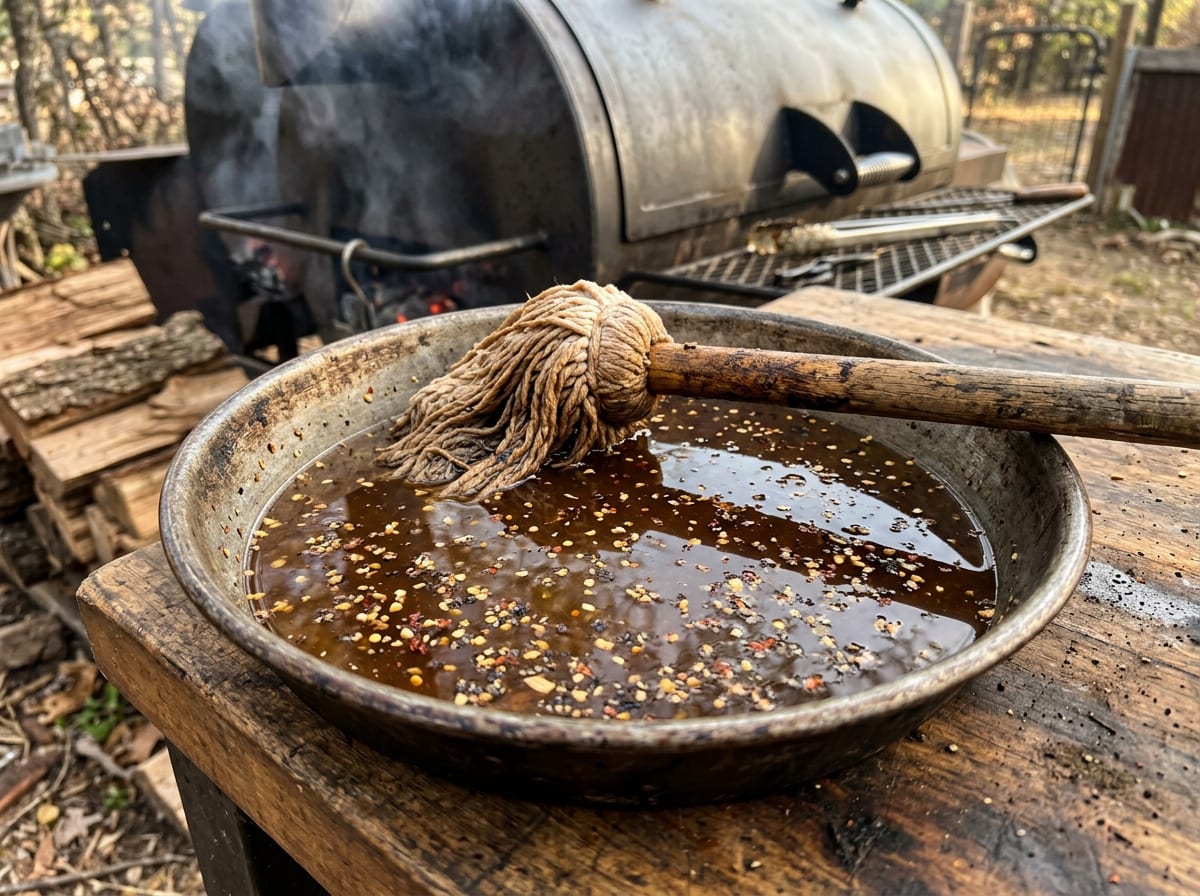
Texas mop sauce
Thin, beefy and barely sweet, swabbed onto brisket through a long cook rather than served at the table. Central Texas barbecue is famously sauceless, and this is why it can be. The mop does the work while the meat is still on the pit.
Prep10 min
Cook10 min
0 Servings16
Central Texas pit practice, thin and applied during the cook
Ingredients
Written for a 2 L pot
Units
Temperature
Servings
Mop
- 500 ml beef stock, the body of the whole thing; a good one matters here rounded
- 250 ml cider vinegar rounded
- 60 ml beef fat or neutral oil, trimmed brisket fat rendered down is the traditional and the best answer rounded
- 30 ml Worcestershire sauce rounded
- 10 g coarse black pepper, coarse, and more than looks sensible rounded
- 8 g fine salt rounded
- 6 g dried chilli flakes rounded
- 6 g garlic granules rounded
- 6 g onion granules rounded
- 1 lemon, juice and the spent halves thrown in as well rounded
- 2 bay leaves rounded
Dietary labels are a guide, not a guarantee. If you have an allergy, read the ingredients yourself.
Method
- Simmer everything together for 10 minutes, then pull the bay and the lemon halves out. That is all the cooking it gets.
- Keep it warm beside the pit, not hot. Cold mop on hot meat drops the surface temperature and costs you bark.
- Do not touch the meat for the first three hours. The bark needs to set first. Mopping early washes the rub straight off and you end up with a grey, striped brisket.
- After that, mop every hour, lightly. You are wetting the surface, not basting it.
Notes
- Why Texas barbecue barely uses table sauce. The seasoning happens on the pit rather than on the plate. Salt, coarse pepper and this mop over twelve hours does what a thick sauce does in the last twenty minutes, and it does it all the way through the bark instead of on top of it.
- There is almost no sugar in it on purpose. It goes on repeatedly over a long cook at temperature. Anything sweet would be carbon by hour six.
- A cotton mop is not an affectation. It holds far more liquid than a brush and puts it down without dragging, which matters when the surface you are touching is the bark you spent six hours building. A silicone brush is the next best thing. A bristle pastry brush sheds.
- Every time you open the pit you lose heat. Mopping hourly costs you roughly an extra hour over a long cook. Budget for it rather than being surprised.
Food safety
A mop that has touched raw or part-cooked meat is not a table sauce. Split it at the start: what goes in the mop pot stays in the mop pot, and anything you want to serve gets set aside before you begin. If you want to use the leftover mop at the table, boil it hard for a full two minutes first.
Ingredient substitutions
- Beef stock is the backbone. A cube dissolved in water is thin and salty; use half the salt in the recipe if that is your route. Vegetable stock makes a serviceable mop for pork or chicken but tastes hollow on beef.
- Worcestershire sauce contains anchovy and usually malt vinegar, so it is neither vegetarian nor gluten-free. Tamari plus a squeeze of tamarind gets close on both counts.
Sources consulted
Good with
Sources consulted
From Christoph Mayer