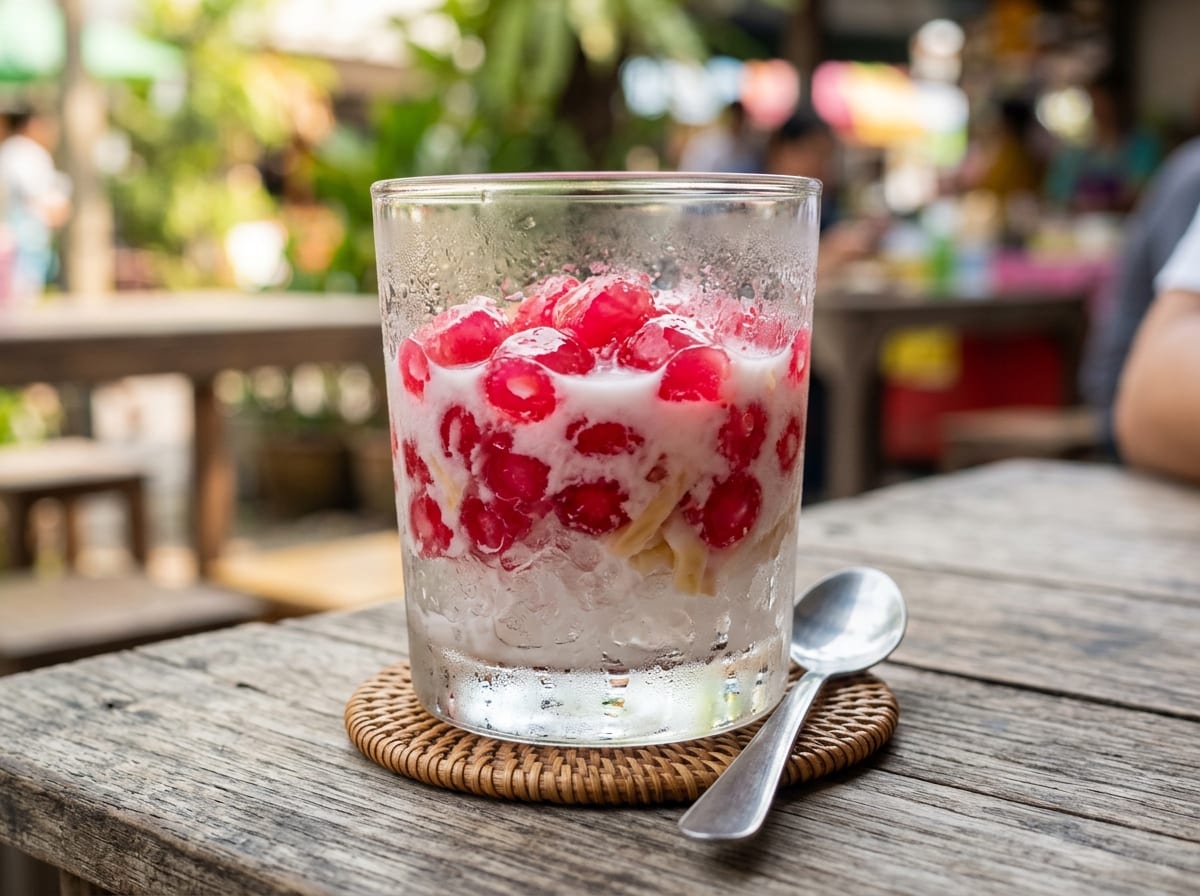
Tub Tim Krob (Thai red rubies)
Diced water chestnuts tinted ruby red, coated in tapioca starch, boiled until the coating turns glassy, then chilled and served in sweetened coconut milk over crushed ice. A refreshing Thai dessert built entirely from texture and temperature contrast.
Technique adapted from Hungry in Thailand's and What To Cook Today's tub tim krob recipes
Ingredients
Red rubies
- 250 g canned water chestnuts, drained and diced into roughly 1 cm cubes rounded
- 4 drop red food coloring, or substitute 3 tablespoons beetroot juice or pomegranate juice, see Notes rounded
- 60 ml water, to dissolve the food coloring; omit if using juice instead rounded
- 150 g tapioca starch, plus extra for dusting; you will not use all of it rounded
Sugar syrup
- 150 g granulated sugar rounded
- 150 ml water rounded
Coconut milk sauce
- 400 ml canned coconut milk rounded
- 50 g granulated sugar rounded
- 0.25 tsp salt rounded
- 2 pandan leaves, tied in a knot; optional, substitute 1/2 teaspoon vanilla extract or omit if unavailable (optional) rounded
To serve
- 500 g crushed ice rounded
Dietary labels are a guide, not a guarantee. If you have an allergy, read the ingredients yourself.
Method
- Drain the water chestnuts and pat them dry, then dice into roughly 1 cm cubes.
- Stir the food coloring into the water (or use the beetroot or pomegranate juice instead), then toss the diced water chestnuts in this liquid until every cube is tinted red. Let them sit for 10 to 15 minutes so the color takes.
- Drain the tinted water chestnuts, then toss with the tapioca starch in two or three batches, working it into every surface with your hands, until each cube is fully and evenly coated and looks matte white. Shake off the excess in a sieve.
- Bring a large pot of water to a rolling boil. Drop in the coated water chestnuts and stir gently so they don’t clump together. They sink at first; once they float to the surface, keep boiling for 2 more minutes, until the coating turns from opaque white to glassy and translucent, with only a faint white dot left at the center of each cube.
- Scoop the rubies straight into a bowl of ice water to stop the cooking and set their chewy texture. Drain once fully cooled.
- Meanwhile, make the sugar syrup: bring the sugar and water to a simmer, stirring until the sugar dissolves, then let it cool. Once the rubies are drained, transfer them into this syrup, which keeps them from sticking together and adds sweetness while they chill.
- Make the coconut milk sauce: warm the coconut milk with the sugar, salt, and knotted pandan leaves, if using, just until the sugar dissolves. Do not let it boil. Remove the pandan leaves and chill the sauce completely.
- To serve, spoon a portion of the syrup-soaked rubies into each bowl, pour over the chilled coconut milk sauce, and pile with crushed ice. Serve at once, while the ice is still crushed and cold.
Notes
- Traditional recipes color the rubies with red food coloring: a few drops in water is all it takes, and the color holds up well through boiling. For a more natural version, swap in beetroot juice or pomegranate juice instead; the tone comes out a touch muddier and less neon, but it still holds through the boil.
- Fresh water chestnuts are hard to find outside Southeast Asian markets. Canned water chestnuts from an Asian grocer, or the Asian aisle of a well-stocked supermarket, work perfectly well here and are what most home cooks in Germany will use.
- Do not skimp on the tapioca coating: too thin a layer and the pieces fall apart in the boiling water. A generous, even coating is what gives the rubies their signature texture, crunchy at first bite, then chewy.
- The rubies and the coconut sauce can both be made a day ahead and kept separately in the fridge. Combine them with fresh crushed ice only right before serving, so the ice doesn’t dilute the sauce.
Sources Consulted
The tapioca coating technique, the boil-until-floating-then-shock method, and the coconut milk sauce ratios come from the sources. Quantities scaled for four servings, the recipe simplified to a single red batch instead of the red-and-blue version, the natural coloring alternative, and all wording are original.
From Christoph Mayer