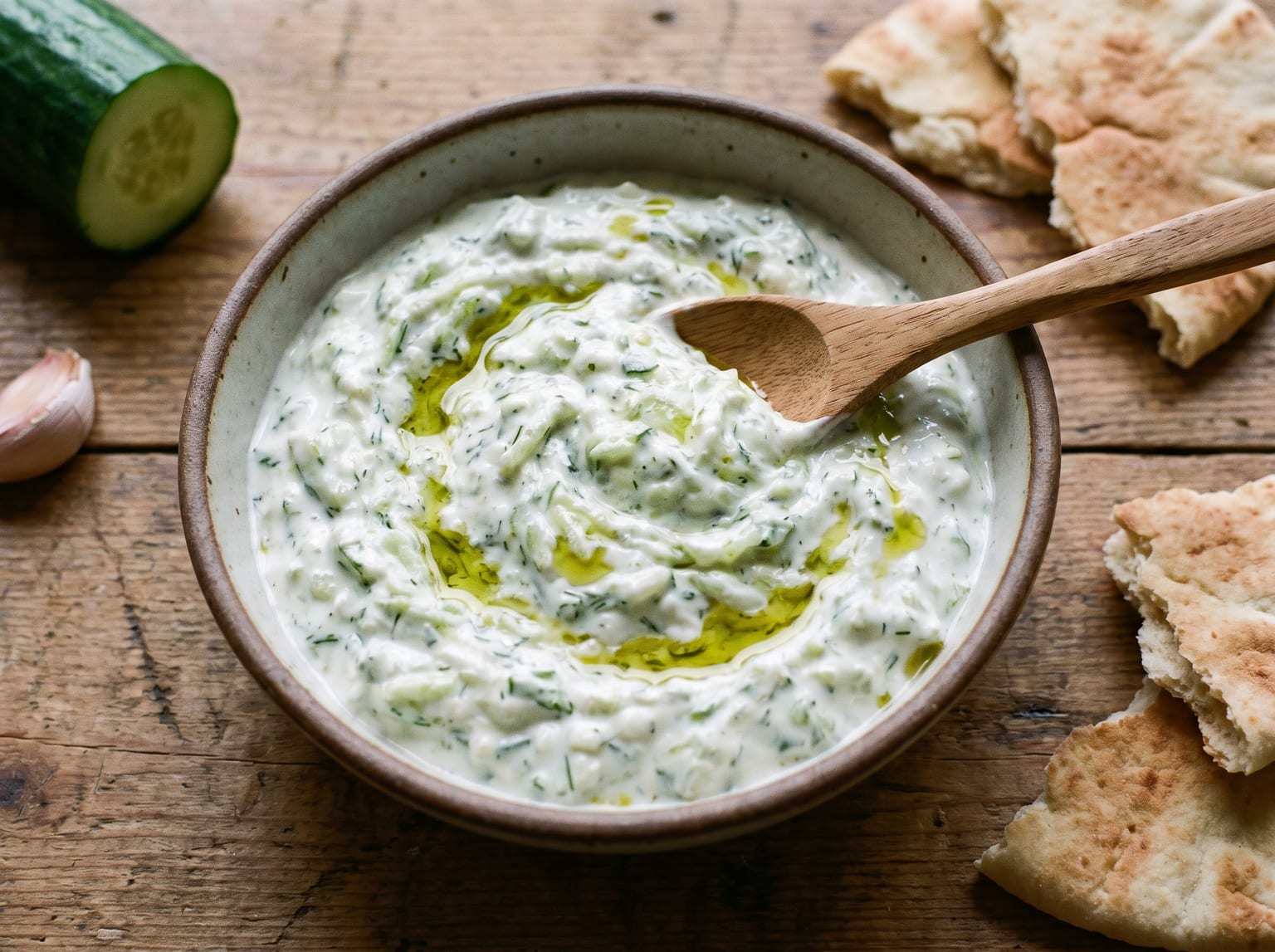
Tzatziki
Thick strained yogurt with grated cucumber that has been salted and wrung out, garlic, dill and a little vinegar. The cucumber water is the difference between tzatziki and a puddle, and squeezing it out is most of the recipe.
Prep25 min
0 Rest120 min
Servings8
Standard Greek method, thick and vinegar-sharpened
Ingredients
Units
Temperature
Servings
Tzatziki
- 500 g Greek yogurt, full fat, 10 percent, and strained further if it is loose rounded
- 300 g cucumber, coarsely grated; you will lose nearly half the weight in water rounded
- 6 g fine salt, for drawing water out of the cucumber, and most of it drains away rounded
- 2 garlic cloves, grated to a paste; two is Greek, four is Cypriot rounded
- 20 g fresh dill, finely chopped rounded
- 20 ml olive oil, stirred in, plus more over the top rounded
- 10 ml red wine vinegar, vinegar rather than lemon is the Greek way rounded
- 3 g fine salt, for the finished bowl, added after tasting rounded
Dietary labels are a guide, not a guarantee. If you have an allergy, read the ingredients yourself.
Method
- Grate the cucumber coarsely, skin on. The skin holds colour and a little bite, and peeling it gains you nothing but time.
- Salt it and leave it 20 minutes in a sieve. Water will run out on its own.
- Then wring it out in a cloth, hard. Gather it in a tea towel and squeeze until no more comes. You should lose something like 130 g of water from 300 g of cucumber. This is the step that decides whether you have made tzatziki or yogurt soup, and almost nobody squeezes it enough the first time.
- Stir everything together and taste before adding the final salt, because the cucumber is still carrying some.
- Rest at least 2 hours in the fridge, and overnight is better. Raw garlic is harsh at first and mellows into the yogurt. Tzatziki eaten immediately tastes of garlic; tzatziki eaten the next day tastes of tzatziki.
- Serve cold, with more oil poured over the top.
Notes
- This is the thick one. Greek tzatziki is a dip you scoop. The Turkish version on this site, cacık, is deliberately thinner and is a different dish rather than a worse version of the same one.
- Vinegar, not lemon. Both appear in Greek kitchens and red wine vinegar is the more traditional and gives a rounder sourness. Lemon makes it brighter and closer to a dressing.
- Dill is the Greek herb here. Mint appears in Cypriot and Turkish versions. Both together is fine, and coriander is not.
- Salting the cucumber is not the same as squeezing it. The salt starts the water moving; your hands finish the job. Do both.
- It keeps 4 days. The garlic gets stronger every day, which is either the point or a problem depending on the day.
- Beyond dipping: thinned with a little water it dresses a salad, it goes under grilled lamb or köfte, and it is what belongs in a souvlaki wrap.
Ingredient substitutions
- Greek yogurt is essential and ordinary yogurt is not a substitute unless you strain it in muslin for a few hours first. Labneh makes an extremely thick version.
- Cucumber. Long English cucumbers are wetter than the small ridged Mediterranean ones. If you use those, squeeze harder.
Sources consulted
Good with
Sources consulted
From Christoph Mayer