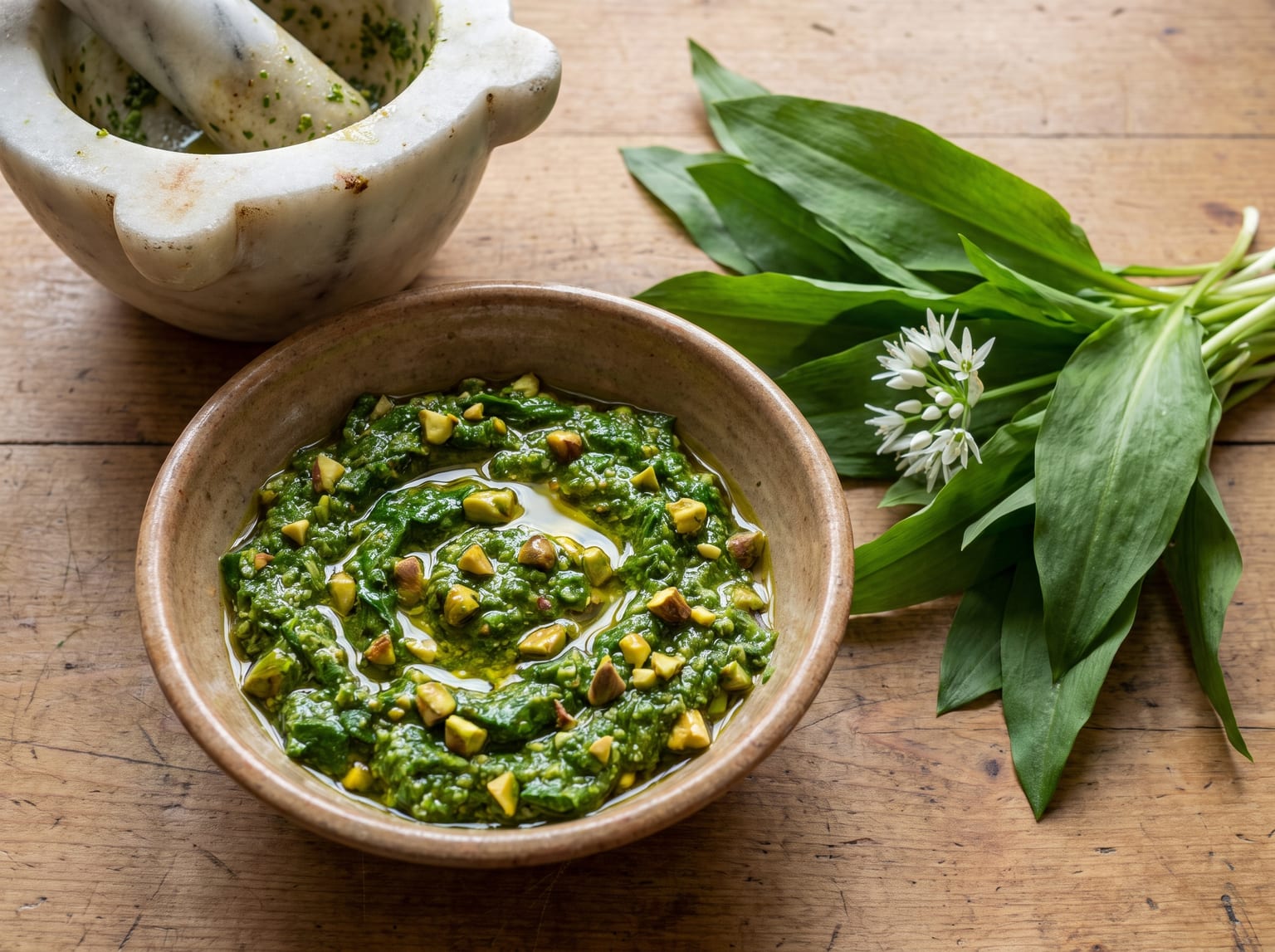
Wild garlic and pistachio pesto
Wild garlic leaves pounded with pistachios and pecorino, with a clove of ordinary garlic in it as well, because wild garlic is gentler than people expect. Six weeks a year and worth freezing.
Prep20 min
0 0 Servings8
Christoph's spring pesto, pistachio rather than pine nut
Ingredients
Units
Temperature
Servings
Pesto
- 120 g wild garlic leaves, washed and spun completely dry; pick young leaves before it flowers rounded
- 80 g shelled pistachios, unsalted, lightly toasted and cooled rounded
- 70 g grated pecorino, or parmesan; pecorino is sharper and suits the garlic rounded
- 1 garlic clove, yes, as well as the wild garlic; see the notes rounded
- 180 ml olive oil, a mild one; a peppery Tuscan oil fights the leaves rounded
- 15 ml lemon juice rounded
- 5 g fine salt rounded
Dietary labels are a guide, not a guarantee. If you have an allergy, read the ingredients yourself.
Method
- Dry the leaves completely. Wash, spin, then spread them on a towel. Water is the enemy: it stops the oil emulsifying and it is the main reason homemade pesto splits and goes watery in the jar.
- Toast the pistachios lightly in a dry pan for 3 minutes, then cool them completely. Warm nuts will heat the leaves.
- If you have a mortar, use it. Garlic clove and salt to a paste first, then the nuts to a rubble, then the leaves a handful at a time, grinding against the side. Cheese last, then the oil in a thin stream while you stir.
- If you are using a processor, chill the bowl and the blade in the freezer for 15 minutes, and pulse rather than run it. Blades generate heat, heat turns wild garlic khaki and bitter, and a blitzed pesto is a smooth paste rather than a sauce with texture. Pulse the nuts and garlic, add leaves and pulse in bursts, then stir the cheese and oil in by hand.
- Season at the end with the lemon and salt. Taste it on a piece of bread rather than off the spoon, because pesto tastes much stronger neat than it does on food.
Notes
- Yes, garlic as well as wild garlic. Wild garlic smells far more assertive than it tastes, and a pesto made only from the leaves is oddly mild and green. One clove puts the heat back without making it taste of supermarket garlic.
- Pistachios rather than pine nuts. Sweeter, greener, and they hold their texture instead of dissolving. They also do not cost what pine nuts now cost.
- Blanching is optional and it is a trade. Ten seconds in boiling water and straight into ice water sets the colour so the pesto stays green for days. It also flattens the raw garlic bite. Christoph does not bother; if you are giving jars away, do it.
- Freezing. Freeze it without the cheese, in an ice cube tray, then bag the cubes. Stir the cheese in after thawing. It keeps a year and gets you wild garlic in November.
- Wild garlic is a six week season in early spring, and it grows in damp woodland. Pick with certainty: the leaves resemble lily of the valley and autumn crocus, both of which are poisonous. Crush a leaf. If it does not smell strongly of garlic, walk away.
Ingredient substitutions
- No wild garlic. Spinach with three cloves of garlic and a handful of chives is the honest approximation. Nettle tops, blanched, are closer in character.
- Pecorino can be parmesan, or for a dairy-free version leave the cheese out entirely and add a tablespoon of white miso and a little more salt.
Sources consulted
Good with
Sources consulted
From Christoph Mayer