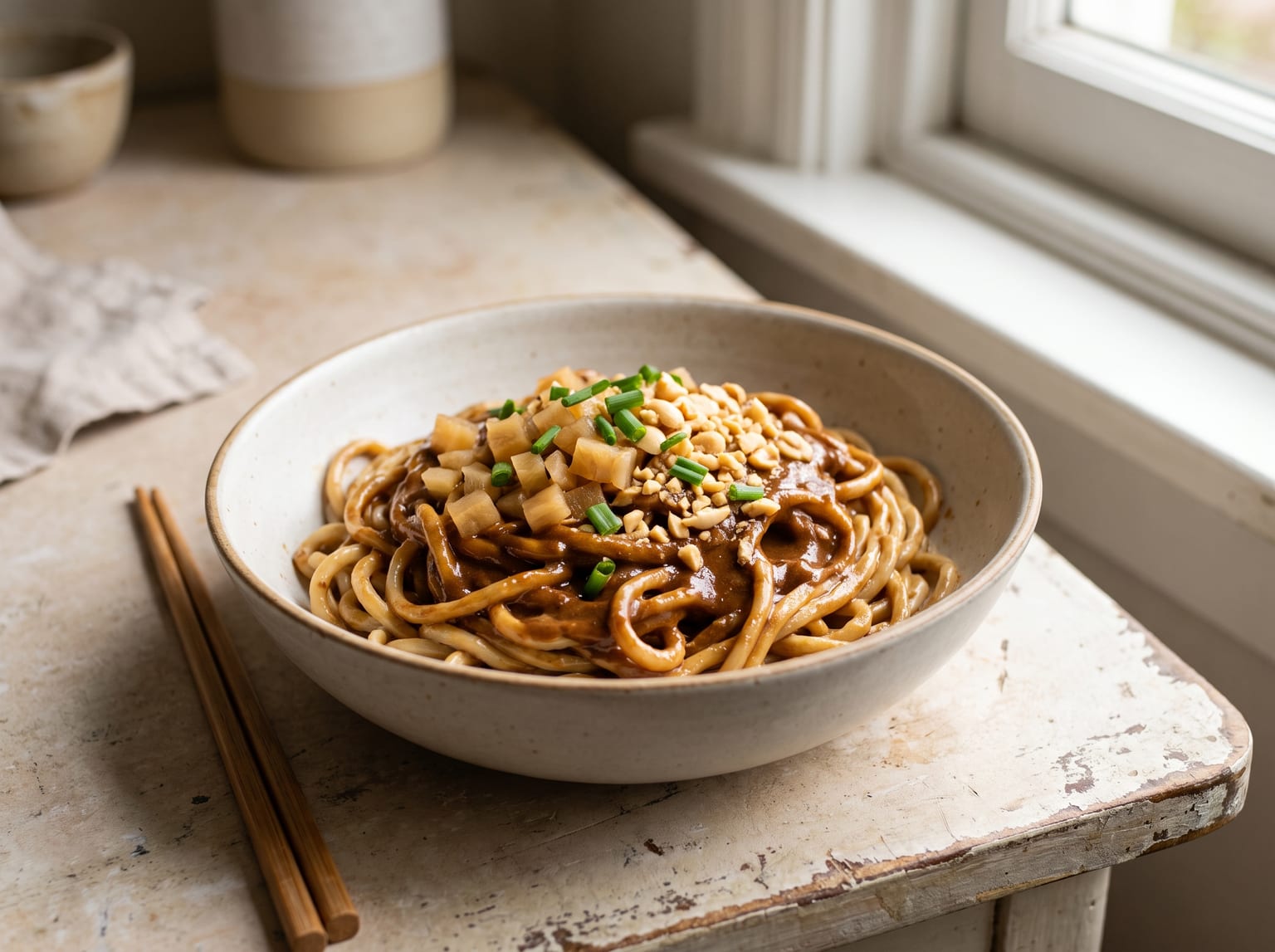
Wuhan Hot Dry Noodles (Reganmian)
Wuhan's signature breakfast noodle, boiled once, tossed in oil and spread out to cool completely before they're ever reheated, which is the "dry" in hot dry noodles and the step nearly every simplified version skips. Skipping that cooling stage leaves the noodles gummy and clumped instead of springy and separate; giving them the full cool-down is what lets a quick second dunk in boiling water and a fast toss in sesame paste produce noodles that are hot, loose, and never soupy.
Prep15 min
Cook10 min
Rest20 min
Servings2
Wuhan's classic hot dry noodles, the noodles fully cooled between boils so the second toss stays dry rather than soupy.
Ingredients
Written for a 3 L pot
Units
Temperature
Servings
Noodles
- 300 g fresh alkaline wheat noodles, or dried thin wheat noodles rounded
- 20 ml neutral oil, for tossing after the first boil rounded
Sesame sauce
- 60 g Chinese sesame paste, or well-stirred tahini rounded
- 30 ml warm water, to thin the paste rounded
- 20 ml light soy sauce rounded
- 10 ml dark soy sauce rounded
- 15 ml chili oil rounded
- 10 ml toasted sesame oil rounded
Toppings
- 40 g Sichuan preserved radish, finely chopped rounded
- 15 g roasted peanuts, roughly crushed rounded
- 15 g garlic chives or scallions, chopped rounded
Dietary labels are a guide, not a guarantee. If you have an allergy, read the ingredients yourself.
Method
- Bring a pot of water to a boil. Cook the noodles for 1 minute less than the package instructs, until just short of done. Drain well.
- Toss the noodles immediately with the neutral oil, coating every strand. Spread them out on a large tray in a thin layer.
- Let the noodles cool to room temperature, at least 20 minutes, fanning them occasionally if you like. This is the “dry” step: it stops the noodles cooking further and keeps them from clumping into a gummy mass.
- While the noodles cool, whisk the sesame paste with the warm water until smooth and pourable. Stir in the soy sauces, chili oil and sesame oil.
- Bring the pot of water back to a rolling boil. Dunk the cooled noodles back in for 15 to 20 seconds, just to reheat, then drain thoroughly.
- Divide the hot noodles between two bowls. Pour over the sesame sauce and toss well to coat every strand.
- Top with the preserved radish, peanuts and garlic chives. Serve immediately.
Notes
- Cool the noodles completely between the two boils. This is the defining technique of hot dry noodles: skip it and the noodles steam in their own residual heat, turning soft and clumped instead of staying springy and separate for the fast reheat.
- Toss with oil the moment the noodles are drained, while they’re still hot enough for the oil to coat evenly. Oil added to cooled noodles just sits on top instead of sealing each strand.
- The second dunk is brief, not a second full cook. 15 to 20 seconds is enough to bring the noodles back to hot; any longer and they overcook on top of the first boil.
- Real Chinese sesame paste tastes different from tahini, nuttier and more roasted, but well-stirred tahini is a fair substitute if that’s what’s available.
Ingredient substitutions
- Sichuan preserved radish (suimiyu) is the traditional topping; if unavailable, finely chopped pickled mustard greens (zhacai) is a reasonable stand-in.
- A soft-boiled egg on top is a common home addition, though not traditional at the noodle carts.
- Black vinegar, a small splash stirred into the sauce, adds brightness for those who like it.
Sources consulted
From Christoph Mayer