condiment LevantineMiddle Eastern VeganVegetarianDairy-freeGluten-freeNut-free make-aheadwarm-spices
Za'atar
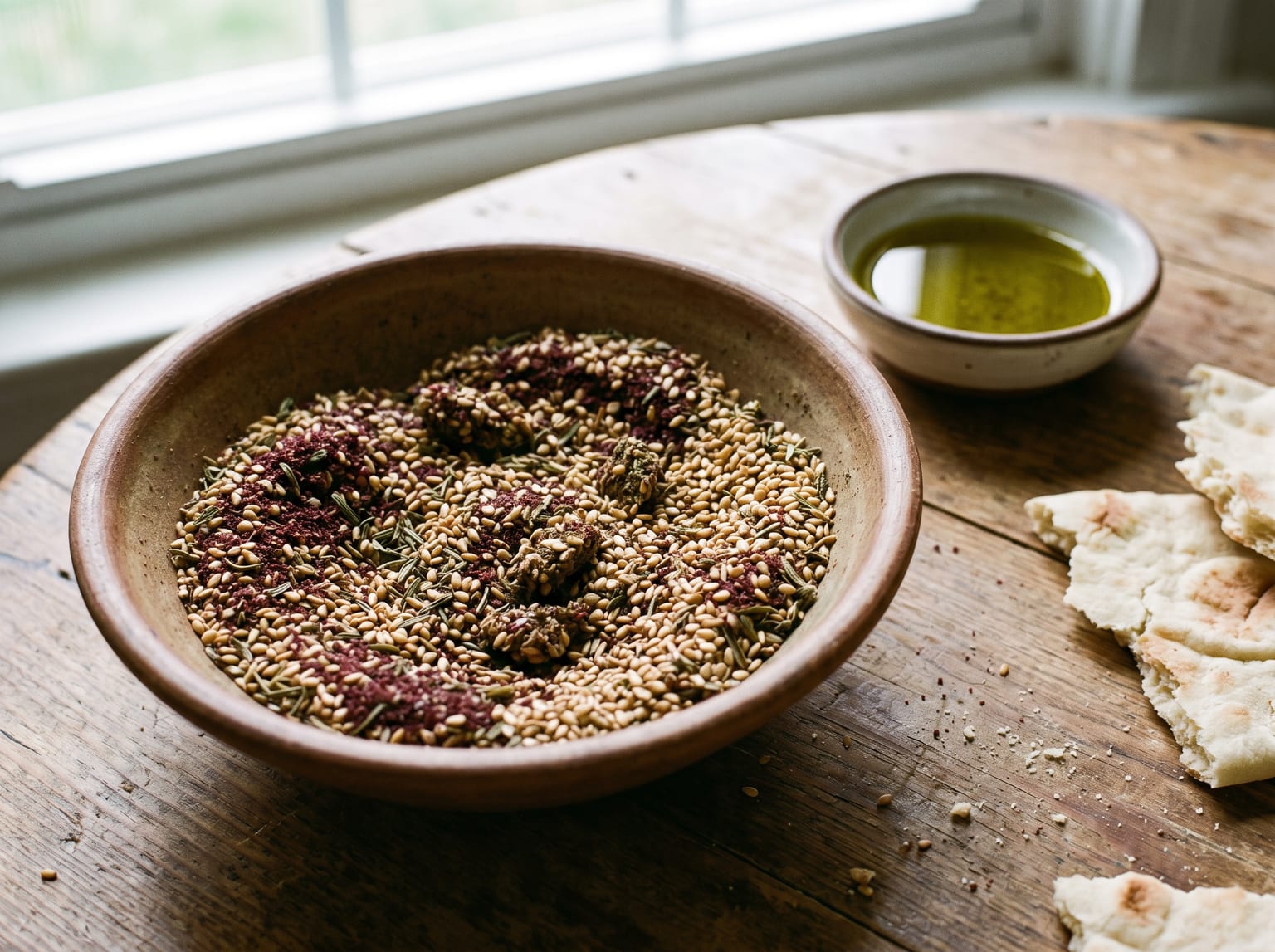
Toasted sesame, sumac and dried thyme, in the proportions that make it taste sour and nutty rather than dusty. Making it yourself is the difference between the jar you ignore and the one you finish.
Prep15 min
Cook5 min
0 Servings30
Standard Levantine proportions, roughly equal sesame, sumac and herb
Ingredients
Written for a 20 cm pan
Units
Temperature
Servings
Blend
- 30 g sesame seeds, hulled white, toasted rounded
- 30 g ground sumac, the deep red sour one; check it is not cut with salt rounded
- 25 g dried thyme, or dried oregano, or a mixture of the two rounded
- 5 g dried marjoram rounded
- 4 g fine salt rounded
- 3 g cumin seed, toasted with the sesame and ground; optional but good rounded
Dietary labels are a guide, not a guarantee. If you have an allergy, read the ingredients yourself.
Method
- Toast the sesame in a dry pan over medium heat, shaking constantly, for 3 to 4 minutes until pale gold and nutty. Tip it straight onto a cold plate. Left in the pan it will carry on and burn, and burnt sesame is bitter enough to ruin the whole jar.
- Toast the cumin seed in the same pan for a minute if you are using it, then grind it.
- Rub the thyme and marjoram between your palms as they go into the bowl, to break the leaf and wake the oils.
- Mix everything with the sumac and salt. Store sealed and dark, and use it within about three months while the sesame is still fresh.
Notes
- Roughly equal parts sesame, sumac and herb is the ratio to remember. Commercial blends cut the sumac back because it is the expensive part, which is exactly why shop za’atar tastes dusty and yours will not.
- Sumac is the point. It is a dried berry, sour in a fruity way rather than sharp like vinegar or lemon. If your jar is pale pink and tastes of salt, it has been cut, and it is worth buying better from a Turkish or Arab grocer.
- What to do with it, since you asked. Olive oil and za’atar as a bread dip. Over labneh or thick yogurt. On flatbread before baking, which is manakish. Over roast cauliflower or carrots for the last five minutes. On fried eggs. Mixed into the crumb of a roast chicken. Over halloumi. On tomatoes with olive oil and nothing else.
- It goes stale faster than a dried herb blend because of the sesame oil. Make small jars often.
Ingredient substitutions
- Za’atar the plant is a wild Levantine hyssop, not the same as garden thyme, and is hard to buy outside the region. Dried thyme, or thyme and oregano together, is the standard substitute everywhere else and is what most recipes assume.
- Sumac has no real substitute. At a push, finely grated dried lemon zest with a pinch of citric acid gets you the sourness and none of the fruitiness.
Sources consulted
Good with
Sources consulted
From Christoph Mayer