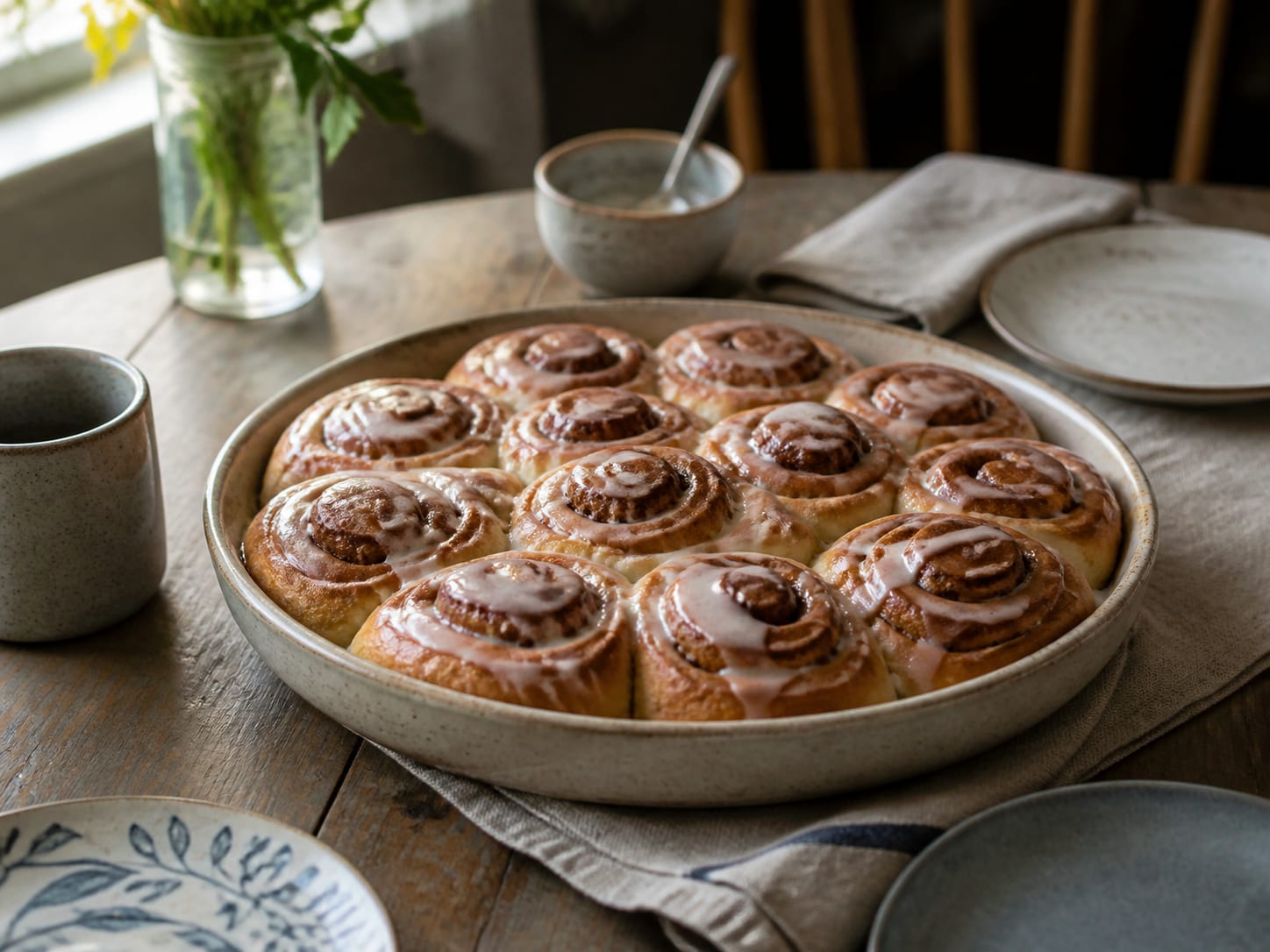
Zimtschnecken (cinnamon rolls)
Classic cinnamon rolls baked pressed close together in a dish rather than spaced apart on a sheet, which is what keeps their sides soft and pale so they pull apart rather than needing to be cut, and lets the cinnamon filling stay gooey in the centre instead of drying out at the exposed edges. Using room-temperature, properly softened butter for the filling, not melted, is what keeps it from soaking straight through the dough before baking.
Prep30 min
Cook25 min
Rest100 min
Servings4
Christoph's Zimtschnecken, baked pressed close together so the sides stay soft, the filling made with softened rather than melted butter.
Ingredients
Written for a 23 × 33 cm dish
Units
Temperature
Servings
Dough
- 450 g flour rounded
- 7 g instant yeast rounded
- 60 g sugar rounded
- 220 ml milk, lukewarm rounded
- 1 egg rounded
- 70 g butter, softened rounded
- 5 g fine salt rounded
Filling
- 80 g butter, softened, not melted rounded
- 100 g brown sugar rounded
- 15 g ground cinnamon rounded
Glaze
- 100 g powdered sugar rounded
- 20 ml milk rounded
Dietary labels are a guide, not a guarantee. If you have an allergy, read the ingredients yourself.
Method
- Whisk the flour, yeast, sugar and salt together in a bowl. Add the lukewarm milk, egg and softened butter. Mix and knead for 8 to 10 minutes, until smooth and elastic. Cover and let rise for 60 minutes, until doubled.
- Mix the softened butter, brown sugar and cinnamon into a spreadable paste for the filling.
- Roll the dough out into a large rectangle, about 5 mm thick. Spread the filling evenly over the surface, leaving a small border.
- Roll up tightly from one long edge. Slice into 10 pieces. Arrange pressed closely together in a buttered baking dish.
- Cover and let rise for 40 minutes. Preheat the oven to 180°C (fan).
- Bake for 22 to 25 minutes, until golden brown and fully cooked through. Let cool for 10 minutes.
- Whisk the powdered sugar and milk together for the glaze. Drizzle over the warm rolls before serving.
Notes
- Pack the rolls tightly together in the dish. This keeps the sides from developing a crust as they bake, so the rolls tear apart soft rather than needing to be cut, and it also traps steam that keeps the centre filling gooey.
- Use the butter softened, not melted, for the filling. Melted butter soaks straight into the dough before it even goes in the oven, leaving a greasy roll with a thin filling; softened butter spreads as a paste that stays largely in place.
- Roll the dough up tightly. A loose roll lets the filling shift and pool unevenly, giving some rolls a thick swirl and others almost none.
- Best eaten warm, glazed just before serving; they reheat acceptably in a low oven the next day.
Ingredient substitutions
- A cream cheese frosting instead of the simple glaze is a popular American-style variation.
- A handful of chopped pecans or walnuts in the filling adds crunch.
- A pinch of cardamom alongside the cinnamon gives a different, slightly more complex spice profile.
From Christoph Mayer